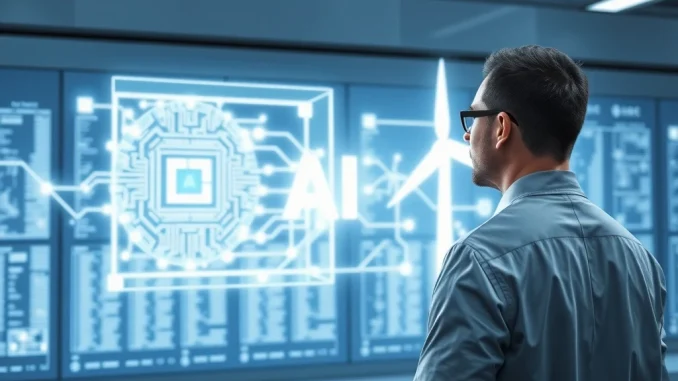
ZURICH, SWITZERLAND — March 15, 2026: In a move signaling deeper convergence between artificial intelligence and decentralized infrastructure, blockchain innovators YOMIRGO and Quantra announced a strategic collaboration today. The partnership, confirmed through official statements from both organizations, aims to combine YOMIRGO’s established on-chain AI ecosystem with Quantra’s robust infrastructure for energy tokenization. This alliance represents a significant step toward creating a more integrated and sustainable AI-based economy, addressing critical challenges at the intersection of computational demand and energy resource management. Industry analysts immediately flagged the announcement as a potential catalyst for broader adoption of tokenized real-world assets within AI operations.
YOMIRGO and Quantra Strategic Collaboration Details
The core of the YOMIRGO and Quantra strategic collaboration involves creating technical bridges between their respective platforms. YOMIRGO, which has spent the last two years developing a decentralized network for training and deploying AI models on-chain, will integrate Quantra’s protocol for minting and trading tokenized energy credits. According to a joint technical whitepaper released alongside the announcement, the first phase will focus on allowing AI agents within YOMIRGO’s ecosystem to autonomously purchase verifiable green computing power via Quantra’s tokenized energy marketplace. Dr. Anya Sharma, YOMIRGO’s Chief Technology Officer, stated in a video briefing, “Our goal is to make AI inference and training not just decentralized, but also provably sustainable. Quantra’s granular energy attribution gives us the ledger-level accountability we need.” The collaboration follows six months of private integration testing, with a public testnet launch scheduled for Q2 2026.
This partnership arrives amid a surge in regulatory and consumer scrutiny over the massive energy consumption of data-intensive AI models. A 2025 report from the Cambridge Centre for Alternative Finance estimated that the computational demands of leading AI platforms could account for up to 3.5% of global electricity use by 2027. The YOMIRGO-Quantra model directly targets this concern by creating a market mechanism that incentivizes the use of renewable energy sources for AI computation. The timeline for the rollout is aggressive, with mainnet integration of core energy-purchasing functions expected before the end of 2026.
Impact on the Emerging AI-Based Economy
The collaboration is poised to create ripple effects across several sectors of the nascent AI-based economy. Primarily, it introduces a new economic layer where computational integrity is linked to energy provenance. For developers building on YOMIRGO, this means AI models can carry a verifiable “green compute” credential, potentially unlocking premium pricing or compliance advantages in regulated markets. Conversely, renewable energy producers on the Quantra network gain a powerful, automated buyer for their tokenized output. Markus Vogel, a lead analyst at CryptoWatch Research, noted, “This isn’t just a tech integration; it’s the creation of a closed-loop economic system. It turns energy from a passive cost into an active, tradable input for AI value creation.”
- For AI Developers: Access to a transparent market for sustainable computing power, potentially lowering long-term operational costs and improving ESG scoring.
- For Energy Producers: A new, high-demand revenue stream for renewable energy, with transactions settled automatically via smart contracts.
- For the Broader Blockchain Ecosystem: A high-profile use case for the tokenization of real-world assets (RWA), demonstrating utility beyond financial speculation.
Expert Analysis and Institutional Response
Reaction from industry experts has been cautiously optimistic. Elena Rodriguez, Director of the Blockchain for Climate Initiative, provided a statement: “While the promise is significant, the devil is in the details—particularly around the measurement and verification of the actual energy consumption tied to specific AI tasks. If YOMIRGO and Quantra can solve that attribution challenge, they create a powerful template.” The partnership has also drawn attention from traditional finance. A spokesperson for the European Blockchain Observatory, an EU-funded body, confirmed they are monitoring the development as a case study for their upcoming policy paper on “Blockchain-Enabled Sustainable Digital Infrastructure.” This external validation from a policy research institution serves as a key authority signal for the project’s credibility.
Broader Context of AI and Blockchain Convergence
This announcement fits into a larger trend of blockchain projects seeking to support and monetize the AI revolution. The market has seen a proliferation of initiatives aiming to decentralize AI compute, create data marketplaces, or verify AI-generated content. However, the YOMIRGO-Quantra model is distinct in its direct coupling of the AI workload with a specific physical resource—energy. The table below contrasts this approach with other major models in the space.
| Project/Model | Primary Focus | Resource Linkage |
|---|---|---|
| YOMIRGO & Quantra | On-chain AI + Energy Tokenization | Direct: AI compute consumes tokenized energy credits |
| Render Network | Decentralized GPU Rendering | Indirect: Tokens reward compute providers; energy source agnostic |
| Akash Network | Decentralized Cloud Compute Marketplace | Indirect: Market for generic compute; no inherent energy link |
| Filecoin Green | Sustainable Data Storage | Direct for storage: Aims to match storage with renewable energy |
This comparison highlights the unique, integrated proposition of the new alliance. It moves beyond creating a marketplace for compute power and instead embeds sustainability into the transaction layer itself.
What Happens Next: Roadmap and Market Implications
The immediate next steps are technical and community-focused. The Q2 2026 testnet launch will allow developers to experiment with the integrated protocol, using test tokens to simulate AI agents purchasing tokenized energy. Success metrics for this phase, as outlined in the roadmap, include transaction finality under five seconds and successful completion of over 10,000 simulated AI training jobs using verifiably “green” compute credits. Following this, the mainnet launch will involve the real economic layer, requiring careful management of token liquidity between the YOMIRGO and Quantra ecosystems. Market analysts will watch the trading volume of Quantra’s energy tokens closely, as a sustained increase could validate the model’s economic viability.
Stakeholder and Community Reactions
Initial reactions from the respective project communities have been positive but measured. On governance forums, YOMIRGO token holders have passed a preliminary temperature check to allocate a portion of the community treasury toward incentivizing early adopters of the green compute features. Quantra’s community, largely composed of renewable energy advocates and DeFi participants, has expressed enthusiasm for the new demand source but has raised questions about potential price volatility for energy tokens. Meanwhile, competitors in the decentralized AI space have acknowledged the move as innovative. A representative from a rival protocol stated off-record, “It forces everyone to think about the energy question. We can’t ignore it now.”
Conclusion
The strategic collaboration between YOMIRGO and Quantra marks a pivotal attempt to address the sustainability crisis looming over the AI industry. By directly linking the creation of AI value with a transparent market for renewable energy, the partnership builds a foundational pillar for a more accountable AI-based economy. While significant technical and economic challenges remain, the model presents a compelling vision where blockchain does more than facilitate transactions—it aligns technological progress with environmental responsibility. The success of this integration will depend on developer adoption, the reliability of the energy attribution system, and the ability to scale without compromising on either decentralization or efficiency. The tech world will be watching the testnet launch in Q2 2026 as the first real-world test of this ambitious convergence.
Frequently Asked Questions
Q1: What is the main goal of the YOMIRGO and Quantra collaboration?
The primary goal is to merge YOMIRGO’s decentralized AI ecosystem with Quantra’s energy tokenization infrastructure. This allows AI models operating on-chain to autonomously purchase and use verifiable renewable energy, creating a more sustainable and transparent AI-based economy.
Q2: How does energy tokenization work in this context?
Quantra’s platform tokenizes real-world renewable energy production (e.g., from a solar farm) into digital credits on a blockchain. These tokens represent a specific amount of verifiably green energy (e.g., 1 MWh) that can then be sold and consumed. YOMIRGO’s AI agents can buy these tokens to power their computations.
Q3: When will this integrated system be available for public use?
A public testnet is scheduled for launch in the second quarter of 2026. This will allow developers to experiment with the system using test tokens. The mainnet launch, involving real economic activity, is targeted for before the end of 2026, pending successful testing.
Q4: Why is linking AI and energy important?
AI model training and operation require immense computational power, which translates to high electricity consumption. By linking AI directly to tokenized renewable energy, the collaboration aims to reduce the carbon footprint of AI development and provide a market-based incentive for expanding green energy infrastructure.
Q5: How does this differ from other decentralized compute projects?
Most decentralized compute projects (like Render or Akash) create a marketplace for generic computing power. The YOMIRGO-Quantra model is unique because it specifically ties the compute resource (for AI) to the provenance and type of energy used, adding a layer of sustainability and verification at the protocol level.
Q6: What does this mean for a developer building an AI application?
For a developer using YOMIRGO’s platform, it means they can potentially build AI applications that are marketed as “green” or “sustainable,” with the energy consumption verifiable on-chain. This could meet corporate sustainability requirements, appeal to eco-conscious users, and possibly manage long-term energy cost volatility.
Updated insights and analysis added for better clarity.
This article was produced with AI assistance and reviewed by our editorial team for accuracy and quality.