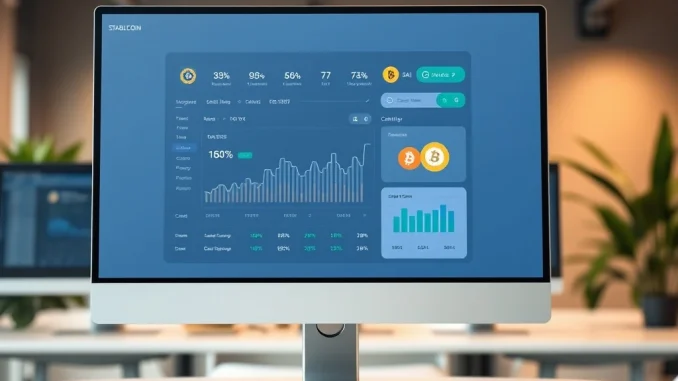
Denver, Colorado, February 18, 2026: Ymax, a decentralized finance (DeFi) infrastructure provider, has initiated an early access phase for its highly anticipated stablecoin yield orchestration platform. This move signals a significant development in the ongoing evolution of automated yield optimization strategies within the cryptocurrency sector. The platform aims to address the persistent complexity and manual effort required for users to maximize returns on their stablecoin holdings across a fragmented DeFi landscape.
Understanding the Ymax Stablecoin Yield Orchestration Platform
The core function of the Ymax platform is to automate the process of identifying, accessing, and managing yield-generating opportunities for stablecoins. Unlike simple staking or single-protocol deposits, yield orchestration involves dynamically allocating assets across multiple DeFi protocols based on real-time data. This data includes interest rates, liquidity pool depths, protocol security audits, and gas fee costs. The platform’s algorithm continuously scans the market for the optimal risk-adjusted returns. Consequently, users can potentially earn higher yields without the need for constant manual monitoring and rebalancing. This approach represents a maturation of DeFi tools, moving from manual farming to sophisticated, automated asset management.
The Mechanics of Automated Yield Optimization
Ymax operates on a set of predefined strategies that users can select based on their risk tolerance and goals. The platform interacts programmatically with various lending protocols, automated market makers (AMMs), and other yield-bearing venues. Key mechanics include:
- Multi-Protocol Sourcing: The platform does not rely on a single source. It aggregates opportunities from established protocols like Aave, Compound, and Uniswap, as well as newer, audited platforms.
- Gas Fee Optimization: A major hurdle in DeFi is transaction cost. Ymax’s algorithm bundles transactions and times them to minimize network gas fees, preserving user profits.
- Risk Assessment Layers: Before allocating funds, the system checks for protocol health indicators, smart contract audit status, and liquidity depth to mitigate exposure to exploits or insolvency.
- Rebalancing Triggers: Automated rebalancing occurs when yield differentials between protocols exceed a certain threshold, ensuring capital remains in the most productive positions.
The Evolution from Manual Farming to Orchestration
The concept of yield farming emerged around 2020, requiring users to manually move assets between protocols—a process nicknamed “DeFi Lego.” This was time-consuming, costly in fees, and risky due to human error. The subsequent generation introduced “yield aggregators,” which automated deposits into a single, high-yield vault. Ymax’s orchestration model represents a third generation. It goes beyond aggregation by actively managing capital across multiple vaults and strategies simultaneously. This shift mirrors the evolution in traditional finance from single-bank savings accounts to robo-advisors managing diversified portfolios across multiple asset classes and institutions.
Implications for the Broader DeFi and Stablecoin Ecosystem
The launch of Ymax’s platform carries several implications for market structure and user behavior. First, it could lead to increased capital efficiency in DeFi. By automating the flow of capital to the most productive protocols, overall liquidity utilization may improve. Second, it could exert a stabilizing influence on yield rates across the ecosystem. As arbitrage bots balance traditional markets, yield orchestration platforms could smooth out anomalous, unsustainable high yields by quickly flooding them with capital until rates normalize. However, this also introduces new considerations. The concentration of assets managed by a few sophisticated platforms could create centralization pressures within a decentralized ecosystem. Furthermore, the complexity of the underlying smart contracts and strategy logic necessitates unprecedented levels of security and transparency to maintain user trust.
Security and Transparency as Foundational Pillars
Given the platform’s control over user funds, Ymax has emphasized a security-first architecture. The early access phase is deliberately limited in scale to stress-test systems under real-world conditions. The company has published details of its multi-signature governance for strategy updates, time-lock mechanisms for critical changes, and ongoing engagement with multiple smart contract auditing firms. All strategy logic and fee structures are fully transparent and on-chain, allowing users and third-party analysts to verify operations. This commitment to verifiability is crucial for establishing the authority and trustworthiness required in a sector historically plagued by opaque operations and exploits.
Conclusion
The early access launch of Ymax’s stablecoin yield orchestration platform marks a pivotal step toward sophistication and accessibility in decentralized finance. By automating complex yield optimization strategies, the platform aims to democratize access to advanced DeFi returns while mitigating operational risks like high gas fees and manual errors. The success of this model will depend on its proven security, sustained yield performance, and ability to navigate an ever-changing DeFi landscape. As the platform moves from early access to full public launch, it will serve as a critical case study in whether automated, multi-protocol asset management can become a reliable cornerstone of the digital asset economy.
FAQs
Q1: What is stablecoin yield orchestration?
Stablecoin yield orchestration is the automated process of dynamically allocating stablecoin assets across multiple DeFi protocols to maximize interest earnings. It involves continuous market scanning, risk assessment, and automatic rebalancing.
Q2: How does Ymax differ from a simple yield aggregator?
While a yield aggregator typically deposits funds into a single high-yield vault, Ymax actively manages and rebalances capital across multiple protocols and strategies simultaneously, aiming for optimal risk-adjusted returns across the entire DeFi landscape.
Q3: What are the main risks of using a platform like Ymax?
Primary risks include smart contract vulnerabilities within Ymax or the underlying protocols it uses, systemic risks in the DeFi ecosystem, potential strategy logic flaws, and the inherent volatility of crypto markets affecting correlated assets.
Q4: Who is the early access phase intended for?
The early access phase typically targets experienced DeFi users, institutional testers, and security researchers who can provide feedback, stress-test the platform with significant capital, and help identify potential issues before a wider release.
Q5: Does using Ymax require active management from the user?
The core value proposition is minimal active management. Users select a strategy based on their risk profile, and the platform’s algorithms handle the ongoing execution, monitoring, and rebalancing. Users should, however, monitor platform announcements and security status.