ZUG, SWITZERLAND — March 21, 2026 — The XRP Ledger (XRPL) decentralized finance landscape has undergone a seismic shift with the surprise launch of a fully rebuilt XRPL.to platform. The comprehensive overhaul, which went live today, transforms the decentralized exchange (DEX) into a unified hub for token and NFT trading, introduces a novel Token Launcher, provides an open API for developers, and implements a groundbreaking fee-sharing model offering users up to 50% of generated fees. This strategic move positions XRPL.to as a central liquidity and utility pillar for the entire XRPL ecosystem, a development that industry analysts confirm was largely unexpected in its scope and immediate availability.
XRPL.to Rebuild: A Complete Platform Overhaul
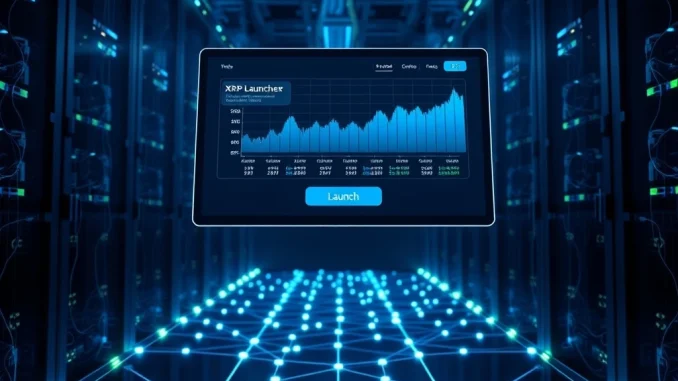
The announcement, detailed across a multi-part reveal, outlines a platform rebuilt from the ground up. Consequently, the new XRPL.to interface consolidates trading for XRPL-native fungible tokens and non-fungible tokens (NFTs) into a single, streamlined experience. Previously, users often navigated between separate platforms or interfaces for these asset classes. Furthermore, the integration of a native Token Launcher provides a simplified, guided process for projects to issue new tokens directly on the XRPL, lowering a significant barrier to entry. “The goal was to create a seamless gateway,” a statement from the platform’s development team read, emphasizing a design philosophy centered on user experience and ecosystem growth.
Architecturally, the rebuild prioritizes performance and accessibility. The team migrated core infrastructure to enhance transaction throughput and reduce latency, critical factors for DEX usability during periods of high network activity. Additionally, the release of a public, open API signals a push toward broader developer adoption, allowing third-party applications to plug directly into XRPL.to’s liquidity pools and trading functions. This modular approach mirrors strategies employed by leading DeFi protocols on other blockchains, suggesting a maturation of the XRPL’s developer toolkit.
Impact and Consequences of the Unified DEX Model
The immediate impact of this launch is multifaceted, affecting traders, developers, and the competitive dynamics of the XRPL DEX space. Primarily, the unification of token and NFT markets creates a one-stop shop, potentially concentrating liquidity and user attention. For retail users, this simplifies portfolio management and trading execution. For developers and projects, the built-in Token Launcher coupled with API access reduces the technical overhead required to launch and maintain a token’s market presence.
- Liquidity Concentration: By aggregating trading pairs for both asset types, XRPL.to may attract a critical mass of liquidity away from smaller, single-purpose DEXs on the ledger, potentially improving price stability and slippage for major pairs.
- Fee-Sharing Incentive: The platform’s advertised fee-sharing model, which returns up to 50% of trading fees to users, introduces a direct economic incentive. This model aims to bootstrap user adoption and loyalty, creating a competitive advantage against platforms that do not offer similar rewards.
- Ecosystem Tooling: The Token Launcher represents a significant piece of ecosystem infrastructure. By providing a user-friendly minting tool, XRPL.to could accelerate the creation of new projects and tokens on the XRPL, directly influencing the ledger’s growth metrics and developer activity.
Expert Perspective on the XRPL DEX Landscape
Dr. Anya Petrova, a blockchain infrastructure researcher at the Digital Asset Research Institute, contextualizes the move. “The XRPL DEX scene has historically been fragmented, with liquidity spread across several interfaces,” Petrova notes. “A unified platform with strong economic incentives like fee sharing is a classic playbook for network effect capture. The true test will be whether the technical execution matches the ambition, particularly in maintaining decentralization and security.” Her analysis references the broader trend of consolidation in decentralized finance, where usability often trumps pure ideological adherence to decentralization for mainstream users. The development follows increased scrutiny from entities like the Bank for International Settlements (BIS) on the interoperability and efficiency of blockchain-based financial markets, a context that adds weight to standardization efforts.
Broader Context and Historical Comparison
This rebuild places XRPL.to in direct comparison with other major DEX interfaces and aggregators within the crypto space. Historically, platforms like Uniswap on Ethereum or PancakeSwap on BNB Chain gained dominance through first-mover advantage, constant iteration, and community incentive programs. The XRPL.to launch appears to be a concerted effort to apply these proven growth strategies specifically to the XRPL environment, which has different technical constraints and a distinct community ethos.
| Platform | Primary Chain | Key Differentiator (2026) | Asset Coverage |
|---|---|---|---|
| XRPL.to | XRP Ledger | Unified Token/NFT DEX + Token Launcher + 50% Fee Share | XRPL-native tokens & NFTs |
| Sologenic DEX | XRP Ledger | Traditional asset tokenization focus | XRPL tokens, stocks, ETFs |
| Uniswap v4 | Ethereum | Customizable liquidity pools via “hooks” | ERC-20, ERC-721, etc. |
The table highlights XRPL.to’s unique positioning by bundling creation, trading, and reward mechanisms natively. Unlike Sologenic’s focus on real-world assets or Uniswap’s generalized smart contract flexibility, XRPL.to’s strategy is deeply integrated with the specific capabilities and user base of the XRP Ledger itself.
What Happens Next: The Road Ahead for XRPL.to
The forward trajectory for the platform will be determined by user adoption metrics, the stability of its new infrastructure under load, and the responsiveness of its development team to community feedback. Key milestones to watch include the volume of tokens launched via its native tool, total value locked (TVL) in its liquidity pools over the next 90 days, and any announcements regarding the specific mechanics and distribution schedule for its fee-sharing program. The team has indicated a roadmap that includes advanced order types and deeper cross-chain integration capabilities, suggesting this rebuild is a foundational step rather than a final product.
Initial Reactions from the XRPL Community
Early reactions from the XRPL community on social platforms and developer forums have been a mix of excitement and cautious optimism. Many users have praised the sleek interface and the convenience of a unified trading experience. However, some veteran community members have raised questions about the centralization points introduced by a proprietary Token Launcher and the long-term sustainability of a 50% fee-sharing model. “It’s a massive upgrade for usability,” posted a prominent XRPL validator operator, “but we must ensure the core tenets of the ledger aren’t compromised for convenience.” This balance between innovation and adherence to decentralized principles will likely be a central theme in ongoing discussions.
Conclusion
The surprise launch of the rebuilt XRPL.to platform marks a pivotal moment for decentralized exchange functionality on the XRP Ledger. By unifying token and NFT trading, introducing a streamlined Token Launcher, and implementing a compelling fee-sharing model, the platform aims to consolidate liquidity and simplify user engagement. Its success will hinge on technical reliability, community trust, and its ability to execute on a roadmap that promises further innovation. For the broader XRPL ecosystem, this development signals a competitive push towards more integrated, user-centric, and economically incentivized DeFi applications, setting a new benchmark for what participants can expect from core infrastructure. Observers should monitor adoption rates and network effect growth in the coming quarters to gauge its lasting impact.
Frequently Asked Questions
Q1: What exactly changed in the XRPL.to rebuild?
The platform underwent a complete overhaul, merging separate token and NFT trading interfaces into one unified DEX. It also added a native Token Launcher for easy token creation, released an open API for developers, and instituted a program to share up to 50% of trading fees with its users.
Q2: How does the 50% fee-sharing model work?
While full mechanics are still being detailed, the model is designed to return a portion of the trading fees generated on the platform back to the users who provide liquidity or engage in trading activity. Specific distribution criteria and schedules are expected to be announced by the development team.
Q3: What is the timeline for future features after this launch?
The development team has indicated a published roadmap that includes implementing advanced order types (like limit orders) and exploring deeper cross-chain functionalities to bridge assets from other blockchains into the XRPL ecosystem via the DEX.
Q4: Is the new XRPL.to platform safe to use?
The platform interacts with the decentralized XRP Ledger, meaning users always custody their own assets. However, as with any new software, users should exercise caution, start with small amounts, and ensure they are using the official website to avoid phishing scams.
Q5: How does this affect other DEXs on the XRP Ledger?
The rebuild introduces significant competition, potentially drawing liquidity and users from smaller DEX interfaces. It may pressure other platforms to innovate with similar features, improved user experiences, or alternative incentive models to retain their user bases.
Q6: How does this benefit someone wanting to launch a new token?
The integrated Token Launcher provides a guided, code-light process to issue a new fungible token directly on the XRPL. This significantly lowers the technical barrier to entry, allowing projects to create a token and potentially list it for trading on the same platform more quickly.