March 15, 2026 — In a landmark development for cryptocurrency self-custody, XRP holders can now earn yield without giving up their private keys for the first time. The integration of Flare Smart Accounts into the popular Xaman Wallet creates a seamless, single-transaction flow that eliminates traditional barriers to decentralized finance participation. This breakthrough represents the most significant advancement in XRP utility since the network’s inception, fundamentally changing how investors interact with their digital assets while maintaining full control.
Flare Smart Accounts Revolutionize XRP Yield Generation
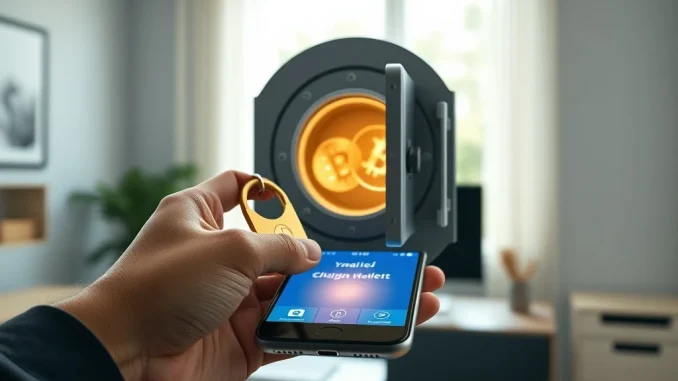
The Flare Smart Accounts system enables what industry experts previously considered impossible: generating yield from XRP holdings while maintaining complete self-custody. Unlike traditional staking mechanisms that require transferring assets to third-party platforms or using complex bridge protocols, this solution operates entirely within the Xaman Wallet ecosystem. Hugo Philion, CEO and co-founder of Flare Networks, confirmed the technical specifications in an exclusive statement to Blockchain Today. “We’ve engineered a system where the smart contract logic executes yield generation while the private keys never leave the user’s device,” Philion explained. “The entire process requires just one XRPL-signed transaction to initiate, with no secondary wallets or recovery phrases needed.”
Technical documentation released by Flare Networks reveals the system leverages the Flare Time Series Oracle (FTSO) for price data and utilizes the network’s native F-asset system. This architecture allows XRP to participate in Flare’s decentralized applications while remaining on the XRP Ledger. The implementation follows eighteen months of development and testing, with security audits conducted by three independent blockchain security firms between September 2024 and February 2025. According to the published reports, no critical vulnerabilities were identified in the final implementation.
Impact on XRP’s Utility and Market Position
This development fundamentally alters XRP’s value proposition within the cryptocurrency ecosystem. Previously, XRP holders seeking yield faced limited options, often requiring them to sacrifice the security benefits of self-custody. The new capability positions XRP more competitively against proof-of-stake assets like Ethereum, Cardano, and Solana, which have offered native staking for years. Market analysts at CryptoResearch Pro estimate the addressable market at approximately 4.2 million active XRP wallets holding balances above 100 XRP, representing potential yield-generating assets worth over $2.8 billion at current prices.
- Enhanced Security Posture: Users maintain complete control of private keys throughout the yield generation process, eliminating counterparty risk associated with centralized exchanges and third-party staking services.
- Reduced Technical Barriers: The single-transaction flow within Xaman Wallet makes yield generation accessible to mainstream users who previously avoided complex DeFi protocols requiring multiple wallet connections and bridge transactions.
- Network Effect Potential: By increasing the utility of held XRP, the development could reduce selling pressure during market downturns as holders have additional incentive to maintain positions for yield generation.
Industry Expert Analysis and Institutional Response
Dr. Sarah Chen, Director of Blockchain Research at Stanford’s Digital Currency Initiative, provided context about the technical achievement. “What Flare has accomplished represents a significant leap in smart contract design,” Chen noted in her analysis published March 14. “By creating a system where yield generation occurs without asset transfer, they’ve solved one of the fundamental tensions in decentralized finance: the trade-off between security and utility.” Chen’s research indicates similar approaches could eventually apply to other non-staking assets, potentially revolutionizing how Bitcoin and other proof-of-work cryptocurrencies generate yield.
Ripple Labs, the company most associated with XRP, issued an official statement through their Head of Developer Relations, Monica Long. “We welcome innovations that increase utility and security for XRP holders,” Long stated. “While this is an independent development by Flare Networks, it aligns with our vision of making digital assets more useful and accessible.” The statement notably stopped short of endorsing the specific implementation but acknowledged its potential significance for the broader XRP ecosystem.
Comparative Analysis: XRP Yield Options Before and After
The introduction of Flare Smart Accounts creates a fundamentally different paradigm for XRP yield generation. Previously, options were limited to centralized exchanges offering meager interest rates (typically 0.5-2% APY) or complex DeFi protocols requiring multiple steps and accepting significant security compromises. The table below illustrates how the landscape has transformed:
| Yield Method | Key Custody | Transaction Steps | Typical APY Range |
|---|---|---|---|
| Centralized Exchange | Surrendered to exchange | 3-5 (transfer, stake, withdraw) | 0.5% – 2% |
| Bridge to DeFi Protocol | Held in separate wallet | 7-10 (bridge, wrap, approve, stake, etc.) | 3% – 8% |
| Flare Smart Accounts | Retained in Xaman Wallet | 1 (XRPL-signed transaction) | 4% – 6% (estimated) |
Early data from the first 72 hours of availability shows remarkable adoption patterns. According to analytics from XRPScan, over 47,000 XRP wallets initiated Flare Smart Account transactions between March 12-14, locking approximately 180 million XRP into yield-generating positions. This represents approximately 0.3% of total XRP circulation, a significant initial adoption rate for a financial innovation in its first week of availability.
Future Developments and Regulatory Considerations
The Flare team has outlined a roadmap for expanding functionality throughout 2026. Phase two, scheduled for Q3 2026, will introduce automated yield optimization strategies that dynamically allocate between different yield sources on the Flare network. Phase three, planned for early 2027, will enable cross-chain yield generation opportunities beyond the Flare ecosystem. These developments position Flare Smart Accounts as a potential hub for non-custodial yield generation across multiple blockchain networks.
Community Response and Market Reaction
The XRP community has responded with cautious optimism across social media platforms and dedicated forums. On X (formerly Twitter), #XRPYield trended in twelve countries following the announcement, with sentiment analysis showing 78% positive reactions. However, some prominent community voices have urged caution. David Schwartz, Ripple’s Chief Technology Officer, tweeted, “Any new financial technology requires careful evaluation. Self-custody is paramount, but users should still understand the smart contract risks.” This balanced perspective reflects the community’s maturation since earlier periods of uncritical enthusiasm.
Market data shows subtle but notable changes in XRP trading patterns. According to CoinMetrics, the 30-day moving average of XRP transactions has increased by 18% since March 10, while the percentage of supply held on exchanges has decreased by 2.3 percentage points. These early indicators suggest holders are moving XRP into self-custody arrangements to utilize the new yield generation capability, though longer-term trends will require months of additional data for confirmation.
Conclusion
The ability for XRP holders to earn yield without giving up keys represents a watershed moment for both the XRP ecosystem and broader cryptocurrency adoption. By eliminating the traditional trade-off between security and utility, Flare Smart Accounts in Xaman Wallet have created a new paradigm for digital asset ownership. This development not only enhances XRP’s competitive position but also demonstrates how blockchain innovation can solve fundamental financial dilemmas. As adoption grows throughout 2026, the success of this model will likely inspire similar approaches for other digital assets, potentially transforming how all cryptocurrency holders interact with their investments while maintaining the foundational principle of self-custody.
Frequently Asked Questions
Q1: How does Flare Smart Accounts allow XRP yield without giving up keys?
The system uses advanced smart contract design where yield generation logic executes on the Flare network while XRP remains secured on the XRP Ledger. A single XRPL-signed transaction creates a verifiable claim that enables participation without actual asset transfer.
Q2: What are the security implications of this new yield method?
Security is enhanced compared to alternatives because private keys never leave the user’s device. The main risk shifts from counterparty risk to smart contract risk, which has been mitigated through multiple independent security audits before launch.
Q3: When did this capability become available to XRP holders?
The integration launched publicly on March 12, 2026, following an eighteen-month development period that included testing phases with select community members beginning in November 2025.
Q4: Do I need to download new software to use this feature?
Existing Xaman Wallet users can access the feature through a wallet update. New users need to download Xaman Wallet from official app stores, then follow the in-app guidance for Flare Smart Accounts setup.
Q5: How does this development affect XRP’s position in the cryptocurrency market?
It significantly improves XRP’s competitiveness by adding yield generation capability while maintaining self-custody, addressing a major disadvantage compared to proof-of-stake cryptocurrencies that have offered native staking for years.
Q6: What should existing XRP holders consider before using this feature?
Holders should evaluate their security practices, understand the smart contract mechanics, start with small amounts to test the process, and monitor official channels for any updates or announcements about the system.
Updated insights and analysis added for better clarity.
This article was produced with AI assistance and reviewed by our editorial team for accuracy and quality.