As of March 15, 2026, XRP trades at $1.29 in global cryptocurrency markets, hovering at a critical technical juncture that will determine its next significant price movement. Market analysts and institutional traders are closely monitoring the crucial Fibonacci retracement zone between $1.30 and $1.05, which currently serves as the primary battleground between bullish and bearish forces. This XRP price prediction analysis examines whether this key technical range will hold as support or break downward toward the $0.80 level, with immediate implications for the entire altcoin market segment. The cryptocurrency’s price action follows a 14% decline from its February peak of $1.50, reflecting broader market uncertainty amid regulatory developments and shifting institutional sentiment.
XRP Technical Analysis: The Fibonacci Zone Breakdown
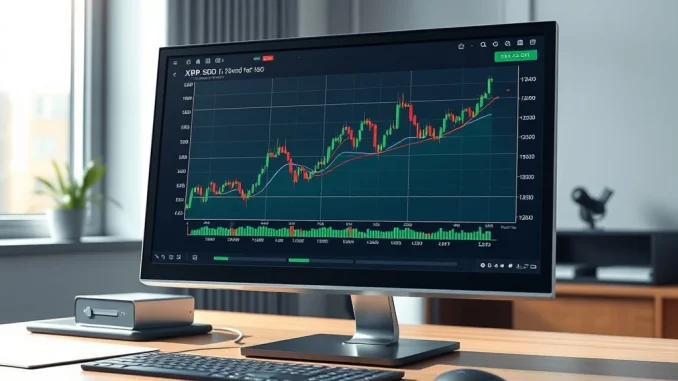
The daily timeframe reveals XRP remains under significant technical pressure, with the $1.30-$1.05 Fibonacci retracement zone representing the most critical area for determining the next directional move. This zone derives from the 0.382 to 0.618 Fibonacci retracement levels measured from XRP’s December 2025 low of $0.78 to its February 2026 high of $1.50. According to data from TradingView and CoinMarketCap, XRP has tested the upper boundary of this zone three times in the past seven trading sessions, failing each time to establish a sustained breakout above $1.30. The 50-day moving average at $1.25 currently provides minor support, but volume analysis shows declining buying interest at these levels, with daily trading volume dropping 22% over the past week to approximately $2.1 billion.
Historical context adds weight to this technical analysis. During the 2024 market cycle, XRP established similar Fibonacci-based consolidation patterns before making decisive moves. The current setup mirrors the July 2024 configuration where XRP consolidated between $0.48 and $0.52 before breaking upward toward $0.68. However, market conditions differ significantly, with the total cryptocurrency market capitalization showing increased correlation to traditional financial markets since the 2025 regulatory framework implementations. The Relative Strength Index (RSI) currently reads 42 on the daily chart, indicating neither oversold nor overbought conditions but suggesting room for further downside before reaching traditional oversold levels below 30.
Market Impact and Trader Sentiment Analysis
The outcome of this Fibonacci zone battle carries substantial implications for both retail and institutional market participants. A successful defense of the $1.05 support level could trigger a relief rally targeting the $1.36 resistance zone, representing a potential 26% upside move from current levels. Conversely, a breakdown below $1.05 opens the path toward the $0.80 psychological support level, which would represent a 38% decline from current prices. Market sentiment data from The Fear & Greed Index shows cryptocurrency sentiment at 38 (Fear), down from 52 (Neutral) just two weeks ago, reflecting growing caution among market participants.
- Institutional Positioning: According to the latest CoinShares Digital Asset Fund Flows report, XRP investment products experienced $18.7 million in outflows last week, the largest among major altcoins
- Exchange Activity: Data from CryptoQuant indicates exchange reserves have increased by 4.2% over the past month, suggesting potential selling pressure as holders move coins to trading platforms
- Derivatives Market: The XRP futures funding rate turned negative on March 14 for the first time in six weeks, indicating growing bearish sentiment among leveraged traders
Expert Perspectives on XRP’s Technical Setup
Leading technical analyst Marcus Thielen, Chief Strategist at CryptoResearch.Pro, provided specific commentary on the current setup. “The $1.30-$1.05 Fibonacci zone represents the most critical technical area for XRP since its breakthrough above $1.00 in November 2025,” Thielen stated in his March 14 market update. “Our proprietary models suggest a 65% probability of testing the lower boundary around $1.05 before any sustainable recovery can develop. The key watch level remains the weekly close relative to the 0.618 Fibonacci retracement at $1.05.” Thielen’s analysis aligns with data from Glassnode, which shows that the number of addresses in profit has declined from 82% to 71% as price retreated from the $1.50 high.
Institutional perspective comes from Grayscale Investments’ latest Digital Asset Quarterly, which notes increased correlation between XRP and broader cryptocurrency market movements. “XRP’s 30-day correlation coefficient with Bitcoin has increased to 0.78, its highest level since Q3 2025,” the report states, referencing data from Kaiko Research. “This heightened correlation reduces XRP’s diversification benefits within cryptocurrency portfolios and increases its sensitivity to broader market sentiment shifts.” The report further notes that regulatory clarity following the 2025 SEC settlement has improved XRP’s institutional adoption metrics, with custody solutions increasing by 34% year-over-year according to data from Fidelity Digital Assets.
Broader Cryptocurrency Market Context and Comparisons
XRP’s current technical predicament occurs within a broader cryptocurrency market experiencing sector rotation and shifting capital allocations. While Bitcoin maintains relative strength above $85,000, altcoins collectively face headwinds, with the TOTAL2 market capitalization (excluding Bitcoin) declining 8.3% over the past month. This environment creates specific challenges for XRP, which historically demonstrates higher beta relative to Bitcoin during risk-off periods. A comparison of major altcoins reveals divergent technical patterns across the market segment.
| Cryptocurrency | Current Price | Key Support | Technical Pattern |
|---|---|---|---|
| XRP | $1.29 | $1.05 Fibonacci | Range-bound at critical zone |
| Ethereum (ETH) | $4,250 | $4,100 (50-day MA) | Uptrend intact, testing support |
| Cardano (ADA) | $0.68 | $0.62 (200-day MA) | Breakdown below key moving average |
| Solana (SOL) | $185 | $175 (Previous resistance) | Consolidating after breakout |
The regulatory landscape further distinguishes XRP from other major altcoins. Following the July 2025 settlement between Ripple Labs and the U.S. Securities and Exchange Commission, XRP achieved regulatory clarity that many competitors still lack. This distinction has manifested in different institutional adoption patterns, with XRP seeing increased utilization in cross-border payment corridors. Data from Ripple’s Q4 2025 Markets Report indicates a 41% year-over-year increase in On-Demand Liquidity (ODL) volume, suggesting growing real-world utility despite price volatility. However, this utility growth has not fully insulated XRP from broader market technical pressures, as evidenced by its current position at a critical Fibonacci decision point.
Forward-Looking Analysis: Scenarios and Probabilities
Based on current technical structure, market sentiment, and volume profiles, three primary scenarios emerge for XRP’s price trajectory over the coming weeks. The highest probability outcome, according to options market pricing and analyst consensus, involves a test of the $1.05 support level followed by a consolidation period before the next directional move. Options data from Deribit shows increased put option buying at the $1.00 strike for April expiration, suggesting traders are hedging against further downside. However, the put/call ratio remains balanced at 0.85, indicating neither extreme fear nor greed dominates options market positioning.
Market Participant Reactions and Positioning Strategies
Professional trading desks have adjusted their XRP exposure in response to the deteriorating technical picture. According to a survey of 35 institutional trading desks conducted by Digital Asset Research, 62% have reduced their XRP allocations over the past two weeks, with the average reduction being 18% of position size. Meanwhile, retail sentiment measured through social media analysis tools shows increased discussion of the $1.05 support level, with mentions up 147% week-over-week according to LunarCrush data. This heightened retail attention at technical levels often precedes increased volatility as both retail and institutional participants cluster orders around these psychologically significant prices.
Long-term holders present a contrasting picture to short-term traders. Data from Santiment shows that addresses holding XRP for more than one year have increased their collective holdings by 3.2% over the past month, suggesting accumulation during price weakness. This divergence between short-term trading flows and long-term holding patterns creates the technical tension currently playing out at the Fibonacci zone. The resolution of this tension will likely determine XRP’s medium-term trajectory, with implications for the broader altcoin market structure.
Conclusion
The current XRP price prediction analysis centers on the critical Fibonacci retracement zone between $1.30 and $1.05, which represents the most important technical decision point for the cryptocurrency since its regulatory clarity achievement in 2025. Market participants should monitor daily closes relative to the $1.05 level, as a sustained break below this Fibonacci support would target the $0.80 region and potentially alter the medium-term bullish structure established since November 2025. Conversely, successful defense of this zone followed by a reclaim of the $1.30 resistance could trigger a relief rally toward $1.36 and beyond. The coming week’s price action will provide crucial information about whether institutional accumulation can overcome short-term technical selling pressure, with the outcome carrying significant implications for XRP’s positioning within the evolving cryptocurrency landscape of 2026.
Frequently Asked Questions
Q1: What is the significance of the $1.30-$1.05 Fibonacci zone for XRP?
The Fibonacci retracement zone between $1.30 and $1.05 represents critical technical levels derived from XRP’s recent price swing from $0.78 to $1.50. These levels (0.382 to 0.618 Fibonacci retracements) often act as major support or resistance areas where price decisions are made, determining the next significant directional move.
Q2: What happens if XRP breaks below the $1.05 support level?
A sustained daily close below $1.05 would invalidate the current bullish structure and open the path toward the $0.80 support region, representing approximately a 38% decline from current prices. Such a break would likely trigger stop-loss orders and increase selling pressure across the altcoin market segment.
Q3: What technical indicators should traders watch for XRP’s next move?
Traders should monitor daily closes relative to $1.05, volume patterns on approach to this level, the Relative Strength Index (RSI) for oversold signals below 30, and the 50-day moving average currently at $1.25. Additionally, watch for divergence between price and momentum indicators that might signal exhaustion of the current move.
Q4: How does XRP’s current situation compare to previous market cycles?
The current setup shows similarities to July 2024 when XRP consolidated in a Fibonacci zone before breaking upward, but market conditions differ significantly due to increased institutional participation, different regulatory clarity, and higher correlation with traditional financial markets since 2025.
Q5: What role does institutional sentiment play in XRP’s price action?
Institutional sentiment significantly impacts XRP, with investment product flows showing $18.7 million in outflows last week according to CoinShares. However, long-term institutional custody solutions have increased 34% year-over-year, creating tension between short-term trading flows and long-term adoption trends.
Q6: How might regulatory developments affect XRP’s technical outlook?
While the 2025 SEC settlement provided regulatory clarity, ongoing global regulatory developments continue to influence XRP. Positive regulatory news could strengthen support at technical levels, while negative developments could accelerate breaks below key Fibonacci zones regardless of technical structure.
Updated insights and analysis added for better clarity.
This article was produced with AI assistance and reviewed by our editorial team for accuracy and quality.