SINGAPORE, March 15, 2026 — The XRP market shows clear signs of a technical correction this week, with its Relative Strength Index (RSI) flashing overbought warnings. This developing story coincides with a stark cybersecurity report from Chainalysis, revealing a 50% global surge in ransomware incidents during the first quarter. However, in a counterintuitive twist, total ransom payouts have declined. Against this volatile backdrop, a segment of risk-tolerant cryptocurrency traders, known as “degens,” is aggressively accumulating a lesser-known altcoin, DeepSnitch AI, betting on parabolic 100X returns. This confluence of technical analysis, cybersecurity data, and speculative fervor defines the complex state of digital assets in early 2026.
XRP Price Correction: Power Protocol RSI Signals Overbought Conditions
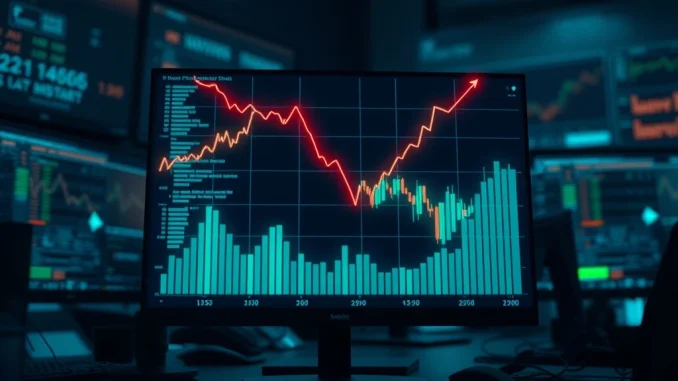
The XRP price news cycle this week is dominated by technical indicators pointing to a potential pullback. Data from analytics platform Power Protocol shows XRP’s daily RSI hovering above 75 for five consecutive sessions, a level traditionally interpreted as overbought. “Markets don’t move in straight lines,” stated Maya Chen, a senior technical analyst at Power Protocol, in a research note published yesterday. “The current RSI reading, coupled with declining volume on upward moves, suggests a consolidation or correction phase is highly probable before any sustained move higher.” Historically, similar RSI divergences for XRP have preceded corrections ranging from 15% to 25%. This pattern is unfolding as broader cryptocurrency market sentiment shows fragility, with Bitcoin struggling to maintain support above key psychological levels.
Furthermore, on-chain data reveals a noticeable increase in XRP token movements from long-term holder wallets to exchanges. This activity often precedes selling pressure. The last 72 hours have seen approximately 180 million XRP transferred to major trading platforms, according to public blockchain explorers. Consequently, the immediate technical outlook for XRP has shifted from bullish to cautiously neutral, with traders watching the $0.75 support level closely. A break below this point could trigger a swift move toward the next significant support zone near $0.68.
Chainalysis 2026 Report: Ransomware Incidents Spike, But Payouts Fall
Parallel to the market movements, blockchain intelligence firm Chainalysis released its mid-Q1 2026 Cryptocurrency Crime Report. The findings are alarming yet nuanced. The firm documented a 50% year-over-year increase in the number of distinct ransomware attacks globally. This surge is attributed primarily to the proliferation of Ransomware-as-a-Service (RaaS) kits and the targeting of critical infrastructure in Asia-Pacific and European regions.
- Attack Volume Surge: The report identifies over 2,500 confirmed ransomware attacks in Q1 2026, up from roughly 1,700 in the same period last year.
- Declining Payouts: Despite more attacks, the total value of cryptocurrency paid to ransomware actors fell by an estimated 30%. The average ransom payment dropped to $85,000, down from $145,000 in early 2025.
- Attribution Shift: A higher percentage of attacks are now conducted by smaller, less organized groups using accessible RaaS platforms, as opposed to sophisticated state-aligned actors.
“The data tells a story of adaptation, not retreat,” explained David Hansen, Chainalysis’s Director of Cyber Threat Intelligence, during a virtual press briefing. “Attackers are casting a wider net with lower-value demands, likely to increase the probability of payment. Meanwhile, improved corporate cybersecurity hygiene and widespread adoption of blockchain tracing tools by law enforcement are making large, multi-million-dollar heists harder to execute and profit from.” This trend has direct implications for privacy-focused cryptocurrencies often associated with such activities, potentially influencing their regulatory scrutiny and market perception.
Expert Analysis: The Cybersecurity-Market Correlation
Financial crime experts see a tentative link between these cybersecurity trends and market behavior. “Significant ransomware events, especially those involving large, public companies, can create short-term negative sentiment for the entire crypto asset class,” notes Dr. Lena Rodriguez, a professor of digital economics at the National University of Singapore. “However, the declining payout metric is a positive long-term signal. It demonstrates that ecosystem defenses—better tracing, improved corporate policies, and international coordination—are having a measurable impact.” This analysis is supported by a recent Financial Action Task Force (FATF) progress report, which highlighted increased compliance among virtual asset service providers. The interplay between crime statistics and investor psychology remains a critical, yet often overlooked, factor in market volatility.
Degens’ 100X Bet: The Rise of DeepSnitch AI
Amidst the correction warnings and crime reports, a distinct narrative is gaining traction on crypto social media platforms and decentralized exchange (DEX) aggregators. A cohort of decentralized finance (DeFi) speculators is funneling capital into DeepSnitch AI, a project claiming to use artificial intelligence for on-chain security and scam detection. Its token has seen a 400% increase in trading volume over the past week, according to DEX data.
The project positions itself as a direct response to the threats highlighted in reports like Chainalysis’s. Its whitepaper proposes an AI engine that scans smart contracts and wallet addresses for malicious patterns, offering a subscription-based protection service. However, the project is in its earliest stages, with its core product still in a closed beta test. This has not dampened the enthusiasm of proponents on forums, who are circulating price targets implying a 100X return from current levels. This speculative mania exemplifies the high-risk, high-reward culture that persists in certain crypto niches, often operating independently of broader market trends.
| Asset | Current Narrative | Key Driver | Primary Risk |
|---|---|---|---|
| XRP | Technical correction after overbought rally | Power Protocol RSI metrics, exchange inflows | Broader market sell-off breaking key support |
| DeepSnitch AI | Speculative 100X bet on AI security | Social media hype, fear of rising cybercrime | Unproven technology, pre-product stage, high volatility |
Market Outlook: Diverging Paths for Established and Speculative Assets
The coming weeks will likely see a divergence in trajectory between large-cap assets like XRP and micro-cap speculative plays. For XRP, analysts anticipate a period of range-bound trading or a controlled correction to healthier support levels. The focus will be on whether it can hold above its 50-day moving average and absorb the selling pressure indicated by the on-chain data. Any positive developments in its ongoing regulatory clarity or new institutional adoption partnerships could provide a floor.
Conversely, tokens like DeepSnitch AI face a binary outcome. They could experience rapid, sentiment-driven pumps followed by equally severe corrections—a common pattern for hype-driven assets. Their fate is less tied to traditional technical analysis and more to community momentum and the delivery of promised technological milestones. The broader lesson for investors is the increasing segmentation of the cryptocurrency market into asset classes with fundamentally different risk profiles and drivers.
Regulatory and Institutional Response
Institutional players are monitoring both threads of this story. The Chainalysis data is being cited in regulatory discussions about strengthening anti-money laundering (AML) frameworks for DeFi. Meanwhile, the volatility in speculative altcoins reinforces the argument for stricter investor protection rules on the periphery of the market. Major asset managers continue to focus almost exclusively on Bitcoin and Ethereum, viewing the rest of the market as too nascent or volatile for significant institutional capital. This institutional caution creates a clear dichotomy between the “blue-chip” digital asset space and the wilder frontiers of DeFi and micro-cap trading.
Conclusion
The XRP price news for March 2026 encapsulates a market at a crossroads. Technical indicators for major assets suggest a necessary cooling-off period, while alarming yet improving cybersecurity statistics paint a complex picture of the ecosystem’s health. Within this environment, the enduring appetite for extreme risk manifests in narratives like DeepSnitch AI. Investors should distinguish between the cyclical technical movements of established cryptocurrencies and the purely speculative waves in nascent projects. The key takeaways are the importance of on-chain metrics for gauging sell pressure, the tangible progress in combating ransomware economically, and the unchanged presence of high-risk speculation. The next major catalyst will be whether the broader market correction remains orderly or triggers a deeper risk-off event that impacts all asset classes, from blue-chips to degen favorites.
Frequently Asked Questions
Q1: What does an RSI above 75 mean for XRP?
An RSI (Relative Strength Index) above 70 typically suggests an asset is overbought. For XRP, a sustained reading above 75, as reported by Power Protocol, indicates a high probability of a near-term price correction or consolidation as traders take profits.
Q2: Why would ransomware attacks increase but payouts decrease?
According to Chainalysis, attackers are launching more lower-value attacks using accessible tools (Ransomware-as-a-Service). Meanwhile, companies have improved backup systems and are more reluctant to pay, and law enforcement can trace payments more effectively, making large ransoms riskier for criminals.
Q3: What is DeepSnitch AI and why are traders interested?
DeepSnitch AI is a cryptocurrency project in development that proposes using artificial intelligence to detect smart contract scams and malicious wallets. Traders are speculating on its token due to hype around its potential utility in response to rising cybercrime, hoping for exponential returns.
Q4: How does cybersecurity news affect cryptocurrency prices?
Major ransomware attacks or regulatory crackdowns linked to crypto crime can create negative media sentiment, leading to short-term selling pressure across the market. However, data showing improved defenses, like declining ransom payouts, can be viewed as a long-term positive for ecosystem legitimacy.
Q5: What is the main risk for someone buying a token like DeepSnitch AI?
The primary risks are extreme volatility, the project’s potential failure to deliver a working product, and the high likelihood of a severe price crash after a hype-driven pump. Such assets are considered highly speculative and risky.
Q6: What should an XRP holder do during a potential correction?
Holders should assess their risk tolerance and investment horizon. Technical traders might set stop-loss orders below key support levels (e.g., $0.75). Long-term investors might view a healthy correction as a potential accumulation opportunity, provided the core investment thesis for XRP remains unchanged.
Updated insights and analysis added for better clarity.
This article was produced with AI assistance and reviewed by our editorial team for accuracy and quality.