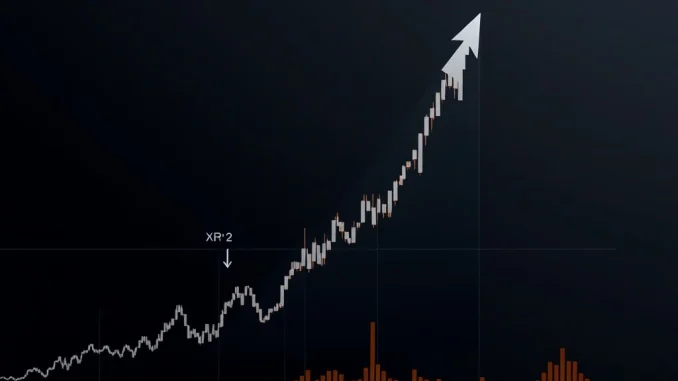
January 15, 2025 – Global cryptocurrency markets experienced a seismic shift today as XRP, Ripple’s digital asset, recorded a dramatic price surge following the release of United States Consumer Price Index (CPI) data. The unexpected inflation figures triggered a cascade of liquidations in crypto derivatives markets, with XRP experiencing an unprecedented +1,122% imbalance between long and short positions within a single hour. This event highlights the increasing sensitivity of cryptocurrency markets to traditional macroeconomic indicators and exposes structural vulnerabilities in derivative trading strategies.
XRP Liquidation Event: Analyzing the Data
The United States Bureau of Labor Statistics released January’s CPI data at 8:30 AM EST, revealing inflation figures that diverged significantly from market expectations. Within minutes, cryptocurrency derivatives platforms registered substantial liquidations across major assets. XRP experienced the most pronounced imbalance, with $76,450 in total liquidations occurring within sixty minutes. The distribution revealed a staggering asymmetry: short position liquidations accounted for $70,180 while long positions represented only $6,270.
This liquidation event created what market analysts term a “short squeeze.” Traders who had bet against XRP’s price were forced to buy back their positions to cover losses as prices rose. Consequently, this buying pressure accelerated the upward price movement, creating a feedback loop that pushed XRP’s value higher. The phenomenon demonstrates how derivative market mechanics can amplify price movements beyond what spot market fundamentals might justify.
Comparative Market Impact
While other major cryptocurrencies also experienced liquidations, XRP’s imbalance stood out for its severity. Bitcoin recorded $4.72 million in liquidations during the same period, while Ethereum saw $3.39 million. However, neither exhibited the extreme ratio between long and short positions that characterized the XRP event. This differential suggests XRP’s derivative market structure may concentrate speculative positions more intensely, making it particularly reactive to macroeconomic catalysts.
Macroeconomic Catalyst: CPI Data Analysis
The Consumer Price Index serves as a primary inflation gauge for the United States economy. Financial markets closely monitor CPI releases because they influence Federal Reserve monetary policy decisions. When today’s data indicated persistent inflationary pressures, traders rapidly adjusted their expectations regarding potential interest rate changes. This repositioning affected all risk assets, including cryptocurrencies.
Cryptocurrency markets have demonstrated increasing correlation with traditional financial indicators since 2023. Institutional adoption has brought more sophisticated trading strategies to digital assets, including derivatives positions tied to macroeconomic forecasts. The XRP liquidation event exemplifies how these connections can produce volatile, rapid market movements when data surprises occur.
Technical Market Structure
Market analysts identified several technical factors that contributed to the severity of the XRP liquidation event. First, the asset’s market depth proved relatively shallow compared to Bitcoin or Ethereum, meaning fewer orders existed to absorb sudden buying or selling pressure. Second, XRP’s derivative markets had accumulated an unusually high concentration of short positions before the CPI release, creating conditions ripe for a squeeze when sentiment shifted.
The $2.08 resistance level mentioned in trading circles represents a critical technical threshold. Some analysts suggest this price point could become a battleground if buying pressure continues. Market structure analysis reveals that liquidations often cluster around such technical levels, where stop-loss orders and margin requirements converge to create volatility spikes.
Derivative Market Dynamics and Risks
Cryptocurrency derivative trading has grown exponentially since 2020, with perpetual swaps and futures contracts enabling leveraged positions. While derivatives provide liquidity and price discovery benefits, they also introduce systemic risks. The XRP event demonstrates how leveraged positions can create cascading effects during market stress.
Derivative platforms implement automatic liquidation mechanisms when positions approach their margin limits. These liquidations occur through market orders, which can exacerbate price movements. Today’s events highlight the interconnected nature of modern crypto markets, where derivative activity directly impacts spot prices through these mechanical processes.
Regulatory Context and Market Evolution
The cryptocurrency derivatives market operates within an evolving regulatory framework. Since 2023, regulatory bodies including the U.S. Commodity Futures Trading Commission (CFTC) and Securities and Exchange Commission (SEC) have increased scrutiny of crypto derivative products. Market participants now face more stringent reporting requirements and risk management expectations.
Despite regulatory advancements, today’s events demonstrate that derivative markets remain vulnerable to sudden volatility. The concentration of positions in specific assets like XRP suggests that risk management practices may need further refinement as cryptocurrency markets mature and integrate with traditional finance.
Historical Context and Market Psychology
Short squeezes have occurred periodically throughout financial market history. The 2021 GameStop episode demonstrated how coordinated retail trading could trigger similar mechanisms in equity markets. In cryptocurrency markets, such events have become more frequent as derivative trading volumes have expanded.
Market psychology plays a crucial role in these events. Traders often herd into popular positions, creating crowded trades that become vulnerable to reversal. The XRP short positions likely represented a consensus view about the asset’s direction before the CPI release. When that consensus proved wrong, the rapid unwinding created disproportionate price effects.
Institutional Participation Patterns
Institutional investors have increased their cryptocurrency exposure significantly since 2023. Many employ sophisticated quantitative strategies that incorporate macroeconomic data. The rapid response to CPI data suggests algorithmic trading systems may have contributed to today’s volatility. These systems can execute trades within milliseconds of data releases, accelerating market movements beyond human reaction times.
XRP has attracted particular institutional interest due to its regulatory clarity following Ripple’s legal developments. This institutional presence may explain why the asset’s derivative markets developed the concentrated positions that proved vulnerable today. As institutional participation grows, understanding these dynamics becomes increasingly important for all market participants.
Market Implications and Future Outlook
The XRP liquidation event provides several important lessons for cryptocurrency market participants. First, it demonstrates the growing importance of macroeconomic awareness in crypto trading. Second, it highlights the risks associated with crowded derivative positions. Third, it suggests that certain assets may exhibit amplified reactions to market catalysts due to their specific market structures.
Looking forward, market analysts anticipate continued volatility as traders adjust to changing monetary policy expectations. The Federal Reserve’s upcoming meetings will likely produce further market movements across all risk assets. Cryptocurrency markets, with their 24/7 trading and global participation, may continue to exhibit rapid responses to traditional financial developments.
Conclusion
The XRP liquidation crisis following January’s CPI data release illustrates the maturation and complexity of modern cryptocurrency markets. What began as a routine economic report triggered a chain reaction that exposed structural imbalances in XRP’s derivative markets. The resulting short squeeze produced dramatic price movements and substantial losses for positioned traders. This event underscores the interconnected nature of contemporary financial markets, where traditional economic indicators now exert immediate influence on digital asset valuations. As cryptocurrency markets continue evolving, understanding these derivative dynamics and their relationship to macroeconomic developments becomes essential for informed participation.
FAQs
Q1: What caused the XRP price spike on January 15, 2025?
The price spike resulted primarily from a “short squeeze” triggered by unexpected US Consumer Price Index (CPI) data. Traders who had bet against XRP were forced to buy back their positions as prices rose, creating accelerating upward momentum.
Q2: How significant was the liquidation imbalance in XRP derivatives?
The imbalance reached +1,122% between long and short positions, with $70,180 in short liquidations versus only $6,270 in long liquidations within one hour. This extreme ratio indicates a heavily one-sided market positioning before the event.
Q3: How does CPI data affect cryptocurrency markets?
CPI data influences Federal Reserve monetary policy expectations. Since cryptocurrencies are considered risk assets, changes in interest rate expectations affect their valuation. Institutional trading algorithms often respond immediately to such data releases.
Q4: What is a short squeeze in cryptocurrency markets?
A short squeeze occurs when traders who have borrowed and sold an asset (betting on price declines) are forced to buy it back as prices rise. This buying pressure further increases prices, creating a feedback loop that can produce rapid, dramatic price movements.
Q5: Are cryptocurrency derivatives markets regulated?
Cryptocurrency derivatives face increasing regulatory scrutiny globally. In the United States, the CFTC oversees crypto derivatives, while other jurisdictions have developed their own frameworks. Regulation has intensified since 2023 but continues evolving alongside market developments.
Updated insights and analysis added for better clarity.
This article was produced with AI assistance and reviewed by our editorial team for accuracy and quality.