Xaman Wallet’s 0.8% Fee: The Critical Debate Over Who Funds XRPL Infrastructure
Global, May 2025: A 0.8% trading fee implemented by the popular Xaman Wallet has ignited a significant debate within the XRP community. This discussion transcends a simple cost analysis, striking at the core of a fundamental question: who is responsible for funding the infrastructure of decentralized networks like the XRP Ledger? The distinction between a software fee and a protocol fee is more critical than many users initially realize.
Xaman Wallet’s 0.8% Fee and the Immediate Community Reaction
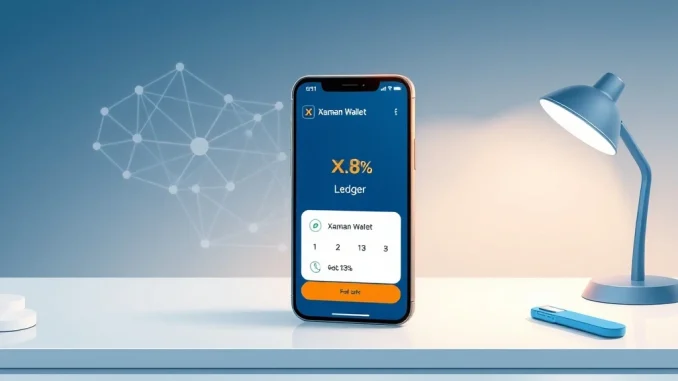
The Xaman Wallet, formerly known as Xumm, announced a 0.8% fee on certain swap and trading functionalities within its application. This move was not met with universal applause. Across social media platforms and community forums, a segment of the XRP holder base pushed back vigorously. Critics questioned the necessity of the fee, especially when users can interact with the XRP Ledger (XRPL) directly for free or use other non-custodial interfaces. The initial perception for some was that this charge represented a new cost to use the XRPL itself, a misunderstanding that fueled much of the early controversy. This reaction highlights a common point of confusion in the crypto space: the conflation of application-layer services with the underlying blockchain protocol.
Decoding the Distinction: Software Layer vs. Protocol Layer
To understand the fee’s purpose, one must separate the XRPL from the software built atop it. The XRP Ledger is the foundational, decentralized blockchain protocol. It processes transactions, maintains the ledger, and operates through a consensus mechanism involving independent validators. Using the XRPL’s core functions—like sending XRP from one address to another—incurs a minimal transaction fee, typically a fraction of a cent, which is burned by the network. This is the protocol layer.
Xaman Wallet operates at the software or application layer. It provides a user-friendly interface, advanced trading tools, secure key management, and integration with decentralized exchanges (DEXs) on the XRPL. The 0.8% fee is applied to value-added services within this software layer, primarily for token swaps that leverage aggregated liquidity. Crucially, this revenue is earmarked to fund the ongoing development, security, and customer support for the Xaman application itself, which in turn supports the broader XRPL ecosystem by onboarding and retaining users.
The Historical Context of Funding Open-Source Infrastructure
The challenge of sustainably funding open-source software and public infrastructure is not unique to crypto. For decades, projects from web servers to programming languages have grappled with this issue. The traditional models—corporate sponsorship, foundation grants, or volunteer work—often lead to instability. Within blockchain, the problem is acute. While transaction fees fund network security (like in Bitcoin or Ethereum), they do not directly fund the user-facing applications that drive adoption. Xaman’s model represents one attempt to solve this: a dedicated revenue stream for a critical piece of ecosystem software, ensuring its longevity and quality without relying solely on venture capital or donations.
Analyzing the Free Alternatives and Their Trade-offs
The existence of free alternatives is a central point in the debate. Users can indeed interact with the XRPL without paying Xaman’s fee.
- Direct Ledger Access: Technically sophisticated users can run their own node or use command-line tools to submit transactions directly to the network, paying only the negligible XRPL transaction fee.
- Other Wallet Interfaces: Competing non-custodial wallets offer basic transaction capabilities without swap fees.
- Centralized Exchanges (CEXs): Users can buy, sell, and trade XRP on traditional exchanges, though this introduces custody risk and different fee structures.
The trade-off is clear. Free or low-cost options often require more technical knowledge, offer a less polished user experience, or lack integrated features like multi-signature security or easy token swapping. Xaman’s value proposition is convenience, security, and advanced functionality bundled into a single application—services that require a dedicated team to develop and maintain.
The Broader Implications for XRPL Ecosystem Health
This debate has far-reaching consequences for the health of the XRPL ecosystem. A robust network requires more than just a functioning protocol; it needs a thriving suite of applications, developer tools, and support services. If high-quality applications like Xaman cannot find sustainable business models, they may stagnate, reduce services, or shut down. This would harm the overall user experience and could slow XRPL adoption. Conversely, a successful model could incentivize other developers to build professional-grade tools for the XRPL, knowing a path to sustainability exists. The community’s acceptance or rejection of such fees will directly signal what it values: pure minimal cost, or a balanced ecosystem with funded, reliable infrastructure.
Comparative Fee Structures in the Crypto Wallet Space
Placing Xaman’s 0.8% fee in a wider context is instructive. Many popular non-custodial wallets that offer built-in swapping services charge similar or higher fees. These fees are typically how the wallet application or its liquidity partners generate revenue, as they do not custody user funds. The model is distinct from centralized exchanges, which charge trading fees but also hold user assets. The table below provides a simplified comparison:
| Service Type | Example | Typical Fee Model | Who Custodies Funds? |
|---|---|---|---|
| Non-Custodial Wallet with Swaps | Xaman, MetaMask | Percentage fee on swaps (0.5% – 1%+) | User |
| Centralized Exchange (CEX) | Binance, Coinbase | Taker/Maker fees (0.1% – 0.6%) | Exchange |
| Protocol-Level Transaction | XRPL Direct Send | Minimal fixed fee (~0.00001 XRP) | User |
Conclusion: A Necessary Conversation for a Sustainable Future
The debate over Xaman Wallet’s 0.8% fee is a necessary and healthy growing pain for the XRP ecosystem. It forces a critical examination of how essential software infrastructure is funded in a decentralized world. The key takeaway is the vital distinction between a fee for a convenient software application and a cost imposed by the XRP Ledger protocol itself. The long-term health of XRPL depends not just on its technology, but on the economic sustainability of the applications that give it utility. Whether the community embraces this model, seeks alternatives, or pushes for different funding mechanisms will shape the trajectory of the XRPL for years to come.
FAQs
Q1: Is the 0.8% fee charged on every XRP transaction I make?
No. The fee is specifically applied to token swap and trading functions within the Xaman Wallet app. Sending XRP directly to another wallet address on the XRPL incurs only the standard, minimal network transaction fee.
Q2: Does this fee mean the XRP Ledger itself is no longer low-cost?
Absolutely not. The XRP Ledger protocol remains extremely low-cost. The 0.8% fee is charged by the Xaman Wallet software, a separate application built on top of the XRPL, for its specific services.
Q3: Where does the money from this fee go?
According to Xaman’s developers, the revenue from this fee is used to fund the ongoing development, maintenance, security updates, and customer support for the Xaman Wallet application. It is a business model to ensure the software’s sustainability.
Q4: Can I avoid the fee entirely and still use the XRPL?
Yes. You can use the XRPL without ever paying Xaman’s fee by using a different wallet interface, by running your own node, or by simply holding XRP in a non-custodial wallet without using its swap features.
Q5: How does this fee compare to what I’d pay on a centralized exchange?
It is generally higher than the base trading fee on a major centralized exchange. However, on an exchange, you do not have custody of your assets. Xaman’s fee is for a service that allows you to trade while maintaining full, non-custodial control of your funds, which is a different security model and value proposition.
Related News
- VAP Group in association with Abu Dhabi Convention & Exhibition Bureau is set to host all AI futurists at The Global AI Show at Abu Dhabi, on 8-9th December 2025
- The MASK Coin: Green Energy Meets Meme Culture on Solana
- TEAMZ SUMMIT 2025. Title, Diamond and Gold sponsor slots sold out! We are accepting only a few sponsorship slots left!
Related: Bitcoin Liquidations Reveal Stunning 'Burj Khalifa' Towers on Market Liquidity Map
Related: Claude Code Security Triggers Devastating $15B Cybersecurity Stock Plunge