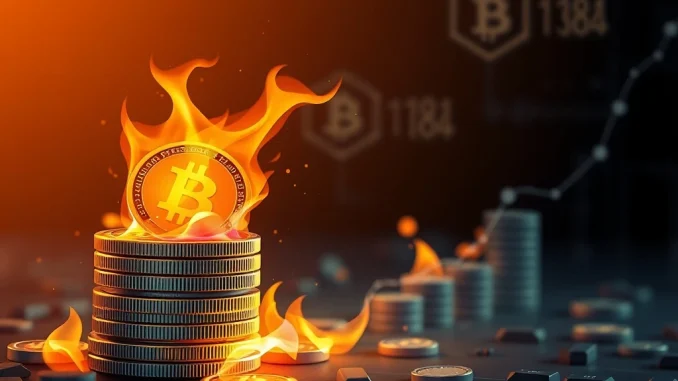
In a significant move for the decentralized finance (DeFi) sector, World Liberty Financial (WLFI) recently announced a substantial **WLFI token burn**. This strategic initiative aims to reduce the total supply of its native token, potentially enhancing its value proposition. The news, shared via the project’s official X account, details a massive burn of over 6.92 million WLFI tokens, signaling a clear commitment to its long-term economic model.
World Liberty Financial’s Strategic Token Reduction
World Liberty Financial operates as a prominent DeFi project. It has gained attention due to its reported leadership by the Trump family. The foundation has actively implemented measures to bolster its ecosystem and token value. A core component of this strategy involves token burning, a process that permanently removes tokens from circulation. Consequently, this action decreases the overall supply.
The latest announcement confirms the successful execution of a two-pronged approach. This approach combined protocol fee burning with a targeted open market buyback. This comprehensive strategy underlines the foundation’s dedication to sustainable growth and robust **DeFi tokenomics**. Such initiatives often instill greater confidence among investors and community members.
Unpacking the 6.92 Million WLFI Token Burn
The total **WLFI token burn** amounted to precisely 6,923,416 WLFI. This figure represents a significant portion of the token’s circulating supply. The burn was executed through two distinct mechanisms, each contributing to the overall reduction:
- Protocol Fee Burning: The foundation burned 3,109,320 WLFI tokens. These tokens were generated directly from fees collected across its Ethereum and Binance Smart Chain (BSC) protocols. This mechanism automatically removes tokens as the network sees more activity.
- Open Market Buyback and Burn: An additional 3,814,095 WLFI tokens were acquired from the open market. World Liberty Financial utilized stablecoins like USD1, USDC, and USDT for these purchases. The average acquisition price stood at approximately $0.2093 per token.
This dual approach demonstrates a proactive stance. It leverages both organic network activity and direct market intervention. Therefore, it effectively manages token supply.
The Power of Cryptocurrency Buyback Programs
A **cryptocurrency buyback** program involves a project purchasing its own tokens from the open market. Following the purchase, these tokens are typically burned. This process permanently removes them from circulation. Projects implement buybacks for several strategic reasons:
- Supply Reduction: Fewer tokens in circulation can lead to increased scarcity.
- Price Support: Market demand from the buyback can help stabilize or increase token prices.
- Investor Confidence: It signals financial strength and a commitment to token value.
- Deflationary Mechanism: It creates a deflationary pressure, counteracting inflation.
World Liberty Financial’s recent buyback aligns with these common objectives. It aims to create a more valuable and stable asset for its holders. The use of multiple stablecoins for the buyback also showcases a flexible and well-resourced strategy.
Enhancing DeFi Tokenomics Through Strategic Burns
Token burning is a cornerstone of effective **DeFi tokenomics**. It represents a deliberate effort to manage the supply-side economics of a digital asset. Unlike traditional fiat currencies, which central banks can print at will, many cryptocurrencies integrate built-in mechanisms to control supply. A burn event is a powerful example of such a mechanism. When tokens are burned, they are sent to an unspendable address, making them permanently inaccessible. This action ensures a verifiable and transparent reduction in total supply.
For World Liberty Financial, integrating fee burning with buybacks strengthens its economic model. It provides a clear pathway for value accrual. This proactive management of supply is crucial in the dynamic DeFi landscape. It helps to differentiate projects and attract long-term investors.
The Broader Impact of Token Deflationary Mechanism
The implementation of a robust **token deflationary mechanism** by World Liberty Financial is a key indicator of its long-term vision. Such mechanisms are designed to counteract inflationary pressures. They help maintain or increase the purchasing power of a token over time. In a market where new tokens are constantly minted, a strong burn strategy can be a significant advantage. It ensures that the token’s scarcity increases as the project matures.
Furthermore, these initiatives often resonate positively with the broader crypto community. They demonstrate accountability and a commitment to token holder value. As the DeFi space evolves, projects with clear and effective tokenomics, including substantial burn programs, tend to garner more trust and sustained interest. This burn follows an earlier announcement, indicating a planned and consistent approach.
In conclusion, World Liberty Financial’s burn of 6.92 million WLFI tokens marks a significant milestone. It reinforces the project’s commitment to a strong **token deflationary mechanism**. By combining protocol fee burning with a strategic **cryptocurrency buyback**, WLFI aims to foster long-term value and stability for its community. This move highlights the importance of innovative **DeFi tokenomics** in today’s rapidly evolving digital asset landscape. It ultimately positions **World Liberty Financial** for continued growth and resilience.
Frequently Asked Questions (FAQs)
What is a WLFI token burn?
A WLFI token burn is the process of permanently removing a specific quantity of WLFI tokens from circulation. This is done by sending them to an unspendable wallet address. This action reduces the total supply of WLFI tokens.
Why did World Liberty Financial conduct this WLFI token burn?
World Liberty Financial conducted this burn to implement a deflationary mechanism. The goal is to reduce the token’s total supply, potentially increasing its scarcity and value over time. It also aims to enhance investor confidence and stabilize the token’s market dynamics.
How many WLFI tokens were burned in total?
A total of 6,923,416 WLFI tokens were burned. This includes 3,109,320 WLFI from protocol fees and an additional 3,814,095 WLFI acquired through an open market buyback.
What is the difference between burning from protocol fees and a cryptocurrency buyback?
Burning from protocol fees involves automatically destroying tokens collected as transaction fees on the network. A cryptocurrency buyback, conversely, means the project actively purchases its tokens from the open market using other assets (like stablecoins) before burning them.
What impact does this burn have on WLFI’s DeFi tokenomics?
This burn significantly impacts WLFI’s DeFi tokenomics by making the token more deflationary. Reducing the supply can increase the token’s value per unit, as long as demand remains constant or grows. It signals a robust strategy for long-term value creation within the decentralized finance ecosystem.
Is this a one-time event or part of an ongoing strategy?
The announcement indicates this burn follows an earlier commitment to begin a buyback and burn program. This suggests it is part of an ongoing, strategic initiative by World Liberty Financial to manage its token supply and tokenomics effectively.
This article was produced with AI assistance and reviewed by our editorial team for accuracy and quality.