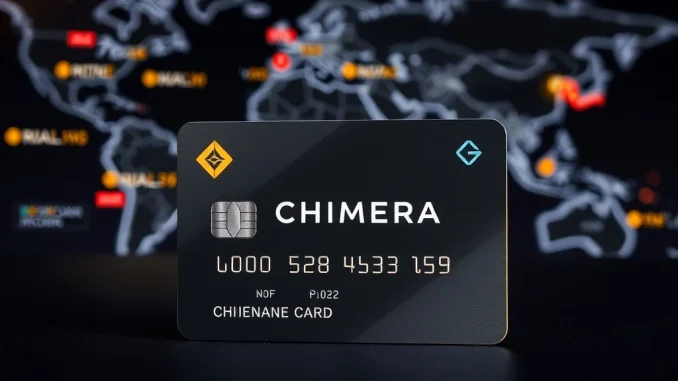
London, United Kingdom – April 2025: A significant development in the convergence of digital and traditional finance is underway. Wirex, a prominent digital payments platform, is facilitating the launch of the Chimera Card, a Bitcoin-funded debit card designed for seamless spending at a reported 80 million merchant outlets worldwide. This move represents a substantial step toward integrating cryptocurrency into everyday commerce, potentially altering how consumers interact with digital assets.
Wirex and the Chimera Card Partnership
The collaboration between Wirex and the entity behind the Chimera Card centers on infrastructure and compliance. Wirex is not issuing the card itself but is providing the critical technological backbone and regulatory framework necessary for its operation. This includes payment processing, card network integration, and the complex systems that convert Bitcoin into local fiat currency at the point of sale. Wirex brings nearly a decade of experience in the crypto-fiat bridge space, having launched its own crypto-enabled debit cards in multiple regions. Their established partnerships with major payment processors like Visa and Mastercard are likely instrumental in achieving the reported global reach of the Chimera Card.
The Chimera Card itself functions as a debit card, not a credit instrument. Users will fund it directly from a cryptocurrency wallet, presumably starting with Bitcoin. The core technical challenge such products solve is instant conversion. When a user makes a purchase, the system automatically sells the equivalent amount of Bitcoin for the merchant’s local currency—euros, dollars, yen, etc.—and settles the transaction. This process happens in seconds, shielding the merchant from cryptocurrency volatility and ensuring compliance with local financial regulations.
The Mechanics of Bitcoin-Powered Spending
For the average user, the experience aims to be indistinguishable from using a standard bank debit card. The underlying technology, however, involves several coordinated steps. First, a user loads Bitcoin onto their Chimera Card account, which is held in a secure, custodial wallet managed by the service provider. This is a critical distinction from decentralized, non-custodial wallets; the provider holds the private keys, simplifying the transaction process but introducing a different trust model.
At the moment of purchase, the following sequence occurs:
- Authorization: The card details are transmitted to the payment network.
- Conversion: Wirex’s systems calculate the exact fiat amount required and execute a market order to sell the corresponding Bitcoin value.
- Settlement: The fiat proceeds are instantly transferred to the merchant’s acquiring bank via traditional rails.
This model, often called “crypto-to-fiat at point-of-sale,” has existed for years but has been limited by regional availability, high fees, and regulatory hurdles. The scale proposed by the Chimera Card partnership suggests a maturation of this model, leveraging Wirex’s existing licenses and global compliance framework.
Historical Context and Market Evolution
The quest to spend Bitcoin like cash is nearly as old as Bitcoin itself. Early attempts involved direct peer-to-peer trades or limited gift cards. The first generation of crypto debit cards emerged around 2015-2017, offered by companies like Wirex and others. These faced significant challenges: banking partners were skittish, regulatory landscapes were unclear, and the technology was clunky. Many cards were abruptly canceled by issuing banks.
The market evolved through a period of consolidation and regulatory navigation. Key developments included obtaining specific e-money licenses in jurisdictions like the UK (FCA) and the European Union, which provided a legal basis for operation. The current wave, exemplified by the Chimera Card announcement, focuses on scalability, lower fees, and mainstream user experience. It builds on the established infrastructure of global card networks, treating cryptocurrency as just another funding source within a regulated financial product.
Implications for Consumers and Merchants
For cryptocurrency holders, the primary implication is liquidity. Bitcoin transitions from a predominantly investment or savings asset to a more functional medium for daily exchange. This could appeal to users in regions with unstable local currencies or those who receive income in cryptocurrency. However, users must consider tax implications, as each spending transaction typically constitutes a taxable event (a disposal of cryptocurrency) in many countries, including the United States and much of Europe.
For the 80+ million merchants, the change is largely invisible. They receive payment in their local fiat currency, as they always have. They do not need to accept Bitcoin directly, understand blockchain technology, or manage cryptocurrency wallets. The innovation and risk are absorbed by the payment infrastructure providers like Wirex. This “under-the-hood” integration is strategically crucial for achieving mass adoption, as it requires no behavioral change from the vast majority of businesses.
The table below outlines the key differences between traditional, early crypto, and this new generation of cards:
| Feature | Traditional Debit Card | Early Crypto Cards (c. 2017) | Chimera Card Model (2025) |
|---|---|---|---|
| Funding Source | Bank Account (Fiat) | Cryptocurrency Wallet | Cryptocurrency Wallet |
| Merchant Receives | Local Fiat | Local Fiat (via partner) | Local Fiat (via licensed provider like Wirex) |
| User Experience | Standard POS/Online Checkout | Often clunky, slow reloads | Aims for standard, seamless checkout |
| Regulatory Status | Highly Regulated | Unclear/Gray Area | Built on Licensed Infrastructure |
| Global Reach | Defined by Card Network | Very Limited, Regional | Claims 80M+ Merchant Network |
Expert Analysis on Regulatory and Security Considerations
Financial technology analysts point to regulatory compliance as the single largest factor determining the success or failure of products like the Chimera Card. Wirex’s role is pivotal here. By acting as the regulated entity, Wirex must ensure adherence to Anti-Money Laundering (AML) and Know Your Customer (KYC) regulations across multiple jurisdictions. This involves verifying user identities, monitoring transactions for suspicious activity, and reporting to authorities as required. The custodial model, while sometimes criticized by decentralization purists, is what makes this level of regulatory compliance feasible at scale.
Security is another paramount concern. While the blockchain underlying Bitcoin is secure, the points of vulnerability are the user’s account with the card provider and the conversion process. Reputable providers employ bank-level security: multi-signature wallets, cold storage for most funds, and robust fraud detection systems. Users are trading the responsibility of securing their own private keys for the convenience and consumer protections (like chargeback processes) offered by a regulated financial service.
Conclusion
The partnership between Wirex and the Chimera Card represents a significant inflection point in the practical use of Bitcoin. By leveraging established payment rails and a strong regulatory framework, it seeks to move cryptocurrency spending from a niche activity to a mainstream convenience. The potential to access over 80 million merchants worldwide could dramatically increase the utility of Bitcoin as a day-to-day financial tool. However, its long-term success will depend on the reliability of the service, the clarity of its fee structure, and its ability to navigate the ever-evolving global regulatory environment. This development is less about a technological breakthrough and more about the sophisticated integration of cryptocurrency into the existing, global financial system.
FAQs
Q1: How does the Chimera Card actually work?
The Chimera Card is a debit card funded by Bitcoin. When you make a purchase, Wirex’s systems instantly convert your Bitcoin into the local currency needed by the merchant, who receives normal payment. You spend crypto, the merchant gets cash.
Q2: Do merchants need to accept Bitcoin to take this card?
No. Merchants do not need to make any changes. They receive settlement in their local fiat currency (e.g., USD, EUR) through standard payment networks, just as they would from any other Visa or Mastercard transaction.
Q3: What are the potential fees for using the Chimera Card?
While specific fees are not detailed in the announcement, similar crypto card products typically involve fees for currency conversion (spread or percentage), ATM withdrawals, monthly account maintenance, and possibly card issuance. Users should scrutinize the final fee schedule.
Q4: Are there tax implications when spending Bitcoin this way?
Yes, in most countries. Each time Bitcoin is sold to fund a purchase, it is considered a disposal of a capital asset. This may create a taxable capital gain or loss, depending on the Bitcoin’s price when acquired versus when spent. Users should consult a tax professional.
Q5: How is this different from earlier cryptocurrency debit cards?
The core difference is scale and regulatory maturity. Earlier cards often had limited geographic reach, unreliable banking partners, and operated in regulatory gray areas. The Chimera Card leverages Wirex’s established, licensed infrastructure and partnerships to aim for true global usability and stability.
This article was produced with AI assistance and reviewed by our editorial team for accuracy and quality.