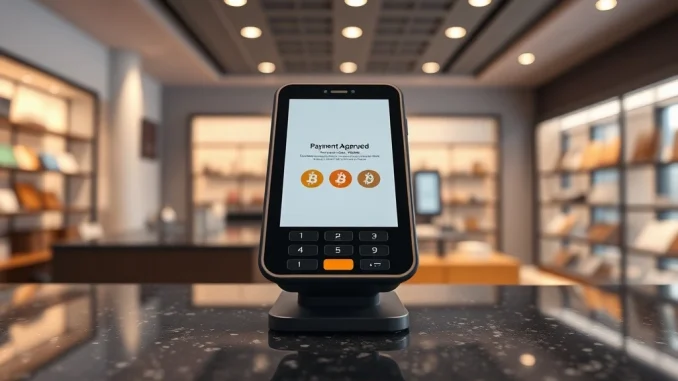
LONDON, March 15, 2026 – Payment Service Providers (PSPs) globally are undergoing a critical transformation, driven by the rapid adoption of white label crypto payment gateways. These turnkey solutions now allow traditional and digital PSPs to seamlessly integrate Bitcoin, Ethereum, and major stablecoin processing for their merchants, alongside features like instant settlement and robust API frameworks. Consequently, a sector once hesitant is now racing to capture a share of the projected $4.7 trillion crypto-commerce market by 2027, according to a recent Juniper Research forecast. The shift marks a definitive move from niche experimentation to core banking infrastructure.
White Label Crypto Gateways: The Core Infrastructure for Modern PSPs
Essentially, a white label crypto payment gateway acts as a private-label technology stack. A PSP licenses the complete backend and frontend solution from a specialized provider like B2BinPay or NOWPayments. Subsequently, the PSP rebrands and deploys it as its own service. “The value proposition for PSPs in 2026 is unambiguous,” states Eliza Chen, Lead Fintech Analyst at Gartner. “They gain enterprise-grade crypto processing, compliance tooling, and risk management overnight without a five-year, nine-figure R&D cycle. Our data shows integration timelines have collapsed from 18 months in 2023 to under 90 days today.” This acceleration stems from standardized API integration protocols now adopted industry-wide.
Furthermore, the 2025 finalization of the Travel Rule protocol (TRP) by the Financial Action Task Force (FATF) provided regulatory clarity. Major gateway providers pre-integrated TRP compliance into their 2026 software suites. Therefore, PSPs can onboard merchants with confidence, automating anti-money laundering (AML) and know-your-customer (KYC) checks across both fiat and crypto transactions. This regulatory scaffolding was the final piece needed for mainstream adoption.
Instant Settlement and Stablecoin Dominance Reshape Cash Flow
The most transformative feature for merchants is the move to instant settlement. Traditional card networks often impose 2-7 day settlement cycles, creating cash flow friction. In contrast, a crypto gateway settling in USDC or EURT can finalize transactions in minutes, 24/7. “For our e-commerce clients, this isn’t just convenient; it’s a competitive moat,” explains Marcus Thorne, CEO of European PSP HexaPay, which launched its white-label crypto suite in January 2026. “They can reinvest revenue daily, not weekly. Our data shows a 15% average improvement in merchant working capital efficiency.”
- Elimination of Chargeback Risk: Cryptocurrency transactions are irreversible, removing the costly chargeback process that costs merchants billions annually.
- Access to New Demographics: PSPs can now serve the estimated 450 million global crypto asset holders directly, a market largely untapped by traditional rails.
- Reduced Cross-Border Friction: Stablecoin settlements bypass correspondent banking networks, slashing fees for international merchants by up to 80%.
Expert Analysis: The Strategic Imperative for PSPs
Industry leaders frame this as an existential shift. “A PSP without a crypto strategy in 2026 is a PSP planning for obsolescence,” argues Dr. Amara Singh, a former SWIFT architect and author of ‘The Tokenized Economy.’ She points to the rapid growth of Central Bank Digital Currency (CBDC) pilot programs as a parallel driver. “The infrastructure built for crypto gateways is directly transferable to CBDCs. PSPs investing now are future-proofing for the next decade of money movement.” This perspective is echoed in a recent Bank for International Settlements (BIS) paper highlighting the convergence of traditional and digital asset payment rails.
API Integration and the Battle for Developer Mindshare
The technical battleground has shifted to API integration simplicity and flexibility. Modern gateways offer RESTful APIs with comprehensive SDKs for all major programming languages. Crucially, they provide webhook support for real-time notification of transactions, failed payments, and settlement confirmations. This allows PSPs to weave crypto processing directly into their existing platforms and merchant dashboards. A comparison of leading 2026 gateway providers highlights key differentiators:
| Provider | Key Feature (2026) | Settlement Speed | Supported Assets |
|---|---|---|---|
| Gateway A | Non-Custodial Model | 2-5 minutes | BTC, ETH, 12 Stablecoins |
| Gateway B | Auto-Fiat Conversion API | Instant* | BTC, 8 Stablecoins, CBDC Pilots |
| Gateway C | DeFi Yield Integration | 5-10 minutes | 50+ Assets, Cross-Chain |
*Via direct stablecoin settlement; conversion to bank fiat adds 1 business day. The choice between custodial and non-custodial models remains a primary strategic decision for PSPs, balancing security control with regulatory complexity.
The Road Ahead: Regulation, Interoperability, and CBDC Convergence
The trajectory for the next 18-24 months is becoming clear. Firstly, the European Union’s Markets in Crypto-Assets (MiCA) regulation, fully enacted in December 2025, establishes a unified licensing regime. Major gateway providers are now seeking MiCA approval, which will act as a passport for their PSP clients across the EU. Secondly, work on cross-chain interoperability protocols like Chainlink’s CCIP will enable gateways to settle transactions across any blockchain, further reducing friction.
Merchant and Consumer Adoption Signals
On the ground, adoption signals are strong. A Q1 2026 survey by PaymentsSource found that 67% of mid-market online merchants are “actively evaluating” or “in integration” with a PSP-offered crypto option, up from 22% in 2024. The driver is not just crypto-native customers but also the demand for faster, cheaper B2B and cross-border invoices. Consumer-facing apps from major PSPs are beginning to unify fiat and crypto balances in a single interface, a trend expected to become standard by late 2027.
Conclusion
The integration of white label crypto payment gateways is no longer a speculative trend but a core operational upgrade for competitive PSPs in 2026. The combination of instant stablecoin settlement, robust API integration, and hardening regulatory frameworks has created a viable, scalable path forward. Providers who leverage these gateways are unlocking new revenue streams, solving merchant pain points around cash flow and cross-border fees, and building infrastructure compatible with the future of digital money. The key watchpoint for the remainder of 2026 will be the speed of merchant onboarding and the emergence of clear market leaders in the white-label provider space, as the race to define the next generation of payments accelerates.
Frequently Asked Questions
Q1: What exactly is a white label crypto payment gateway for PSPs?
A white label crypto payment gateway is a fully developed payment processing platform that a Payment Service Provider (PSP) licenses and rebrands as its own. It allows the PSP to offer its merchants the ability to accept cryptocurrencies like Bitcoin and stablecoins without building the complex underlying technology from scratch.
Q2: How does instant settlement with stablecoins benefit merchants?
Instant settlement means merchants receive funds in minutes, 24/7, instead of waiting days for traditional card network settlements. This dramatically improves cash flow, allows for daily reinvestment, and eliminates the risk of chargebacks associated with credit card payments.
Q3: What are the main regulatory considerations for PSPs in 2026?
PSPs must ensure their chosen gateway provider complies with relevant regulations like the EU’s MiCA framework, the FATF Travel Rule, and local AML/KYC laws. Reputable white-label providers pre-package this compliance, significantly reducing the legal burden on the PSP.
Q4: Can a small or regional PSP realistically offer this service?
Yes, that’s the primary advantage of the white-label model. It democratizes access to advanced crypto payment technology. A regional PSP can compete with global giants by offering cutting-edge crypto services through a licensed gateway, with integration often taking less than 90 days.
Q5: How does API integration work for these gateways?
Providers offer well-documented REST APIs and Software Development Kits (SDKs). A PSP’s developers use these tools to connect their existing payment platform to the gateway, enabling functions like creating payment invoices, checking transaction status, and managing settlements programmatically.
Q6: What happens if the price of Bitcoin is volatile at the time of a sale?
Most gateways for merchants are designed around stablecoins, not volatile assets like Bitcoin. The gateway instantly converts a customer’s Bitcoin payment into a stablecoin like USDC at the point of sale, and the merchant receives that stablecoin value. This shields the merchant from market volatility.
Updated insights and analysis added for better clarity.
This article was produced with AI assistance and reviewed by our editorial team for accuracy and quality.