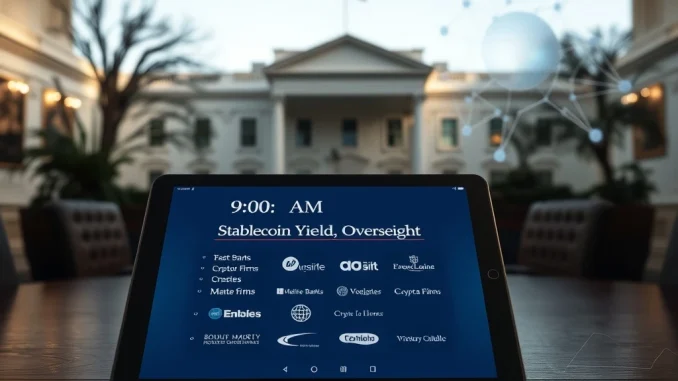
Washington, D.C., April 2025: The White House will convene its third high-level meeting focused on stablecoin yields tomorrow at 9:00 A.M. ET, marking a significant escalation in the federal government’s efforts to understand and potentially regulate this critical segment of the cryptocurrency market. This session, first reported by Fox Business journalist Eleanor Terrett, will bring together a select group of representatives from both the traditional banking sector and the digital asset industry, signaling a continued push for collaborative policy development. The meeting’s agenda centers on the mechanisms, risks, and economic implications of yields generated by stablecoins—digital currencies pegged to assets like the US dollar.
White House Stablecoin Yield Meeting: Context and Escalation
This third gathering is not an isolated event but part of a deliberate, escalating sequence of engagements initiated by the Biden administration. The first meeting, held in late 2024, served as an introductory roundtable, establishing basic definitions and identifying key stakeholder concerns. A second, more technical session followed, diving into the mechanics of how stablecoin issuers and decentralized finance (DeFi) protocols generate returns for holders, often through lending, staking, or treasury management strategies. The progression to a third meeting indicates that preliminary discussions have identified specific, complex issues requiring deeper analysis and that the administration is moving closer to formulating concrete policy positions. The consistent 9:00 A.M. ET timing suggests a formal, scheduled series rather than ad-hoc consultations.
Stablecoin Yield Mechanics and Regulatory Concerns
To understand the meeting’s importance, one must grasp what stablecoin yields entail. Unlike volatile cryptocurrencies like Bitcoin, stablecoins aim to maintain a steady value. However, holders can often earn interest or “yield” on these assets by depositing them into specific protocols or platforms. These yields are generated through several primary methods:
- Lending: The stablecoins are loaned to borrowers, with interest paid to the depositor.
- Protocol Rewards: New tokens are issued as incentives for providing liquidity to a decentralized exchange or other platform.
- Traditional Finance Integration: Issuers may invest reserve assets in short-term Treasuries or commercial paper, passing a portion of the returns to holders.
Regulators, including those from the Treasury Department, the Federal Reserve, and the SEC, are concerned about the systemic risks these practices might pose. Key questions include the transparency and safety of the underlying reserves, the potential for a “run” on a stablecoin if yields collapse, and whether these products constitute unregistered securities. The table below outlines the core regulatory dilemmas:
| Regulatory Body | Primary Concern | Potential Framework |
|---|---|---|
| Securities and Exchange Commission (SEC) | Whether yield-bearing stablecoins are investment contracts (securities). | Application of the Howey Test. |
| Office of the Comptroller of the Currency (OCC) | Banking system exposure and reserve asset safety. | Interagency guidance for bank-issued stablecoins. |
| Financial Stability Oversight Council (FSOC) | Systemic risk to the broader financial system. | Designation of activities or entities as systemically important. |
The Historical Precedent: From Money Market Funds to Digital Assets
The regulatory scrutiny of stablecoin yields draws direct parallels to historical financial innovations, most notably money market mutual funds (MMFs) in the 1970s and 2000s. MMFs offered bank-like deposits with higher yields, promising stability and liquidity. The 2008 financial crisis exposed their vulnerability, leading to a “breaking of the buck” for the Reserve Primary Fund and subsequent sweeping reforms by the SEC. Regulators are now examining whether yield-bearing stablecoins represent a 21st-century digital equivalent, posing similar liquidity and stability risks but with the added complexity of blockchain technology and 24/7 global markets. This historical context is likely a central topic in the White House discussions, informing how to preemptively address risks rather than react to a crisis.
Meeting Participants and Industry Implications
While the official attendee list remains confidential, sources indicate the meeting includes a balanced mix of voices. From the traditional finance side, representatives from systemically important banks and payment processors are expected. The cryptocurrency delegation likely includes executives from major regulated stablecoin issuers like Circle (USDC) and Paxos (USDP), as well as experts from leading DeFi foundations. The absence of more speculative crypto projects underscores the meeting’s focus on the intersection of stable digital money with the established financial system. For the industry, the outcomes of these meetings will shape the operational future of yield products. Possible regulatory paths include:
- Licensing Regimes: Requiring yield-generating platforms to obtain federal or state licenses.
- Reserve Requirements: Mandating strict, audited, and liquid backing for any stablecoin offering a yield.
- Disclosure Rules: Enforcing clear, standardized risk disclosures for yield-bearing products.
- Activity Limitations: Potentially restricting the types of investments used to generate yields.
Conclusion: A Pivotal Moment for Crypto Policy
The third White House stablecoin yield meeting represents a pivotal moment in the maturation of US cryptocurrency policy. It demonstrates a move beyond theoretical debate into the granular, technical work of crafting rules for a multi-trillion dollar segment of the digital economy. The collaborative inclusion of both crypto and banking representatives suggests a pragmatic approach, recognizing that effective regulation requires industry input. The timeline of these meetings shows a clear, deliberate pace, with tomorrow’s session likely focusing on narrowing policy options and assessing their real-world impact. The decisions informed by this dialogue will not only affect the viability of yield products but will also set a foundational precedent for how the United States governs the broader digital asset ecosystem, balancing innovation with consumer protection and financial stability.
FAQs
Q1: What is the purpose of the White House stablecoin yield meetings?
The meetings aim to educate policymakers and gather industry input on the complex mechanisms and risks associated with yields generated by stablecoins. The goal is to inform potential federal regulatory frameworks that ensure financial stability and consumer protection.
Q2: Why are stablecoin yields a concern for regulators?
Regulators are concerned about the opacity of reserve assets, the potential for misleading “risk-free” return promises, the liquidity risks if many users withdraw simultaneously, and whether these products should be classified and regulated as securities.
Q3: Who is attending these meetings?
While not publicly disclosed, attendees typically include selected representatives from federal agencies (Treasury, SEC, Fed), major traditional financial institutions, and leading, regulated cryptocurrency stablecoin issuers and ecosystem experts.
Q4: How might these meetings affect everyday cryptocurrency users?
Potential outcomes could change how and where users can earn yield on stablecoins. New rules might mandate clearer risk warnings, affect the rates offered, or limit access to certain yield products based on user accreditation or platform licensing.
Q5: What is the likely next step after this third meeting?
The most probable next steps are the drafting of an interagency report or a set of legislative recommendations for Congress. This could lead to proposed rules from specific agencies like the SEC or OCC, or it could inform broader digital asset legislation.