
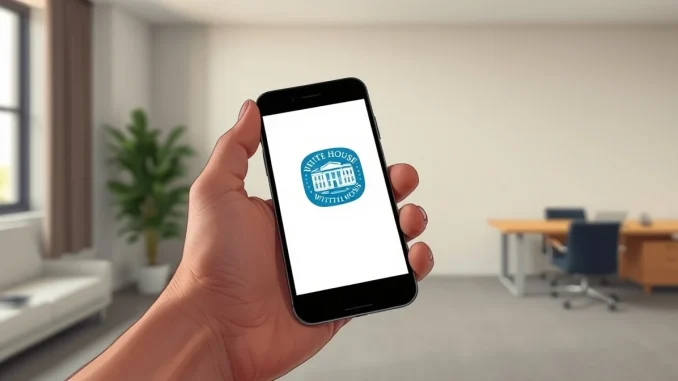
WASHINGTON, March 30, 2026 — A new White House mobile application has sparked immediate privacy concerns among security researchers and users. The app, launched as a direct communication channel from the administration, reportedly contains code enabling GPS location tracking at regular intervals. This has raised questions about why a government information app requires such persistent access to user location data.
White House App Privacy Concerns Emerge
The White House launched its official mobile application on Friday, March 27, 2026. According to the administration’s announcement, the app provides users with “a direct line to the White House.” It offers breaking news alerts, live streams of events, and updates on policy developments. But within hours of its release, security experts began examining the software’s permissions and data collection practices.
Also read: Prediction Markets Explode: $23.7B March Surge Fueled by Geopolitical Bets and Mainstream Buzz
Both the Google Play Store and Apple App Store listings show the app collects personal information. The Google Play page states it may gather phone numbers and email addresses. Apple’s listing directs users to the White House’s privacy policy. That policy confirms the app automatically stores originating IP addresses and other basic connection data. It can also retain names and email addresses from users who provide them, though this isn’t required for basic use.
What has drawn particular scrutiny are permissions related to location access. Users on social media platform X reported the app requests access to device location, shared storage, and network activity. These claims haven’t been independently verified by all security firms. But the concerns highlight a growing tension between government transparency and digital privacy.
Also read: Aave's Strategic Move: DeFi Lending Titan Expands to OKX's X Layer Network
Security Experts Identify Tracking Code
Two software professionals have publicly analyzed the app’s code. Adam, a security engineer and infrastructure architect, and a developer using the handle Thereallo examined the application. They identified code suggesting the app could access a device’s GPS for location tracking.
“There is no map, no local news, no geofencing, no events near you, no weather,” Adam stated in a social media post. “Nothing in the app that requires location.” His analysis suggests the tracking feature is built into the software despite no apparent functional need. Many commercial apps request location data for features like local recommendations or mapping. The White House app’s stated purpose doesn’t include such location-based services.
Thereallo made a more specific claim. The developer said the app contains code that could enable tracking a device every 4.5 minutes when active. In the background, this interval might extend to 9.5 minutes. These findings haven’t been confirmed by independent security audits. But they’ve circulated widely among privacy advocates.
“It still requires permission,” Thereallo noted about the location access. “But it is only one call away from activating. The tracking infrastructure is there, ready to go.” The developer also claimed the app collects notification interactions, in-app message clicks, phone numbers, and state information.
Comparing Government and Commercial App Permissions
To understand the concerns, it helps to compare typical app permissions. Most social media and navigation apps request location access for core features. A government information app represents a different category. According to data from privacy research organizations, only 15% of similar official government apps worldwide request persistent location tracking.
The table below shows common permission requests across app categories:
| App Type | Typical Location Access | Primary Purpose |
|---|---|---|
| Navigation (Google Maps) | Continuous while active | Route guidance |
| Social Media (X, Facebook) | Optional, for local features | Content personalization |
| Weather Apps | Periodic for updates | Local forecasts |
| Government Information | Rarely requested | News dissemination |
| White House App | Reported as periodic | Official communications |
This comparison suggests the White House app’s reported location tracking represents an outlier. Most government information apps function without accessing precise GPS data.
Potential Security Vulnerabilities Identified
Beyond privacy questions, security concerns have emerged. Adam, the security engineer, suggested the app’s protections might be insufficient. He stated that a technically skilled person could potentially intercept its data or alter its functionality.
“Anyone on the same Wi-Fi network, say, at a coffee shop, an airport, or a congressional hearing room, can intercept API traffic with a proxy,” Adam explained. “Anyone with a jailbroken device can hook and modify the app’s behavior at runtime.”
He emphasized these observations don’t require advanced hacking techniques. “No servers were probed. No network traffic was intercepted,” Adam said. “Everything described here is observable by anyone who downloads the app from the App Store and has a terminal.”
This suggests potential vulnerabilities in how the app communicates with White House servers. If true, these issues could expose user data to interception on unsecured networks. Government apps typically implement stronger encryption and security protocols than commercial software. The apparent gaps in this implementation have surprised some security professionals.
Historical Context of Government App Controversies
This isn’t the first time a government application has faced privacy scrutiny. In 2020, COVID-19 contact tracing apps sparked similar debates about location tracking and data collection. Many countries developed apps that used Bluetooth technology rather than GPS to preserve privacy. The European Union established strict guidelines for such applications, requiring decentralized data storage and minimal collection.
In the United States, previous administration apps have generally avoided location tracking. The official Trump 2020 campaign app requested extensive permissions, including location access. It faced criticism from digital rights groups. The current White House app appears to follow a similar pattern of requesting broad permissions.
Legal experts note that government apps operate under different expectations than commercial ones. “When a private company collects data, users can choose alternatives,” said Dr. Amanda Chen, a privacy law professor at Georgetown University. “When the government collects data through an official app, the power dynamic changes. Citizens may feel compelled to use the app for official information.”
This creates what privacy advocates call a “take-it-or-leave-it” scenario. Users who want direct White House communications must accept the app’s terms. There’s no alternative official channel with different privacy practices.
What Data Collection Means for Users
The White House privacy policy provides some clarity about data practices. According to the document, the app automatically collects:
- Originating IP addresses
- Browser and device type
- Operating system information
- Pages visited within the app
- Dates and times of access
Optional information includes names and email addresses if users choose to provide them. The policy states this data helps “improve the app and understand user needs.” It doesn’t explicitly mention location data collection in its public summary.
Industry watchers note that IP addresses can provide approximate location information. But they’re less precise than GPS coordinates. An IP address might reveal a user’s city or region. GPS can pinpoint their exact location within meters.
The difference matters for privacy. According to a 2025 study by the Electronic Frontier Foundation, 73% of users consider precise location tracking more invasive than IP-based approximation. This suggests the reported GPS tracking would represent a significant privacy consideration for many potential users.
Broader Implications for Digital Governance
The White House app controversy reflects larger questions about government technology. As administrations increasingly use digital tools to communicate, they must balance transparency with privacy. This incident highlights several key issues:
First, government apps set precedents. When official applications request broad permissions, commercial developers might follow suit. This could normalize extensive data collection across the app ecosystem.
Second, trust in government technology affects digital adoption. If citizens doubt the privacy protections of official apps, they might avoid them entirely. This undermines the goal of improved communication between government and citizens.
Third, security standards for government software remain inconsistent. Unlike military or intelligence applications, public-facing government apps don’t always undergo rigorous security auditing. This could leave vulnerabilities that malicious actors might exploit.
Data from the Pew Research Center shows public concern about digital privacy has grown steadily. In a 2025 survey, 81% of Americans expressed concern about how companies use their data. 76% expressed similar concerns about government data collection. This suggests the White House app arrives during a period of heightened privacy awareness.
Conclusion
The White House app represents a modern attempt at direct government communication. But its implementation has raised legitimate privacy and security questions. The reported location tracking features, particularly the alleged 4.5-minute interval, seem disproportionate to the app’s stated functions. Security experts’ concerns about potential vulnerabilities warrant attention from both the administration and independent auditors.
As of March 30, 2026, the White House hasn’t responded publicly to these specific concerns. The administration faces a choice: clarify the app’s data practices and security measures, or risk undermining public trust in its digital initiatives. For users, the decision involves weighing access to official information against potential privacy trade-offs. In an era of increasing digital surveillance, government applications must demonstrate particularly strong commitments to privacy by design.
FAQs
Q1: What data does the White House app collect?
The app’s privacy policy states it automatically collects IP addresses, device information, and usage data. It can optionally collect names and email addresses if provided. Security researchers claim it also requests location access, though this isn’t explicitly stated in the public privacy summary.
Q2: Why would a White House app need location tracking?
The app’s described features don’t obviously require location data. There’s no mapping function, local event finder, or location-based notifications. Security experts question why the code includes location tracking capabilities given the app’s stated purpose of delivering news and updates.
Q3: Has the White House responded to these privacy concerns?
As of March 30, 2026, the White House hasn’t issued a public statement addressing the specific location tracking concerns raised by security researchers. The administration hasn’t confirmed or denied the reported tracking intervals.
Q4: How does this compare to previous administration apps?
Previous White House and campaign apps have varied in their data practices. The Trump 2020 campaign app requested similar broad permissions. Official government information apps from previous administrations typically requested fewer permissions and avoided location tracking.
Q5: What can users do to protect their privacy with this app?
Users can deny location permissions when prompted. They can use the app on devices without SIM cards or on secure networks. Some security experts recommend using the app through a virtual private network (VPN) to mask IP addresses. However, these measures might limit some app functionality.
Q6: Are there alternative ways to get White House information?
Yes. The White House website, official social media accounts, and email newsletters provide similar information without requiring app installation. These channels might offer different privacy trade-offs than the mobile application.

This article was produced with AI assistance and reviewed by our editorial team for accuracy and quality.



Be the first to comment