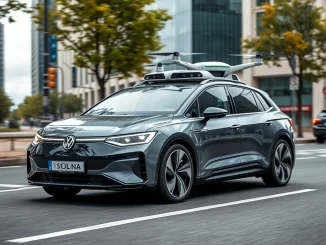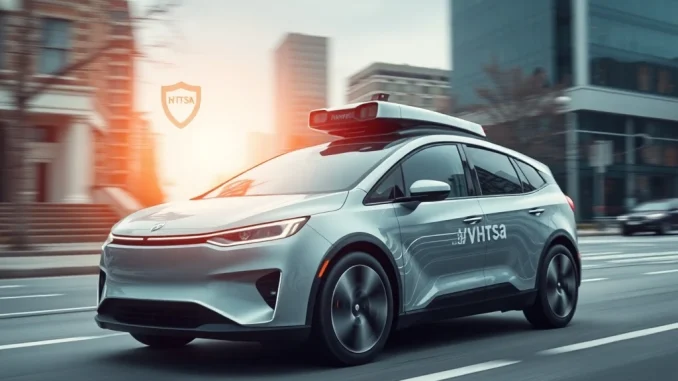
In the fast-paced world of technological innovation, where blockchain breakthroughs and AI advancements constantly redefine our future, the regulatory landscape often struggles to keep pace. For enthusiasts tracking the convergence of cutting-edge tech, the recent resolution of the National Highway Traffic Safety Administration’s (NHTSA) 14-month investigation into Waymo, Alphabet Inc.’s self-driving subsidiary, marks a significant milestone. This decision not only clears a major hurdle for Waymo but also sets a compelling precedent for how autonomous vehicles will be regulated going forward, impacting everything from urban logistics to potential tokenized mobility solutions.
The Verdict is In: NHTSA Concludes Waymo Probe with Confidence
After a rigorous 14-month deep dive, the National Highway Traffic Safety Administration (NHTSA) has officially concluded its investigation into Waymo, the pioneering force behind many of today’s advanced self-driving cars. Initiated in May 2024, the probe meticulously reviewed 22 complaints, which included reports of traffic violations and unexpected vehicle behavior. Among these were 17 minor collisions, notably a 2024 incident where a Waymo vehicle struck a utility pole. However, in a significant vote of confidence for Waymo, the investigation has been closed without any enforcement action.
This positive outcome is largely attributed to Waymo’s proactive and transparent approach. The company implemented two crucial voluntary recalls: one directly addressing the utility pole collision and another focusing on enhancing obstacle detection capabilities across its fleet. NHTSA emphasized that these comprehensive updates, combined with their own detailed technical evaluations, provided sufficient evidence of robust safety measures, thereby warranting the probe’s closure. This resolution underscores a pivotal moment for the autonomous vehicle industry, signaling a mature regulatory response to emerging technologies.
Unpacking Waymo’s Safety Improvements and Voluntary Recalls
At the heart of NHTSA’s decision were the tangible safety improvements implemented by Waymo. The company didn’t just respond to complaints; it proactively identified and rectified vulnerabilities within its sophisticated autonomous vehicle system. A key focus was on software fixes designed to enhance its LiDAR-based detection capabilities, particularly for challenging scenarios like identifying chained barriers, road gates, and active construction zones. Waymo candidly admitted that its vehicles had previously struggled with these specific obstacles, leading to what it described as ‘erratic or delayed decisions.’
NHTSA’s independent analysis validated the effectiveness of these enhancements. The agency noted that Waymo’s commitment to iterative improvements and its willingness to issue voluntary recalls—a testament to its focus on vehicle safety—align perfectly with the evolving regulatory expectations for autonomous systems. This collaborative approach between a tech innovator and a federal safety agency could serve as a blueprint for future oversight, prioritizing rapid, adaptive solutions over prolonged, punitive actions. It demonstrates that continuous improvement and transparency are paramount for the widespread adoption of self-driving cars.
What Does This Mean for Waymo’s Competitive Edge and Autonomous Vehicle Expansion?
The closure of the NHTSA probe undoubtedly strengthens Waymo’s competitive position in the rapidly evolving autonomous vehicles market. With the cloud of regulatory uncertainty lifted, Waymo is now poised for accelerated expansion. The company is already operating a substantial fleet of over 1,500 autonomous vehicles across the U.S., providing an impressive 250,000 fully driverless rides weekly. The absence of new mandates or enforcement actions clears the path for Waymo’s ambitious plans to launch services in major new markets, including New York, Miami, and Washington, D.C.
Furthermore, this positive regulatory signal will likely bolster Waymo’s strategic partnerships, such as its recent collaboration with Uber in Atlanta. This move indicates a clear strategy to integrate autonomous ride-hailing into mainstream transportation networks. For investors and enthusiasts alike, Waymo’s ability to navigate regulatory scrutiny successfully while continuing its aggressive expansion highlights its leadership and resilience in a highly competitive sector.
Navigating Public Trust and Regulatory Precedent for Self-Driving Cars
While Waymo celebrates this regulatory win, the broader self-driving cars industry continues to grapple with public skepticism and the complex task of building trust. The shadow of incidents like the 2023 Cruise pedestrian accident still looms large, having prompted increased scrutiny across all self-driving programs. This highlights the delicate balance between technological advancement and ensuring public confidence.
Local officials, such as those in Boston, remain cautious, delaying decisions on allowing autonomous vehicles until public trust is firmly established. Waymo’s measured approach in Boston—announcing no confirmed launch date while actively engaging with local leaders—reflects a pragmatic understanding of these challenges. NHTSA’s decision to prioritize preemptive fixes and adaptive oversight sets a crucial precedent. It signals a shift towards regulatory frameworks that encourage data transparency and iterative improvements, rather than relying solely on traditional compliance models, especially in sectors where technological progress outpaces conventional regulations.
Beyond the Probe: The Future of Vehicle Safety and AI Adoption
The resolution of the Waymo probe is more than just a win for one company; it’s a significant moment for the future of AI-driven transportation and vehicle safety. It demonstrates that robust internal safety protocols, coupled with transparent communication and proactive recalls, can lead to positive regulatory outcomes. As autonomous technology continues to mature, the focus will increasingly shift from proving capability to ensuring widespread public acceptance and ironclad safety records.
This outcome could pave the way for other autonomous vehicle developers to follow a similar path, emphasizing internal vigilance and collaboration with regulators. The precedent set by NHTSA’s reliance on Waymo’s data and improvements suggests a future where regulatory bodies become partners in fostering innovation, rather than solely gatekeepers. This adaptive oversight model is crucial for industries that evolve at warp speed, ensuring that safety standards keep pace without stifling groundbreaking advancements.
Conclusion
In conclusion, NHTSA’s decision to close its 14-month probe into Waymo without enforcement action marks a pivotal moment for the autonomous vehicle industry. It underscores the effectiveness of Waymo’s proactive safety measures, including voluntary recalls and significant software enhancements. This resolution not only bolsters Waymo’s position as a leader in self-driving cars but also sets a new standard for regulatory engagement in the rapidly evolving tech landscape. While challenges remain in building public trust and navigating local complexities, this outcome signifies a clear path forward for the safe and widespread deployment of autonomous technology, promising a future where smarter, safer transportation is within reach.
Frequently Asked Questions (FAQs)
Q1: Why did NHTSA initiate an investigation into Waymo?
A1: NHTSA initiated the 14-month investigation in May 2024 following 22 complaints related to traffic violations and unexpected behavior by Waymo’s autonomous vehicles, including 17 minor collisions and an incident where a vehicle struck a utility pole.
Q2: What were Waymo’s key actions that led to the probe’s closure?
A2: Waymo implemented two voluntary recalls to address specific issues (like the pole collision) and improve obstacle detection. They also deployed significant software fixes to enhance their LiDAR-based system, particularly for identifying challenging objects like chained barriers and construction zones.
Q3: How does this decision impact Waymo’s expansion plans?
A3: The closure without enforcement action strengthens Waymo’s competitive position and is expected to accelerate its planned expansions. The company operates over 1,500 autonomous vehicles, offers 250,000 weekly driverless rides, and plans to expand to cities like New York, Miami, and Washington, D.C., along with its Uber partnership in Atlanta.
Q4: What precedent does NHTSA’s decision set for the autonomous vehicle industry?
A4: NHTSA’s decision sets a precedent for “adaptive oversight,” prioritizing preemptive fixes, data transparency, and iterative improvements from companies over punitive measures. It suggests a collaborative approach between regulators and tech innovators in rapidly evolving sectors.
Q5: Are there still challenges for autonomous vehicle adoption despite this positive outcome?
A5: Yes, challenges remain, particularly regarding public trust. Incidents like the 2023 Cruise pedestrian accident highlight ongoing risks, and local officials in some cities, like Boston, are still cautious about allowing autonomous vehicles until public confidence is firmly established.