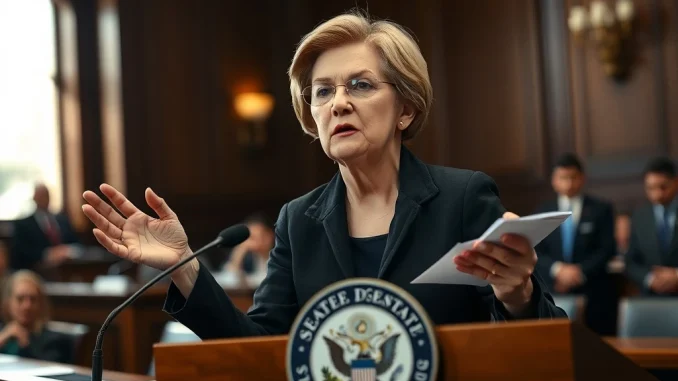
WASHINGTON, D.C. — March 14, 2026: Massachusetts Senator Elizabeth Warren issued a forceful demand today for anti-corruption provisions in all cryptocurrency legislation moving through Congress. Her statement followed the U.S. Securities and Exchange Commission’s $10 million settlement with Tron founder Justin Sun, a case Warren characterized as the SEC “giving a free pass” to a billionaire who invested $90 million in crypto ventures tied to former President Donald Trump’s family. The senator’s intervention comes as the Senate Banking Committee, where Warren serves as ranking Democrat, considers the critical digital asset market structure bill that passed the House last year as the CLARITY Act. This development signals escalating political tensions around cryptocurrency regulation during an election year.
Warren’s Anti-Corruption Demand Targets Crypto Legislation
Senator Warren specifically connected the SEC’s enforcement action to broader legislative concerns during a Thursday press briefing. “Justin Sun poured $90 million into Trump’s crypto ventures, and today the SEC agreed to drop its case against him,” Warren stated. “The SEC should not be a lap dog for Trump’s billionaire buddies, and any crypto legislation moving through Congress must stop the President’s crypto corruption.” The senator’s office provided documentation showing Sun’s investments through token purchases in the Trump family’s crypto platform, World Liberty Financial. Meanwhile, the SEC settled its unrelated case against Sun and his companies for $10 million without admission of guilt. Warren’s statement represents her most direct linkage between specific financial transactions and pending legislation.
Congressional staffers confirmed the timing coincides with the Senate Banking Committee’s review of the market structure bill. This legislation advanced from the Senate Agriculture Committee in January after passing the House of Representatives in late 2025. The bill addresses tokenized equities, ethics provisions, and stablecoin rewards—all areas where Warren believes anti-corruption measures could apply. Notably, the White House has hosted three meetings between administration officials and representatives from both crypto and banking industries since February, though participants reported no consensus on legislative language.
Immediate Impacts on Pending Crypto Legislation
Warren’s demand creates immediate procedural complications for the market structure bill. As ranking Democrat on the Banking Committee, she holds significant influence over whether and how the legislation advances. Committee staff confirmed the markup session originally scheduled for January was “indefinitely postponed” after Coinbase CEO Brian Armstrong expressed concerns about the bill “as written.” Now, Warren’s anti-corruption focus adds another layer of complexity. Banking organizations have already argued that including provisions on stablecoin rewards could undermine credit systems and create deposit flight risk. Adding ethics and anti-corruption requirements might further complicate negotiations.
- Legislative Delay: The Banking Committee must now consider whether to incorporate specific anti-corruption language, potentially pushing any vote into late 2026 or beyond.
- Industry Division: Crypto companies that previously supported the bill may withdraw support if new provisions create compliance burdens or disclosure requirements they consider excessive.
- Political Positioning: With presidential elections approaching, cryptocurrency regulation becomes increasingly politicized, making bipartisan compromise more difficult.
Expert Analysis: Legal and Regulatory Perspectives
Columbia Law School professor and former SEC advisor Sarah Thompson told reporters, “Senator Warren is highlighting a genuine gap in current proposals. Most crypto legislation focuses on market structure and consumer protection, but political contribution disclosures and conflict-of-interest rules remain underdeveloped.” Thompson noted that traditional securities laws include various anti-corruption measures that don’t clearly apply to digital assets. Meanwhile, the Blockchain Association’s policy director, Michael Chen, responded cautiously: “While we support transparent markets, adding last-minute provisions without industry consultation could undermine the comprehensive work done over two years.” Chen referenced the three White House meetings that failed to produce consensus on key issues.
Historical Context: Crypto Regulation Timeline
Today’s developments represent the latest chapter in a five-year struggle to establish comprehensive cryptocurrency regulation. The journey began with executive orders in 2022, progressed through multiple congressional hearings, and now faces election-year politics. The table below shows key milestones in U.S. crypto legislation development:
| Date | Event | Significance |
|---|---|---|
| March 2022 | Executive Order on Digital Assets | First comprehensive federal approach |
| June 2023 | House Financial Services Committee draft | Initial market structure framework |
| July 2024 | CLARITY Act passes House | First major crypto bill through chamber |
| January 2026 | Senate Agriculture Committee approval | Bill advances to Banking Committee |
| March 2026 | Warren’s anti-corruption demand | New focus on ethics and disclosures |
What Happens Next: Legislative Pathways
The Senate Banking Committee faces three possible paths forward, according to congressional procedure experts. First, the committee could incorporate anti-corruption language directly into the market structure bill during markup. Second, they might create a separate amendment package addressing Warren’s concerns. Third, and most likely according to staffers, the committee could delay further action until after elections, using the time to develop comprehensive ethics provisions. The White House has not issued an official position on Warren’s specific demand, though administration officials previously expressed support for “strong guardrails” in digital asset regulation. Both former President Trump and his son Eric criticized banking organizations this week for their positions on the legislation, suggesting continued political engagement from multiple directions.
Industry and Political Reactions
Crypto industry representatives expressed concern about adding new requirements to already complex legislation. “We’ve been working with committees for years to get the technical details right,” said a spokesperson for the Crypto Council for Innovation who requested anonymity. “Introducing major new concepts at this stage risks the entire package.” Conversely, consumer advocacy groups praised Warren’s move. “Cryptocurrency shouldn’t be a loophole for political influence,” said Denise Carter of Americans for Financial Reform. “These markets need the same transparency rules as traditional finance.” On Capitol Hill, reactions split along party lines, with some Republican members calling the anti-corruption focus a “political distraction” from substantive regulatory issues.
Conclusion
Senator Elizabeth Warren’s demand for anti-corruption provisions in cryptocurrency legislation represents a significant escalation in Washington’s crypto policy debate. The connection between the SEC’s settlement with Justin Sun and broader legislative efforts highlights growing concerns about political influence in digital asset markets. As the Senate Banking Committee considers the market structure bill, Warren’s position as ranking Democrat gives her substantial leverage to shape the final product. The coming weeks will reveal whether anti-corruption measures become integrated into the legislation or create insurmountable obstacles. Regardless, today’s developments ensure that ethics and transparency will remain central to America’s cryptocurrency policy discussions through the 2026 elections and beyond.
Frequently Asked Questions
Q1: What specific anti-corruption provisions does Senator Warren want in crypto bills?
While Warren hasn’t released detailed legislative text, her statement references measures to prevent “crypto corruption” involving political figures. Experts suggest this likely includes disclosure requirements for political contributions made via cryptocurrency, conflict-of-interest rules for officials involved in crypto regulation, and transparency measures for investments by public officials and their families in digital asset ventures.
Q2: How does the SEC’s settlement with Justin Sun relate to crypto legislation?
The SEC settled an unrelated case against Sun and his companies for $10 million. Warren connected this settlement to Sun’s separate $90 million investments in Trump-family crypto ventures, arguing that without anti-corruption rules in legislation, such financial relationships could influence regulatory outcomes. The connection highlights concerns about enforcement consistency and political influence.
Q3: What is the timeline for the market structure bill now?
The Senate Banking Committee had indefinitely postponed a markup session in January. With Warren’s new demands, committee staff indicate further delays are likely. The earliest possible committee vote would be late April 2026, but more probable timelines extend into summer or post-election sessions, depending on whether consensus emerges on anti-corruption language.
Q4: How do crypto industry groups view these anti-corruption proposals?
Industry reactions are mixed but generally cautious. Major organizations like the Blockchain Association emphasize the need for careful consideration rather than last-minute additions. They worry new provisions could complicate already delicate negotiations and potentially undermine the bill’s core market structure improvements that the industry has sought for years.
Q5: What broader political context affects this crypto legislation debate?
The 2026 presidential election campaign intensifies all policy debates, including cryptocurrency regulation. Former President Trump’s family involvement in crypto ventures, combined with President Biden’s administration pushing for regulatory clarity, creates a highly politicized environment. This makes bipartisan compromise more challenging as both parties position themselves for electoral advantage.
Q6: How might anti-corruption provisions affect ordinary cryptocurrency users?
Most directly, these provisions would likely increase transparency about which entities are investing in or influencing crypto projects. This could help users make more informed decisions. However, additional compliance requirements might also increase costs for crypto businesses, potentially affecting service fees or product availability, though the exact impacts depend on final legislative language.