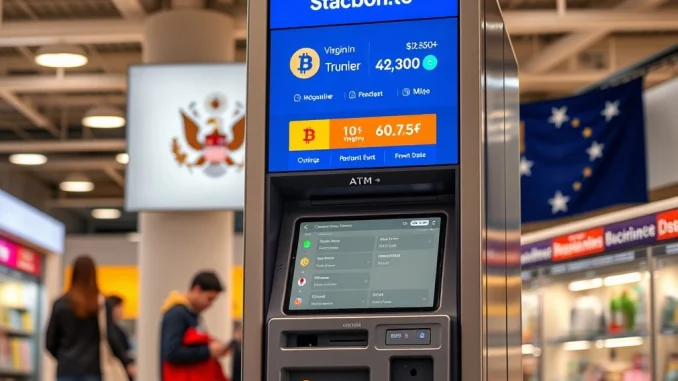
Richmond, Virginia – April 2025: In a decisive move to protect consumers from escalating financial scams, the Virginia General Assembly has passed a comprehensive crypto kiosk regulation bill, sending it to Governor Glenn Youngkin’s desk for final approval. This landmark legislation, formally known as Senate Bill 439, establishes a first-of-its-kind regulatory framework for cryptocurrency automated teller machines (ATMs) and kiosks operating within the Commonwealth. The bill’s advancement marks a pivotal moment in the state’s approach to digital asset oversight, directly responding to a documented surge in fraud and financial losses reported at these largely unregulated machines.
Understanding the Virginia Crypto Kiosk Regulation Bill
The proposed law introduces a multi-layered system of oversight for operators of cryptocurrency kiosks. At its core, the bill mandates state licensing for all kiosk operators, moving these businesses from a regulatory gray area into a clearly defined legal structure. The Virginia State Corporation Commission (SCC) will serve as the primary regulatory body, responsible for issuing licenses, conducting background checks on operators, and ensuring ongoing compliance. This shift mirrors regulatory approaches taken in traditional money transmission and financial services, applying long-established consumer protection principles to the novel world of digital asset vending.
Key provisions within the bill include strict transaction limits, which lawmakers designed to curb impulsive, high-value purchases that often lead to devastating losses. Operators will be required to implement robust identity verification processes that go beyond simple phone number checks, integrating more secure Know Your Customer (KYC) protocols. Furthermore, the legislation mandates clear, conspicuous physical and on-screen disclosures at every kiosk. These disclosures must outline fees, exchange rates, and the irreversible nature of cryptocurrency transactions, ensuring customers cannot claim they acted without understanding the fundamental risks involved.
The Driving Force: Combating Cryptocurrency Scams and Fraud
The legislative push stems from alarming data collected by state agencies and consumer advocacy groups. Reports from the Virginia Attorney General’s office and the Department of Agriculture and Consumer Services indicate a 300% year-over-year increase in complaints related to cryptocurrency scams, with a significant portion originating at public kiosks. Investigators found that scammers frequently coerce victims—often elderly or technologically inexperienced individuals—into visiting these kiosks to purchase Bitcoin or other cryptocurrencies, which are then immediately transferred to untraceable digital wallets.
“These kiosks became the physical point of failure in sophisticated digital scams,” explained a policy analyst from the Virginia Poverty Law Center during committee testimony. “A person receives a threatening call from someone pretending to be the IRS or a family member in trouble. They are told to withdraw cash, but then are directed to a crypto kiosk to convert that cash into crypto and send it. The existing lack of oversight at the kiosk made the process seamless for the criminal.” The new bill directly targets this vulnerability by requiring transaction delays or cooling-off periods for first-time users and large transactions, creating a critical window for intervention or reconsideration.
A Comparative Look: How Virginia’s Approach Stacks Up
Virginia is not the first state to scrutinize crypto kiosks, but its proposed framework is among the most detailed. The table below compares key aspects of Virginia’s bill with regulations in other states.
| State | Licensing Required | Transaction Limits | Mandatory Disclosures | KYC/Identity Verification |
|---|---|---|---|---|
| Virginia (Proposed Bill) | Yes, through State Corporation Commission | Yes, daily and per-transaction caps | Yes, detailed fee and risk warnings | Enhanced verification required |
| Texas | Yes, as Money Services Businesses | No state-mandated limits | Basic fee disclosure required | Standard verification |
| California | Under consideration | Local ordinances vary | Patchwork local requirements | No unified state standard |
| New York | Yes, under BitLicense regime | Implied through licensing | Stringent regulatory disclosures | Rigorous verification mandated |
As shown, Virginia’s bill positions the state as a leader in proactive, consumer-focused regulation, borrowing stringent elements from New York’s BitLicense while tailoring rules to the specific kiosk model. This balanced approach aims to protect consumers without stifling legitimate business innovation, a challenge that has plagued broader federal cryptocurrency regulatory efforts.
Industry Response and Operational Implications
The reaction from the cryptocurrency kiosk industry has been mixed. Major national operators have expressed cautious support, acknowledging that clear regulations can legitimize their business model and weed out bad actors. “We have always advocated for responsible operation,” stated a spokesperson for a leading kiosk network. “A standardized regulatory framework across states actually reduces complexity for compliant companies. Our primary concern is ensuring the compliance costs don’t make serving certain communities economically unviable.”
For smaller operators and individual kiosk owners, the new requirements present significant logistical and financial hurdles. The licensing fees, combined with the cost of upgrading software for enhanced KYC and implementing new disclosure systems, could reshape the market. Experts predict a potential consolidation in the industry, with larger, well-capitalized firms absorbing or outlasting smaller players who cannot bear the new compliance burden. This could inadvertently reduce physical access points for cryptocurrency in rural or underserved areas of Virginia, an unintended consequence lawmakers have pledged to monitor.
The Path to the Governor’s Desk and Potential Outcomes
The bill enjoyed bipartisan support through both chambers of the General Assembly, passing with substantial majorities. This political consensus underscores the non-partisan nature of consumer protection as a legislative priority. Governor Youngkin now has several options: sign the bill into law, allow it to become law without his signature, or veto it. Political observers note that a veto appears unlikely given the bill’s support and the governor’s stated focus on both innovation and consumer safety.
If signed, the law would take effect on January 1, 2026. This provides a six-month implementation period for the State Corporation Commission to establish detailed administrative rules and for kiosk operators to achieve compliance. The SCC would likely initiate a rulemaking process, soliciting public comment from industry stakeholders, consumer groups, and the general public to refine the operational details of the licensing and disclosure regimes. Failure to comply with the new law would result in civil penalties, license revocation, and potential cease-and-desist orders from the state.
Broader Context: The National Trend in Crypto Kiosk Oversight
Virginia’s action is part of a growing national trend where state legislatures, in the absence of comprehensive federal regulation, are taking the lead. The Federal government has yet to pass legislation specifically governing cryptocurrency kiosks, leaving a patchwork of state money transmitter laws to apply unevenly. This regulatory gap has created the exact environment where scams have flourished. States like Virginia are now acting as laboratories of democracy, testing regulatory models that could eventually inform a national standard.
Consumer advocacy organizations, including the AARP and the National Consumer Law Center, have hailed Virginia’s bill as a model for other states. They argue that the physicality of a kiosk transaction creates a unique opportunity for intervention that does not exist in purely online crypto exchanges. By mandating clear warnings and delays, the law empowers consumers at the precise moment a financial decision is made. This on-the-spot protection is seen as a critical tool in the broader fight against financial exploitation, especially of vulnerable populations.
Conclusion
The advancement of the crypto kiosk regulation bill to the Virginia Governor’s desk represents a significant and thoughtful step toward legitimizing and securing the digital asset ecosystem for everyday users. By establishing clear licensing, enforcing transaction limits, and mandating unambiguous consumer disclosures, Virginia lawmakers are addressing a critical vulnerability exploited by fraudsters. This balanced legislation seeks to foster responsible innovation while implementing essential safeguards, setting a potential precedent for other states navigating the complex intersection of cryptocurrency and consumer protection. The governor’s impending decision will determine whether Virginia becomes a national leader in creating a safer, more transparent environment for cryptocurrency transactions at the community level.
FAQs
Q1: What exactly does the Virginia crypto kiosk bill do?
The bill requires state licensing for all cryptocurrency kiosk operators, imposes daily and per-transaction limits on purchases, mandates clear fee and risk disclosures at machines, and enforces stronger customer identity verification to prevent fraud and scams.
Q2: Why is this regulation considered necessary?
Law enforcement and consumer agencies report a dramatic increase in scams where victims are coerced into using crypto kiosks. The lack of regulation made kiosks an easy tool for criminals to quickly obtain irreversible cryptocurrency from defrauded individuals.
Q3: How will this affect someone who wants to legally buy crypto from a kiosk?
For legitimate users, the process may take slightly longer due to enhanced identity checks. They will see much clearer information about fees and the final amount of crypto they will receive before confirming the transaction, leading to more informed decisions.
Q4: What happens if Governor Youngkin vetoes the bill?
If vetoed, the bill would return to the General Assembly. Given its strong bipartisan support, the legislature could potentially override the veto with a two-thirds majority vote in both chambers, enacting it into law despite the veto.
Q5: Are cryptocurrency kiosks being banned in Virginia?
No, they are not being banned. The bill regulates their operation to make them safer for consumers. Its goal is to allow legitimate businesses to continue operating under a clear set of rules designed to protect the public from prevalent financial scams.