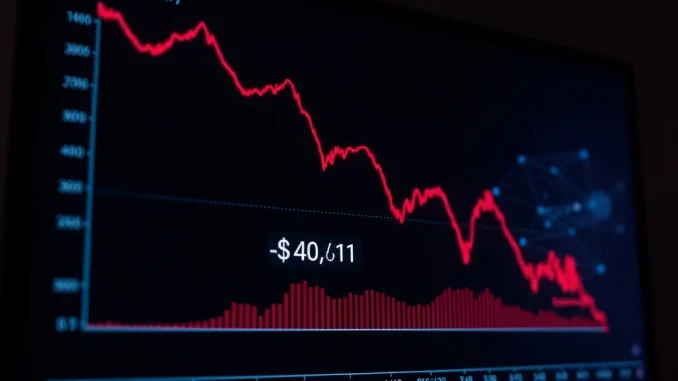
January 29, 2025: The decentralized finance (DeFi) market witnessed a sudden and severe shock as the Venus (XVS) token price crashed over 30% in a mere ten minutes. Beginning sharply at approximately 8:05 a.m. UTC, the XVS price on Binance’s spot market against USDT collapsed from around $4.40 to a startling intraday low of $3.12. This rapid Venus XVS price crash sent immediate ripples through the DeFi sector, highlighting the inherent volatility and complex mechanisms within algorithmic lending protocols.
Analyzing the Venus XVS Price Crash Event
The event unfolded with remarkable speed, characteristic of a flash crash in digital asset markets. Data from major exchanges, including Binance, shows a near-vertical decline on the XVS/USDT trading pair. The price found a temporary bottom at $3.12 before experiencing a slight recovery. At the time of reporting, Venus (XVS) was trading near $3.32, reflecting a 31.83% loss from its pre-crash level. Such extreme moves in a short timeframe typically trigger a cascade of automated liquidations and stop-loss orders, potentially exacerbating the downward momentum. Market analysts immediately began scrutinizing order book depth and large wallet movements preceding the event.
Contextualizing the Crash in the DeFi Ecosystem
Venus Protocol is a core algorithmic money market and synthetic stablecoin platform built on the BNB Chain. Its native governance token, XVS, allows holders to vote on protocol parameters and earn a share of the platform’s revenue. Therefore, a sharp decline in the XVS price is not an isolated event. It can directly impact the perceived stability and governance health of the entire Venus ecosystem. Key factors analysts consider in such events include:
- Protocol Health Metrics: The total value locked (TVL) in Venus, borrowing volumes, and collateralization ratios before and after the crash.
- Liquidation Events: Whether the price drop triggered significant liquidations of loans within the protocol, potentially creating selling pressure.
- Market-Wide Conditions: The performance of broader crypto markets and major assets like Bitcoin (BTC) and BNB at the time of the crash.
- Governance Proposals: Recent or pending votes on the Venus platform that could influence tokenholder sentiment.
Historical Precedents and Flash Crash Mechanics
Flash crashes, while alarming, are not unprecedented in cryptocurrency markets. Events like the May 2021 market-wide crash or specific exchange-related incidents demonstrate how low liquidity in certain pairs can lead to exaggerated moves. In decentralized finance, the mechanics are often more complex. A rapid drop in a governance token’s price can affect the collateral quality within its native protocol if the token itself is used as loan collateral. This creates a reflexive relationship where price declines threaten protocol stability, which in turn can spur further selling. Understanding this interplay is crucial for assessing the true impact beyond the simple price chart.
Immediate Consequences and Market Reaction
The immediate aftermath of the Venus price crash saw heightened volatility and social media speculation. Traders and DeFi users closely monitored the Venus Protocol’s front-end and blockchain data for signs of technical distress or abnormal activity. The rapid price movement likely resulted in the liquidation of leveraged positions both on centralized exchanges like Binance and within the Venus Protocol itself if XVS was used as borrowed collateral. Such events serve as a stark reminder of the risks associated with high volatility assets and the automated, non-custodial nature of DeFi lending. There is no central entity to pause trading or reverse transactions, a fundamental tenet and risk of the space.
| Metric | Detail |
|---|---|
| Start Time (UTC) | ~8:05 a.m. |
| Starting Price | ~$4.40 |
| Lowest Price | $3.12 |
| Percentage Decline | >30% |
| Duration of Core Drop | ~10 minutes |
| Price at Press Time | $3.32 |
| Primary Trading Pair | XVS/USDT on Binance Spot |
The Role of Centralized Exchange Dynamics
While Venus is a decentralized protocol, its native token trades predominantly on centralized exchanges (CEXs) like Binance. The crash manifested most visibly on these platforms. The concentration of liquidity on a few major exchanges means that a large sell order, a series of algorithmic trades, or even a technical glitch on one platform can disproportionately impact the global market price. This interplay between decentralized protocol utility and centralized price discovery is a defining characteristic of the current DeFi token landscape. It creates unique vulnerabilities where CEX volatility can directly impact the economic security of a decentralized system.
Conclusion: Lessons from the Sudden Venus XVS Price Crash
The dramatic 30% plunge in the Venus (XVS) token price serves as a powerful case study in cryptocurrency and DeFi market dynamics. It underscores the critical importance of liquidity, risk management, and understanding the interconnectedness of governance tokens and their underlying protocols. For participants in the DeFi space, events like the January 29th Venus XVS price crash reinforce the need for conservative collateralization ratios and a deep comprehension of protocol mechanics. As the sector matures, managing this inherent volatility remains one of its most significant challenges. The market’s next focus will be on whether the protocol’s core functions remained stable and how the governance community responds.
FAQs
Q1: What exactly happened to Venus (XVS) on January 29, 2025?
The Venus (XVS) token experienced a flash crash, losing over 30% of its value in approximately ten minutes. The price dropped from around $4.40 to a low of $3.12 on the Binance spot market against USDT.
Q2: What is Venus Protocol and what is the XVS token used for?
Venus Protocol is a decentralized algorithmic money market on the BNB Chain. Its native token, XVS, is a governance token that allows holders to vote on proposals and share in the protocol’s revenue.
Q3: Could this crash cause problems for people using the Venus lending platform?
Potentially, yes. If users had borrowed funds using XVS as collateral, the sharp price drop could have triggered the automatic liquidation of their loans to maintain the protocol’s solvency, depending on their collateralization ratio.
Q4: Are flash crashes like this common in cryptocurrency?
While not daily occurrences, flash crashes and extreme volatility are well-documented phenomena in cryptocurrency markets due to factors like lower liquidity compared to traditional markets, high leverage use, and 24/7 automated trading.
Q5: Where did the Venus price crash happen?
The price action was recorded on global cryptocurrency exchanges, with data from the Binance spot market (XVS/USDT pair) being widely cited. The crash would have affected the token’s price across all trading venues due to arbitrage.
Q6: Has the price recovered since the crash?
At the time of initial reporting, the price had recovered slightly from the $3.12 low to trade around $3.32, but it remained down approximately 31.8% from its pre-crash level. Full recovery from such events can take variable amounts of time.