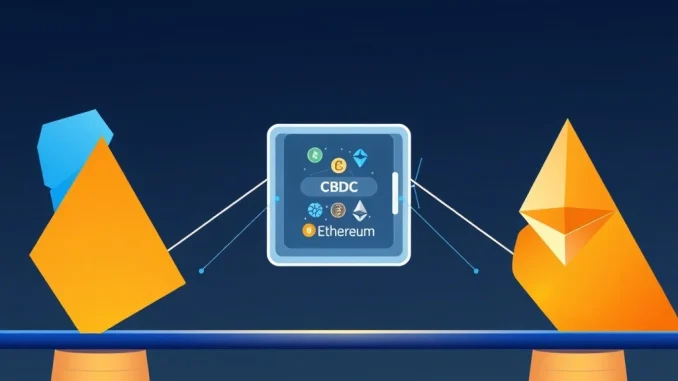
Abu Dhabi, UAE – May 2025: The Venom Foundation has announced a pivotal integration with ChainConnect, a specialized interoperability protocol, to enable trustless, intermediary-free atomic swaps between its proprietary Telegram Open Network Virtual Machine (TVM) and the ubiquitous Ethereum Virtual Machine (EVM) ecosystem. This strategic technical development directly targets the burgeoning markets for Central Bank Digital Currencies (CBDCs) and high-value institutional token transfers, aiming to remove critical friction points in cross-chain asset movement.
Venom Foundation and ChainConnect Enable Intermediary-Free Atomic Swaps
The core of this integration is the implementation of atomic swaps, a peer-to-peer cryptographic mechanism that allows two parties to exchange tokens from different blockchains without relying on a centralized custodian or exchange. Historically, moving assets between incompatible chains like TVM and EVM required wrapped assets through centralized bridges or custodial services, introducing counterparty risk, delays, and additional fees. The Venom Foundation’s deployment of ChainConnect’s protocol eliminates this middle layer. The swap executes atomically, meaning either both legs of the transaction complete successfully, or the entire transaction reverts, ensuring no party can be left with a partial transfer. This is a significant leap for the Venom blockchain, which is designed for high throughput and regulatory compliance, making it a candidate platform for state-level digital assets.
Technical Breakdown: Bridging the TVM and EVM Divide
The technological challenge of connecting TVM and EVM is non-trivial. They possess different architectural philosophies, consensus mechanisms, and smart contract languages. ChainConnect functions as a standardized communication layer and a set of verifiable smart contracts deployed on both networks.
- Hashed Timelock Contracts (HTLCs): The atomic swap process is governed by HTLCs. Party A locks funds in a contract on the Venom (TVM) chain, generating a cryptographic secret hash. Party B, seeing this hash, can lock corresponding funds in a contract on an EVM chain. Party A then reveals the secret to claim the EVM funds, which automatically allows Party B to use that same secret to claim the original TVM funds. The time-lock ensures funds are refunded if the swap is not completed within a set period.
- State Verification: ChainConnect provides light clients or relayers that cryptographically verify the state and events (like contract locks) on one chain for the other, enabling the conditional logic of the HTLC to function across the technological divide.
- Targeted Use Cases: This is not designed for retail micro-transactions but for large, structured settlements. The primary applications are cross-chain CBDC liquidity pools, institutional cross-collateralization, and the transfer of tokenized real-world assets (RWAs) between ecosystems that cater to different regulatory or technical requirements.
The Institutional and CBDC Imperative Driving Development
The explicit focus on CBDCs and institutional transfers is a direct response to market demand. Central banks experimenting with digital currencies, such as the digital Euro or a potential digital Dirham, are evaluating multiple blockchain platforms. A CBDC issued on the Venom network, prized for its speed and compliance features, would need seamless convertibility with DeFi liquidity and other digital assets predominantly residing on EVM chains like Ethereum, Polygon, or Arbitrum. An intermediary-free bridge mitigates sovereign risk for central banks wary of third-party custody. For institutional players, it reduces operational complexity and eliminates the credit risk associated with bridge operators, a vulnerability starkly highlighted by several nine-figure bridge hacks between 2022 and 2024.
Historical Context and the Evolution of Blockchain Interoperability
To understand the significance of this move, one must view it within the broader narrative of blockchain interoperability. The industry has evolved through distinct phases.
| Phase | Method | Key Limitation |
|---|---|---|
| Early (2017-2020) | Centralized Custodial Bridges | Single point of failure and trust. |
| Intermediate (2020-2023) | Federated/Multi-Sig Bridges | Improved but still requires trust in a validator set. |
| Advanced (2023-Present) | Light Client & Zero-Knowledge Proof Bridges | Technically complex and computationally expensive. |
| Current (2025 Focus) | Atomic Swap Protocols (e.g., ChainConnect) | Limited to specific, agreed-upon pairings but maximally trust-minimized. |
The Venom-ChainConnect integration represents a pragmatic, security-first approach within this evolution. It does not attempt to be a universal bridge for all assets but provides a maximally secure, auditable corridor for predefined, high-value asset flows between two specific environments.
Implications for the Broader Blockchain Ecosystem
This development has several clear implications. First, it strengthens Venom’s positioning as a Layer-1 contender for regulated finance by directly addressing the interoperability demands of that sector. Second, it places competitive pressure on other institutional-focused chains to develop or integrate similar native, non-custodial swap capabilities. Third, it could accelerate the fragmentation of liquidity by enabling secure, direct pathways between niche regulatory chains and the general-purpose DeFi ecosystem, rather than forcing all value through a few large, vulnerable bridge hubs. The success of this model will be measured by its adoption for live CBDC pilot projects and the volume of institutional transfers it secures in the coming 12-18 months.
Conclusion
The integration of ChainConnect by the Venom Foundation marks a sophisticated step in blockchain infrastructure, enabling intermediary-free atomic swaps between the TVM and EVM worlds. By prioritizing security and direct settlement for high-stakes transfers involving CBDCs and institutional tokens, the development addresses a critical gap in the maturation of blockchain for global finance. While not a panacea for all interoperability challenges, it provides a vital, trust-minimized pipeline that could become a foundational component for the next wave of regulated digital asset innovation. The technical execution and real-world adoption of these atomic swap corridors will be a key narrative to watch in the institutional cryptocurrency space throughout 2025 and beyond.
FAQs
Q1: What is an atomic swap in blockchain technology?
An atomic swap is a smart contract-based technology that enables two parties to exchange cryptocurrencies from different blockchains directly and without an intermediary. The “atomic” property ensures the transaction is all-or-nothing; it either completes fully for both parties or does not execute at all, eliminating the risk of one party defaulting.
Q2: Why is the Venom Foundation’s integration with ChainConnect significant for CBDCs?
Central banks considering CBDCs require maximum security and control over their digital currency. Traditional cross-chain bridges involve third-party custodians, creating unacceptable risk. This integration allows a CBDC on Venom’s network to be swapped directly for assets on an EVM chain in a non-custodial, cryptographically secure manner, aligning with the risk tolerance of monetary authorities.
Q3: What is the difference between TVM and EVM?
The Ethereum Virtual Machine (EVM) is the runtime environment for smart contracts on Ethereum and most of its Layer-2 networks and competitors. It uses the Solidity programming language. The Telegram Open Network Virtual Machine (TVM) is the execution environment for the Venom blockchain (and originally the TON network), optimized for speed and using different programming languages like FunC and Tact. They are not natively compatible.
Q4: Are atomic swaps through ChainConnect fast and cheap for all users?
No. The protocol is engineered first for security and finality in high-value transfers, not for low-cost, high-speed retail trading. The process involves multiple on-chain transactions and waiting periods (timelocks) for security. Its value proposition is risk reduction for large settlements, not convenience for small, frequent trades.
Q5: Does this mean any token on Venom can now swap with any token on Ethereum?
Not automatically. The atomic swap capability must be specifically implemented for each asset pair (e.g., a specific Venom-based token and a specific ERC-20 token). The integration provides the infrastructure and protocol. Liquidity providers and institutional partners will need to deploy and fund the specific smart contract pairs to enable swaps for particular assets, starting with those targeted for CBDC and institutional use.