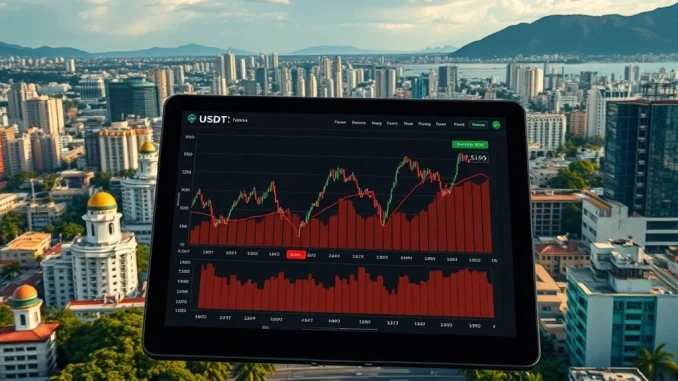
In Venezuela, the dramatic premium for the dollar-pegged stablecoin USDT has significantly cooled throughout early 2025, marking a crucial stabilization in the country’s complex cryptocurrency landscape. Following the U.S. arrest of President Nicolás Maduro, USDT briefly traded at an astonishing 140% premium against the official dollar exchange rate. However, market data now shows this premium has fallen by approximately 40%, returning to levels last observed in December 2024. This development reveals important insights about cryptocurrency market dynamics in politically volatile economies.
USDT Premium Dynamics in Venezuela’s Volatile Economy
The USDT premium in Venezuela represents one of the most significant cryptocurrency phenomena in emerging markets. Typically, stablecoins like USDT trade close to their pegged value of $1.00 in most global markets. In Venezuela, however, persistent economic instability has created consistent premiums for dollar-denominated assets. The recent political developments surrounding President Maduro triggered an unprecedented surge in this premium, reaching levels that shocked international observers.
Market analysts now confirm the initial surge represented exaggerated speculative trading rather than genuine panic-driven demand. The premium spike occurred in a low-liquidity environment where relatively small trading volumes could create disproportionate price movements. As liquidity returned to the market and political clarity emerged, the premium naturally corrected toward more sustainable levels. This pattern demonstrates how cryptocurrency markets can overreact to political events before finding equilibrium.
Expert Analysis of Market Correction
Economist Asdrúbal Oliveros provided crucial insights into this market correction. “The exchange rate’s overreaction is calming as the economic outlook becomes clearer over time,” Oliveros explained. His analysis highlights how cryptocurrency markets, particularly in volatile economies, often experience exaggerated movements that correct as information becomes more complete. The initial premium surge reflected uncertainty rather than fundamental economic shifts.
Several factors contributed to the premium normalization:
- Increased market liquidity as traders returned following initial uncertainty
- Reduced speculative pressure as political tensions eased
- Improved information flow about Venezuela’s economic direction
- Market mechanism corrections that naturally arbitrage extreme premiums
Historical Context of Cryptocurrency in Venezuela
Venezuela’s relationship with cryptocurrency extends back several years, driven by hyperinflation and currency controls. The bolívar has lost significant value against major currencies, pushing Venezuelans toward alternative stores of value. Cryptocurrencies, particularly Bitcoin and stablecoins, have become essential tools for preserving wealth and conducting international transactions. This historical context explains why USDT maintains a persistent premium in Venezuelan markets.
The table below illustrates recent USDT premium trends in Venezuela:
| Time Period | USDT Premium | Market Conditions |
|---|---|---|
| December 2024 | Baseline Level | Stable political environment |
| Post-Maduro Arrest | 140% Peak | High uncertainty, low liquidity |
| Current (Early 2025) | ~40% Below Peak | Stabilizing conditions |
This historical perspective shows how cryptocurrency markets respond to political events in economies with existing instability. The premium serves as a barometer for both economic confidence and practical access to dollar-denominated assets. While the premium has cooled significantly, it remains elevated compared to global standards, reflecting Venezuela’s ongoing economic challenges.
Market Mechanisms Behind Premium Fluctuations
Understanding the USDT premium requires examining specific market mechanisms unique to Venezuela. Several interconnected factors drive these fluctuations. First, limited access to traditional dollars through official channels creates persistent demand for alternatives. Second, cryptocurrency exchanges operating in Venezuela face regulatory uncertainties that affect liquidity. Third, network effects mean that as more Venezuelans use USDT, its utility increases, supporting higher valuations.
The cooling premium indicates several market developments. Trading volumes have increased, spreading demand across more participants. Additionally, arbitrage opportunities between different exchanges have reduced as information flows improved. Market makers have returned to provide liquidity, smoothing extreme price movements. These developments collectively created a more efficient market that better reflects fundamental economic conditions.
Impact on Venezuelan Citizens and Businesses
The changing USDT premium directly affects millions of Venezuelans who rely on cryptocurrency for daily transactions and wealth preservation. During the peak premium period, individuals holding USDT saw dramatic increases in their bolívar-equivalent wealth. However, this paper wealth proved difficult to realize due to limited liquidity. As the premium cooled, practical access to USDT improved, benefiting users needing to convert between currencies.
Businesses operating in Venezuela face particular challenges from premium fluctuations. Importers relying on USDT for international payments experienced unpredictable costs during volatile periods. Exporters receiving cryptocurrency payments saw fluctuating bolívar revenues. The premium cooling brings welcome stability for business planning and operations. This stability supports economic activity by reducing uncertainty in commercial transactions.
Global Implications for Stablecoin Markets
The Venezuelan USDT premium case offers important lessons for global stablecoin markets. It demonstrates how political events can create temporary dislocations even in assets designed for stability. Market participants worldwide should note that stablecoin pegs can experience pressure during geopolitical crises, particularly in emerging markets. However, the Venezuelan experience also shows market mechanisms eventually correct extreme deviations.
Regulators and policymakers can draw several insights from this case. First, cryptocurrency markets can absorb significant shocks without collapsing. Second, market-based corrections often occur more rapidly than traditional financial systems might manage similar dislocations. Third, stablecoins serve important functions in economies with unstable national currencies. These insights should inform global cryptocurrency regulation and policy development.
Key observations for international markets include:
- Stablecoin resilience under political pressure
- Market efficiency in correcting extreme premiums
- Practical utility in unstable economic environments
- Regulatory considerations for cross-border cryptocurrency flows
Conclusion
The cooling USDT premium in Venezuela represents a significant market correction following political developments. From a peak of 140% above the official dollar rate, the premium has fallen approximately 40%, returning to December 2024 levels. This correction reflects reduced speculative demand and improved market liquidity as political tensions eased. While USDT continues trading at a premium in Venezuela, the market overheating has significantly diminished. The Venezuelan case demonstrates how cryptocurrency markets can experience exaggerated reactions to political events before finding equilibrium through market mechanisms. This development offers important insights for understanding stablecoin dynamics in volatile economies and their role in global financial systems.
FAQs
Q1: What caused the USDT premium spike in Venezuela?
The premium spiked following the U.S. arrest of President Nicolás Maduro, creating political uncertainty and speculative trading in a low-liquidity market environment.
Q2: How much has the USDT premium cooled?
The premium has fallen approximately 40% from its peak of 140% above the official dollar rate, returning to levels last seen in December 2024.
Q3: Why does USDT trade at a premium in Venezuela at all?
Persistent economic instability, hyperinflation, and limited access to traditional dollars create consistent demand for dollar-denominated assets like USDT, supporting ongoing premiums.
Q4: What does the cooling premium indicate about Venezuela’s economy?
The cooling suggests reduced immediate political uncertainty and improved market liquidity, though ongoing economic challenges maintain some premium above global rates.
Q5: How do premium fluctuations affect ordinary Venezuelans?
Fluctuations impact wealth preservation, transaction costs, and business planning for millions relying on cryptocurrency for daily economic activities and international transactions.
Updated insights and analysis added for better clarity.
This article was produced with AI assistance and reviewed by our editorial team for accuracy and quality.