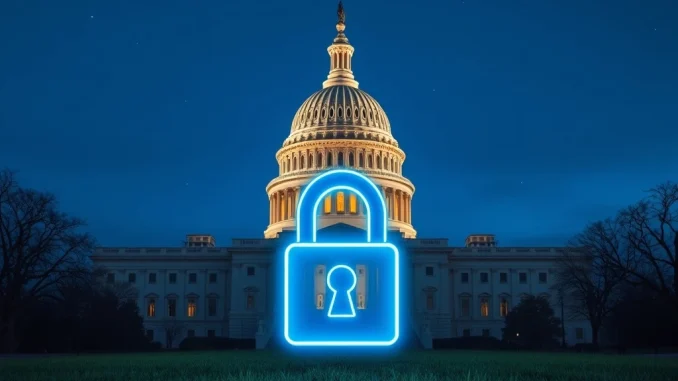
WASHINGTON, D.C. — March 12, 2026. The United States Senate delivered a decisive blow to the prospect of a Federal Reserve-issued central bank digital currency today, voting overwhelmingly to include a prohibition within major bipartisan housing legislation. Lawmakers approved the 21st Century Road to Housing Act by an 89-10 margin, embedding an amendment that explicitly bars the Federal Reserve from creating or issuing a central bank digital currency (CBDC) until at least December 31, 2030. This legislative maneuver, occurring during a critical election year, represents the most significant congressional action to date against a U.S. digital dollar and signals a profound shift toward embracing private-sector stablecoins instead.
Senate Vote Embeds CBDC Ban in Housing Affordability Bill
The Senate floor vote on Thursday, March 12, attached the CBDC prohibition as Amendment 427 to the broader 21st Century Road to Housing Act. The amendment’s text is unequivocal. It states, “The Board of Governors of the Federal Reserve System or a Federal Reserve Bank may not issue or create a central bank digital currency or any digital asset that is substantially similar… directly or indirectly through a financial institution or other intermediary.” Senator Cynthia Lummis (R-WY), a co-sponsor of the amendment, argued on the floor that the measure protects financial privacy. “We are drawing a line in the sand against financial surveillance,” Lummis stated. “A housing bill is an appropriate vehicle because home ownership represents the ultimate financial privacy and autonomy.” The legislative tactic—adding a contentious financial regulation to must-pass housing policy—ensured broad support, as noted by several aides speaking on background.
However, the legislation carves out a critical exception. It does not prohibit any dollar-denominated digital currency that is “open, permissionless, and private.” This language provides explicit legal safe harbor for certain stablecoins—cryptocurrencies pegged to traditional assets like the U.S. dollar. The distinction creates a clear policy preference for private-sector digital dollar alternatives over a government-issued CBDC. The bill now moves to the House of Representatives, where Republican leadership has signaled strong support for the CBDC ban, though some Democrats on the Financial Services Committee have raised procedural objections about the amendment’s scope.
Political Consensus Forms Against “Surveillance Currency”
The landslide 89-10 vote reveals a rare, cross-aisle consensus forming around the perceived dangers of a central bank digital currency. More than 30 lawmakers had previously signed a March 6 letter urging a permanent, rather than temporary, ban. “A CBDC would give unelected bureaucrats unprecedented power over Americans’ finances and threaten basic economic freedom,” argued Representative Ralph Norman (R-SC), a leading signatory. This sentiment finds echoes on the left. Senator Elizabeth Warren (D-MA), while not voting against the housing bill, has expressed parallel concerns about consumer protection gaps in any digital dollar design. The opposition coalesces around three core arguments: privacy erosion, government overreach, and the technical risks of a single point of failure in the financial system.
- Privacy Erosion: Critics argue a Fed-issued CBDC would inherently create a transparent ledger of all transactions, enabling unprecedented government surveillance of personal finances.
- Programmable Control: The potential for “programmable money”—currency with embedded rules on how, when, or where it can be spent—raises fears of economic coercion and social engineering.
- Financial Stability Risk: A digital dollar could accelerate bank runs during crises, as citizens could instantly move deposits to the perceived safety of the central bank, destabilizing commercial banks.
Expert Warnings and Institutional Reactions
Financial experts and industry groups have reacted strongly to the Senate’s action. In a notable interview from late 2025, hedge fund manager Ray Dalio warned Tucker Carlson that CBDCs represent “a very effective controlling mechanism by the government.” Dalio emphasized that such currencies “will be no privacy” and likely non-yield-bearing, making them vulnerable to automatic taxation or freezing. Concurrently, the Bank Policy Institute, representing major commercial banks, issued a statement of cautious support for the moratorium, highlighting the need for “full consideration of the systemic impacts” on the traditional banking sector. An external analysis from the Atlantic Council’s GeoEconomics Center (a high-authority external source) shows that over 130 countries are currently exploring CBDCs, placing the U.S. stance in stark contrast to peers like China’s digital yuan. The Institute’s CBDC Tracker is a key resource for global comparisons.
Stablecoins Emerge as the Preferred Digital Dollar Path
With the door closing on a Fed CBDC until 2030, the policy spotlight intensifies on dollar-pegged stablecoins. The Senate bill’s language mirrors objectives outlined in the Guiding and Empowering Nation’s Innovation for US Stablecoins (GENIUS) Act. Treasury Secretary Scott Bessent and President Donald Trump have consistently framed well-regulated, dollar-pegged stablecoins as tools to extend U.S. monetary hegemony globally. “Private stablecoins, operating within a clear regulatory framework, can export dollar dominance in the digital age far more effectively than a bureaucratic CBDC,” a Treasury official stated last month. This strategic pivot acknowledges the existing dominance of stablecoins like USD Coin (USDC) and Tether (USDT) in global crypto markets, which together hold over $140 billion in assets.
| Digital Dollar Model | Issuing Authority | Key Characteristics | U.S. Legislative Status |
|---|---|---|---|
| Central Bank Digital Currency (CBDC) | Federal Reserve | Centralized, potential for programmability, direct liability of Fed | Banned until 2030 per Senate bill |
| Regulated Stablecoin | Licensed Private Entities | Open, permissionless, backed by reserves, private | Path defined by GENIUS Act (pending) |
| Unregulated Stablecoin | Various Private Entities | Varying reserve transparency, global reach | Subject to ongoing regulatory scrutiny |
Legislative Path Forward and 2026 Election Implications
The amended 21st Century Road to Housing Act now proceeds to the House. Observers expect the CBDC ban provision to survive conference negotiations, given its overwhelming Senate support and alignment with House Republican priorities. The ultimate fate of the broader housing bill, however, remains less certain. President Trump has pledged to sign the legislation if it reaches his desk, framing the CBDC ban as a victory for financial freedom. The issue has become unexpectedly potent in the 2026 midterm campaigns, with numerous candidates adopting anti-CBDC platforms. This political reality makes a presidential veto of the popular ban highly unlikely, regardless of the housing provisions’ final form.
Industry and Advocacy Group Responses
Reactions from the cryptocurrency industry have been mixed. The Blockchain Association praised the Senate for “protecting innovation and financial privacy from a surveillance-style CBDC.” Conversely, some digital asset advocates worry the ban creates regulatory uncertainty and cedes leadership in digital currency architecture to other nations. Privacy advocacy groups like the Electronic Frontier Foundation have applauded the move. “This is a necessary pause to have a national conversation about privacy, money, and power in the digital era,” said a foundation representative. The contrasting views highlight the complex trade-offs between innovation, privacy, and monetary sovereignty at the heart of the debate.
Conclusion
The U.S. Senate’s 89-10 vote to ban a Federal Reserve CBDC marks a pivotal moment in the evolution of digital currency policy. By embedding the prohibition within must-pass housing legislation, lawmakers have effectively halted the digital dollar project for the remainder of the decade. This action solidifies a growing political consensus that views a central bank digital currency as an unacceptable risk to financial privacy and freedom. The policy vacuum created will now be filled by a push for regulated, private-sector stablecoins under frameworks like the GENIUS Act. As the bill moves to the House, the United States is formally choosing a path of decentralized digital dollar innovation over centralized control, a decision with profound implications for the global financial system. The world will watch closely as America charts this alternative course.
Frequently Asked Questions
Q1: What exactly did the US Senate vote on regarding CBDCs?
The Senate voted 89-10 to include an amendment in the 21st Century Road to Housing Act that prohibits the Federal Reserve from issuing or creating a central bank digital currency. This ban is effective immediately and lasts until December 31, 2030.
Q2: Does this ban affect stablecoins like USDC or USDT?
No. The legislation explicitly excludes dollar-denominated digital currencies that are “open, permissionless, and private.” This language protects well-regulated stablecoins and aligns with separate efforts to pass the GENIUS Act for stablecoin regulation.
Q3: What happens next with this legislation?
The amended housing bill now goes to the House of Representatives for consideration. Given the strong bipartisan Senate vote, the CBDC ban provision is expected to remain in the final version sent to the President, who has indicated he will sign it.
Q4: Why are so many lawmakers opposed to a U.S. CBDC?
Opponents, spanning both parties, argue a Fed-issued digital currency could enable unprecedented government surveillance of financial transactions, create risks of government coercion through “programmable money,” and potentially destabilize the commercial banking system.
Q5: How does the U.S. position compare to other countries on CBDCs?
The U.S. is now an outlier among major economies. Over 130 countries, including China (with its digital yuan), the European Union, and the UK, are actively developing or piloting CBDCs, viewing them as essential for future monetary systems.
Q6: How does this decision impact the average American or cryptocurrency user?
For now, it means no U.S. government-issued digital dollar will exist. Americans will continue to use physical cash, bank digital dollars, and private cryptocurrencies. The decision accelerates regulatory focus on stablecoins, which may become more integrated into everyday payments.