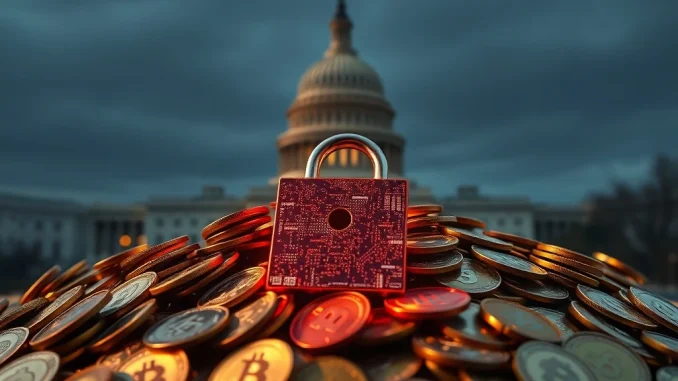
The digital asset world is abuzz with a significant development as the U.S. government takes decisive action against illicit financial activities. In a clear signal that authorities are stepping up their efforts to combat crime in the crypto space, the U.S. Attorney’s Office for the Western District of Washington has filed a civil action to secure the **crypto forfeiture** of $7.1 million in digital currency. This substantial sum is directly linked to an alleged oil and gas investment fraud scheme that reportedly duped investors out of a staggering $97 million.
Unpacking the Alleged Investment Fraud Scheme
This particular case shines a spotlight on the sophisticated methods employed by perpetrators of financial crimes. According to reports, the suspected **investment fraud** scheme operated for a considerable period, from June 2022 to July 2024. The Department of Homeland Security (DHS) initiated the seizure of the cryptocurrency in December 2024, paving the way for the recent civil action filed on July 22. This legal move aims to recover a portion of the vast sums allegedly collected from unsuspecting victims.
Such schemes often prey on the promise of high returns with minimal risk, a classic red flag in the investment world. In this instance, the allure of oil and gas investments, combined with the perceived anonymity and speed of cryptocurrency transactions, likely made the fraud more appealing and harder to trace for victims. The filing of a civil action rather than immediate criminal charges often indicates a focus on asset recovery, aiming to return funds to those who lost them.
The Growing Trend of US Government Crypto Seizure
This latest development is not an isolated incident but rather part of a broader, intensifying trend: the **US government crypto seizure** of illicit digital assets. Over the past few years, federal agencies, including the Department of Justice, IRS, and Homeland Security, have significantly ramped up their capabilities and efforts to track, trace, and seize cryptocurrencies used in illegal activities. From ransomware payments to drug trafficking, and now investment fraud, crypto’s role in the illicit economy has drawn significant attention from law enforcement.
Why are governments increasingly targeting crypto? The answer lies in the evolving nature of financial crime. While cryptocurrencies offer many legitimate benefits, their pseudonymous nature and cross-border transfer capabilities have made them attractive to criminals. However, contrary to popular belief, blockchain transactions are immutable and publicly recorded, making them traceable with the right tools and expertise. Law enforcement agencies have invested heavily in blockchain analytics tools and specialized units to follow the money trail, regardless of its digital form.
Understanding the Impact of Crypto Forfeiture
So, what exactly does **crypto forfeiture** entail, and what are its implications? Forfeiture is a legal process by which the government takes ownership of assets that were used in or derived from criminal activity. In this case, the $7.1 million in cryptocurrency is believed to be direct proceeds of the alleged fraud. Once forfeited, these funds can be liquidated, and in many instances, the proceeds are returned to victims or used to fund further law enforcement efforts.
The impact of such actions reverberates across the cryptocurrency ecosystem. Firstly, it sends a strong message to criminals that digital assets are not a safe haven for ill-gotten gains. Secondly, it can instill greater confidence in the legitimate use of cryptocurrencies by demonstrating that the system is not entirely ungoverned and that bad actors can be held accountable. For the broader market, these seizures highlight the ongoing tension between regulatory oversight and the decentralized ethos of crypto, but ultimately underscore the push for a more secure and compliant digital financial landscape.
Navigating the Risks: Protecting Against Cryptocurrency Fraud
Given the persistent threat of schemes like this alleged oil and gas **cryptocurrency fraud**, it’s more crucial than ever for individuals to exercise extreme caution and diligence when engaging with digital assets. The promises of guaranteed high returns, especially those that seem too good to be true, are almost always a scam. Here are key actionable insights to protect yourself:
- Do Your Due Diligence: Thoroughly research any investment opportunity, company, or individual before committing funds. Check for legitimate registrations, licenses, and verifiable track records.
- Be Wary of Unsolicited Offers: Scammers often reach out via social media, email, or messaging apps with tempting offers. Always be skeptical of unexpected investment pitches.
- Understand the Technology: While you don’t need to be a blockchain expert, a basic understanding of how cryptocurrencies work can help you identify unrealistic claims.
- Secure Your Assets: Use strong, unique passwords, enable two-factor authentication (2FA) on all your crypto accounts, and consider hardware wallets for significant holdings.
- Verify Official Communications: Always verify information from official sources. If you receive a press release or news about a seizure, cross-reference it with reputable news outlets and government websites.
The Perilous Landscape of Oil and Gas Scam Investments
It’s particularly alarming to see traditional scam methods, like the **oil and gas scam**, adapt and leverage modern technologies like cryptocurrency. Historically, oil and gas investment frauds often involve selling shares in non-existent wells, promising high yields from speculative ventures, or misrepresenting geological data. By integrating cryptocurrency, these scammers add layers of complexity and perceived legitimacy, sometimes even offering fake crypto tokens supposedly backed by oil and gas reserves.
This fusion of old and new fraud techniques makes detection harder for the average investor. The promise of combining a tangible asset (oil/gas) with the excitement of digital currencies can be a powerful lure. However, the fundamentals remain the same: if the investment relies on secrecy, high pressure sales tactics, and guarantees that defy market realities, it’s likely a scam. The case in the Western District of Washington serves as a stark reminder that vigilance is paramount, whether the investment is traditional or digital.
A Clear Message to the Digital Underworld
The U.S. government’s pursuit of this $7.1 million in cryptocurrency is a powerful testament to its commitment to maintaining integrity in the financial system, both traditional and digital. It underscores the reality that while cryptocurrency offers innovation and decentralization, it is not beyond the reach of law enforcement when used for illicit purposes. As the digital asset space continues to evolve, so too will the methods of both criminals and the authorities working to combat them.
For investors and enthusiasts, this serves as a crucial reminder: the responsibility to protect your assets begins with education and skepticism. Stay informed, stay vigilant, and always prioritize security and verifiable legitimacy over the promise of quick, unrealistic gains. The fight against fraud is ongoing, and awareness is your strongest defense.
Updated insights and analysis added for better clarity.
This article was produced with AI assistance and reviewed by our editorial team for accuracy and quality.