ZUG, SWITZERLAND — March 15, 2026: In a move set to redefine the frontier of autonomous finance, the artificial intelligence firm UnifAI has announced a pivotal technical integration with blockchain infrastructure provider OpenClaw. This strategic collaboration, confirmed today, grants UnifAI’s AI agents seamless, programmatic access to over 45 leading decentralized finance (DeFi) protocols. The partnership directly targets the advancement of secure, AI-driven agentic finance automation, enabling autonomous systems to execute complex financial strategies across a fragmented DeFi landscape. Industry analysts immediately flagged the alliance as a significant acceleration point for the convergence of AI and decentralized systems.
UnifAI and OpenClaw: Architecting the DeFi-AI Bridge
The core of the partnership hinges on OpenClaw’s specialized middleware, which acts as a unified API layer for disparate DeFi protocols. Previously, AI developers faced immense complexity building secure connections to each protocol’s unique smart contracts and liquidity pools. Dr. Anya Sharma, UnifAI’s Chief Technology Officer, explained the technical hurdle in a statement to our publication. “Our goal is agentic finance—AI that can perceive, reason, and act autonomously within financial markets,” said Dr. Sharma. “Before OpenClaw, connecting to 45 protocols meant managing 45 different security models, 45 update cycles, and 45 points of potential failure. This integration consolidates that risk and operational overhead dramatically.”
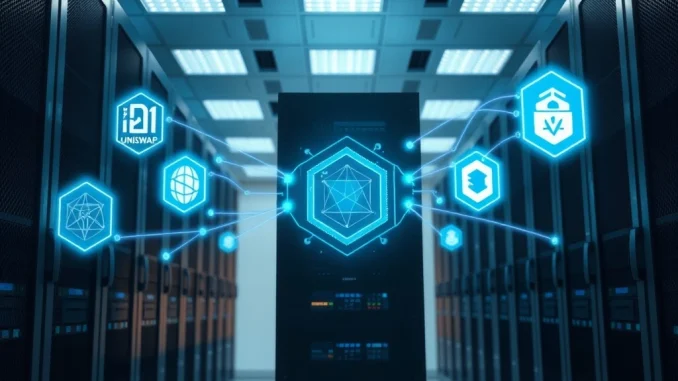
OpenClaw’s infrastructure, already utilized by several institutional trading desks, provides standardized security checks and real-time liquidity data. The integration allows UnifAI’s AI agents to query data from and execute transactions on protocols including Aave, Compound, Uniswap, and newer automated market makers (AMMs) through a single, audited gateway. A timeline released by the companies shows the technical integration began in Q4 2025, with a private beta running for the past eight weeks involving three undisclosed quantitative hedge funds.
Quantifying the Impact on AI and DeFi Markets
The immediate impact of this alliance is twofold: it lowers the barrier to entry for sophisticated AI in DeFi and potentially increases capital efficiency across the ecosystem. Marcus Chen, a lead researcher at the Digital Finance Observatory, provided context. “We estimate the total value locked (TVL) in protocols accessible via this integration exceeds $80 billion,” Chen noted. “By enabling AI agents to operate across this liquidity seamlessly, we could see a new wave of algorithmic strategies that are market-neutral across multiple chains, something largely manual and slow today.”
- Enhanced Strategy Complexity: AI agents can now construct multi-protocol strategies in seconds—for example, borrowing assets on one platform, swapping on another, and providing liquidity on a third, all while autonomously managing risk parameters.
- Improved Security Posture: Centralizing interactions through OpenClaw’s audited layer allows for uniform security screening, potentially reducing the attack surface compared to bespoke integrations.
- Market Liquidity Effects: Increased activity from AI-driven agents could deepen liquidity pools but may also introduce new volatility patterns, a subject of ongoing study by regulators.
Expert Analysis: A Step Toward Autonomous Financial Systems
Professor Kenji Tanaka of the Stanford Blockchain Research Center emphasized the long-term significance. “This isn’t just a better API,” Tanaka stated. “It’s a critical piece of plumbing for the ‘agentic economy’—a world where autonomous software entities participate in markets. The real test will be in the robustness of the security model under adversarial conditions from other AI agents.” His reference points to emerging research on multi-agent financial systems, where AIs might compete or collaborate. The partnership includes a joint research initiative with the University of Zurich’s Center for Sustainable Finance to study these systemic implications, providing an external, authoritative source for ongoing analysis.
Broader Context: The Race for AI-Fi Dominance
This move places UnifAI and OpenClaw in direct competition with other “AI-Fi” stacks being developed by both crypto-native firms and traditional finance giants. The collaboration reflects a strategic bet that the future of autonomous finance will be built on decentralized rails rather than legacy systems. The table below contrasts key approaches in the emerging AI-driven finance landscape.
| Approach | Key Players | Primary Infrastructure | Access Scope |
|---|---|---|---|
| DeFi-Native AI Integration | UnifAI/OpenClaw | Blockchain & Smart Contracts | 45+ DeFi Protocols |
| TradFi Automation Augmentation | Major Investment Banks | Private APIs, Legacy Systems | Equities, Forex, Commodities |
| Cross-Chain Aggregation | Various DeFi Aggregators | Bridge Protocols, Messaging Layers | Liquidity Across Chains |
The Road Ahead: Scaling and Regulatory Navigation
The next phase, according to a joint roadmap, involves scaling the number of integrated protocols to over 100 by end-of-year and implementing more advanced intent-based transaction systems. These systems would allow AI agents to specify a desired financial outcome (e.g., “achieve yield of X% with Y risk profile”) while the infrastructure determines the optimal path across protocols. However, the path forward is not purely technical. Elena Vasquez, a former SEC advisor now with the Fintech Policy Lab, highlighted regulatory attention. “When you introduce autonomous agents into DeFi, you amplify questions about liability, market manipulation, and compliance,” Vasquez explained. “The companies are proactively engaging with the Swiss Financial Market Supervisory Authority (FINMA), which is a positive trust signal.”
Industry and Community Reaction
Initial reactions from the developer community have been cautiously optimistic. On developer forums, many praised the technical simplification but voiced concerns about centralization risks inherent in relying on a single access layer. Meanwhile, representatives from several integrated DeFi protocols welcomed the potential for increased protocol usage and fee generation, though they emphasized the need for ongoing dialogue about governance and security standards.
Conclusion
The partnership between UnifAI and OpenClaw represents a substantial infrastructural milestone for AI-driven agentic finance automation. By solving the critical problem of fragmented access, it unlocks a new tier of strategic complexity for autonomous systems operating in decentralized markets. While challenges around regulation, security, and market dynamics remain, this collaboration provides a concrete foundation for the next evolution of automated finance. Observers should monitor the rollout of the public API in Q2 2026 and the subsequent white papers from the associated academic research partnerships, which will provide crucial data on the real-world impacts of AI agents on DeFi stability and efficiency.
Frequently Asked Questions
Q1: What does the UnifAI and OpenClaw partnership actually do?
The partnership integrates OpenClaw’s unified API layer with UnifAI’s AI systems, allowing UnifAI’s autonomous agents to securely interact with over 45 different DeFi protocols—like Aave and Uniswap—without building separate connections to each one.
Q2: How could this affect the average DeFi user?
In the short term, users may not notice direct changes. However, increased AI activity could lead to deeper liquidity and more efficient markets, potentially lowering trading fees and slippage. It may also introduce new, more complex yield-generating strategies managed by AI.
Q3: When will this integrated technology be publicly available?
The companies have completed a private beta. A public API and developer toolkit are scheduled for release in the second quarter of 2026, according to the published roadmap.
Q4: Is my money safer or at more risk with AI agents in DeFi?
The integration centralizes security checks through OpenClaw’s audited system, which could reduce certain risks. However, the overall risk profile depends on the actions and potential vulnerabilities of the AI agents themselves, a new area of focus for security researchers.
Q5: How does this differ from existing DeFi aggregators like 1inch?
While aggregators find the best trade prices for users, this partnership provides a full-stack *execution* layer for autonomous AI. It allows AI to not just swap tokens but also borrow, lend, and provide liquidity across many protocols programmatically as part of a long-term strategy.
Q6: What should developers and institutions watch for next?
Key milestones include the Q2 2026 public API launch, the publication of the joint research with the University of Zurich on systemic impacts, and any regulatory guidance from bodies like Switzerland’s FINMA regarding autonomous financial agents.
Updated insights and analysis added for better clarity.
This article was produced with AI assistance and reviewed by our editorial team for accuracy and quality.