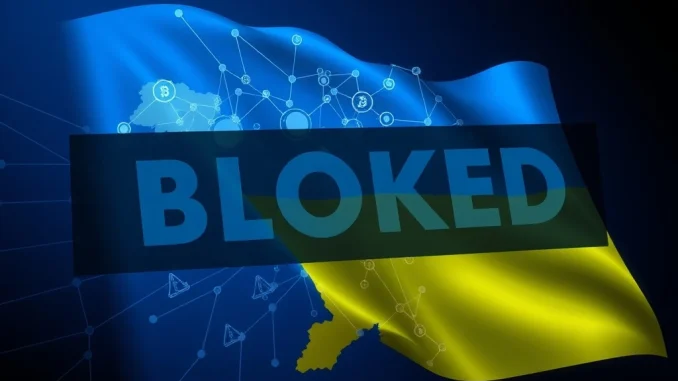
Ukrainian authorities have implemented a decisive blockade against Polymarket, a prominent cryptocurrency-based predictive markets platform, marking a significant escalation in global regulatory scrutiny of blockchain-based gambling alternatives. This enforcement action, initiated in December 2025, represents a clear regulatory stance that crypto innovation does not override established gambling legislation. The Ukrainian National Commission for Regulation of Gambling and Lotteries has formally classified Polymarket’s activities as unauthorized online gambling, compelling internet service providers to restrict access to the platform’s primary domain. This development occurs amidst broader international debates about the classification and regulation of decentralized prediction markets, particularly those operating with cryptocurrency tokens. Consequently, the Ukrainian case establishes an important precedent for how jurisdictions worldwide might approach similar platforms that blur traditional financial and gambling boundaries.
Polymarket Ukraine Blockade: Technical Implementation and Enforcement
Ukrainian regulators executed the Polymarket blockade through a formal resolution dated December 10, 2025. This administrative order specifically targets platforms that organize or facilitate betting activities without recognized national licenses. Authorities added polymarket.com to Ukraine’s public registry of banned online resources, triggering mandatory DNS filtering and network-level restrictions across the country’s internet infrastructure. The enforcement mechanism relies on internet service providers implementing technical blocks, though reports indicate inconsistent application. Some Ukrainian users confirm complete access denial, while others bypass restrictions using alternative DNS servers or virtual private networks. This fragmentation highlights common challenges in nationwide internet censorship enforcement. Meanwhile, the technical blockade represents just one component of Ukraine’s comprehensive regulatory strategy. The government simultaneously pursues public awareness campaigns about unauthorized gambling platforms and coordinates with financial institutions to monitor cryptocurrency transactions linked to such services.
Crypto Predictive Markets: The Regulatory Classification Challenge
The Ukrainian regulator’s decision centers on a fundamental classification question: when do cryptocurrency prediction markets constitute gambling rather than financial innovation? Polymarket operates as an event-based trading platform where users purchase shares tied to specific outcomes. These shares fluctuate in value based on market sentiment and event probability, creating a price discovery mechanism similar to financial markets. However, Ukrainian authorities emphasize that users ultimately stake money on uncertain events with the primary expectation of financial gain. This core characteristic triggers gambling legislation in numerous jurisdictions. The regulator’s analysis notes several gambling indicators: consideration (cryptocurrency stakes), chance (uncertain outcomes), and prize (potential returns). Furthermore, the platform’s design includes elements common to gambling interfaces, such as simplified betting mechanisms and immediate payout structures. This regulatory perspective aligns with increasing global scrutiny of crypto platforms that might circumvent traditional gambling oversight through technological novelty.
International Regulatory Parallels and Precedents
Ukraine’s action against Polymarket follows similar regulatory moves in other European jurisdictions. Multiple countries have previously restricted or investigated prediction market platforms operating with cryptocurrencies. These international cases establish important precedents for the Ukrainian decision. Regulatory bodies typically examine several key factors: whether platform operators control the markets, how they facilitate monetary transactions, and what consumer protections exist. Many jurisdictions maintain that decentralized technology does not eliminate operator responsibility for user protection and regulatory compliance. The European Union’s evolving Markets in Crypto-Assets (MiCA) framework, while primarily addressing financial instruments, increasingly considers how prediction markets might fit within existing gambling directives. Consequently, Ukraine’s enforcement action reflects broader regional trends toward clearer regulatory categorization of blockchain-based services that involve financial speculation on future events.
War-Related Markets: The Sensitive Context of Ukrainian Enforcement
Ukraine’s regulatory decision carries particular sensitivity due to Polymarket’s historical hosting of markets related to the ongoing conflict. The platform previously allowed trading on military and political developments within Ukraine, creating ethical and political complications. From a regulatory perspective, permitting unlicensed betting on national security matters presents clear concerns. Even without explicit prohibitions, authorities generally restrict gambling activities that could exploit national crises or conflict situations. The Ukrainian case demonstrates how prediction markets can intersect with geopolitical realities in problematic ways. Furthermore, the government likely considers the potential for market manipulation or misinformation propagation through such platforms. While Polymarket has removed many conflict-related markets, their previous existence contributes to regulatory skepticism about adequate content moderation in decentralized prediction platforms. This context reinforces authorities’ determination to establish clear jurisdictional control over platforms accessible to Ukrainian citizens.
Legal Framework Analysis: Ukraine’s Gambling Regulation Evolution
Ukraine’s gambling regulatory framework has undergone significant transformation since its legalization in 2020. The current legislation establishes strict licensing requirements, consumer protection standards, and responsible gambling measures. The National Commission for Regulation of Gambling and Lotteries exercises comprehensive oversight authority, including blocking unlicensed operators. This regulatory structure explicitly covers online gambling activities, regardless of technological implementation. The Polymarket case tests how cryptocurrency-based prediction markets fit within this existing framework. Ukrainian law defines gambling as “a risk-based agreement to win money or other property, the result of which depends entirely or predominantly on chance.” Regulators apply this definition to Polymarket’s operations, emphasizing the chance element in event outcomes. The enforcement action demonstrates authorities’ commitment to applying traditional gambling regulations to novel technological implementations. This approach ensures consistent consumer protection regardless of platform technology while maintaining national control over gambling activities accessible to Ukrainian residents.
Consumer Protection and Financial Safeguards
Ukrainian regulators emphasize consumer protection rationales for the Polymarket blockade. Unlicensed gambling platforms typically lack mandatory safeguards present in regulated markets: age verification systems, spending limits, self-exclusion mechanisms, and addiction prevention resources. Furthermore, cryptocurrency transactions complicate financial protections, as chargebacks or payment disputes become nearly impossible. The regulatory analysis notes that Polymarket’s decentralized nature potentially exacerbates these consumer risks. Users have limited recourse for disputed transactions or platform issues, while the pseudonymous nature of cryptocurrency wallets hinders responsible gambling enforcement. These consumer protection concerns align with broader financial regulatory priorities in Ukraine, particularly regarding cryptocurrency adoption. The National Bank of Ukraine has consistently emphasized the importance of regulated financial environments, even as it explores central bank digital currency development. Consequently, the Polymarket decision reflects interconnected regulatory priorities spanning gambling oversight, financial protection, and technological governance.
Global Implications for Crypto Prediction Markets
Ukraine’s enforcement action against Polymarket signals potential challenges for similar platforms worldwide. Regulatory scrutiny of cryptocurrency prediction markets intensifies as these platforms gain mainstream attention. The classification dilemma persists across jurisdictions: are these platforms financial markets, gambling services, or entirely new regulatory categories? Several factors influence regulatory responses: the platform’s centralized elements, the role of cryptocurrency, market topic sensitivity, and consumer participation levels. International regulatory cooperation increasingly addresses cross-border platforms like Polymarket. Information sharing between national regulators helps identify common concerns and enforcement strategies. Furthermore, the Ukrainian case highlights how geopolitical considerations can influence regulatory decisions about globally accessible platforms. As prediction markets expand into more sensitive topics, additional jurisdictions may implement restrictive measures similar to Ukraine’s blockade. This trend suggests that purely technological arguments about decentralization may prove insufficient against determined national regulators prioritizing consumer protection and jurisdictional control.
Technical Compliance and Platform Adaptation Strategies
The Polymarket blockade demonstrates technical enforcement capabilities against globally accessible cryptocurrency platforms. While complete technical blocking proves challenging, regulatory pressure can significantly restrict platform accessibility and usability. Service providers face difficult decisions when jurisdictions demand platform modifications for compliance. Potential adaptation strategies include geographical access restrictions, market topic limitations, and enhanced user verification systems. However, these modifications often conflict with decentralized platforms’ fundamental design principles. The technical response also involves cryptocurrency exchange compliance, as regulators increasingly pressure exchanges to restrict transactions linked to non-compliant platforms. This multi-layered enforcement approach creates substantial operational challenges for prediction market platforms targeting global users. Consequently, the Ukrainian case may accelerate industry discussions about regulatory engagement models, potentially leading to more structured compliance frameworks for decentralized platforms operating across multiple jurisdictions with conflicting regulatory standards.
Conclusion
Ukraine’s blockade of Polymarket represents a significant development in global cryptocurrency regulation, particularly regarding prediction markets and their classification under gambling legislation. This enforcement action underscores that technological innovation does not automatically override established regulatory frameworks designed for consumer protection and jurisdictional control. The Ukrainian case demonstrates rigorous regulatory analysis of how cryptocurrency platforms’ operational characteristics align with traditional gambling definitions. Furthermore, the decision highlights how geopolitical context and national security considerations can influence regulatory approaches to globally accessible platforms. As cryptocurrency prediction markets continue evolving, they will likely face increasing regulatory scrutiny across multiple jurisdictions. The Polymarket Ukraine situation establishes important precedents for how nations might assert regulatory authority over decentralized platforms operating within their digital borders. This case ultimately reinforces that cryptocurrency platforms must navigate complex regulatory landscapes that vary significantly across national boundaries, regardless of their technological decentralization narratives.
FAQs
Q1: Why did Ukraine block access to Polymarket?
Ukrainian regulators blocked Polymarket because they classify its prediction markets as unauthorized online gambling. The National Commission for Regulation of Gambling and Lotteries determined that users stake cryptocurrency on uncertain events hoping for financial gain, which meets Ukraine’s legal definition of gambling activity requiring licensing.
Q2: Can Ukrainian users still access Polymarket despite the blockade?
Access varies depending on technical implementation by internet service providers. Some users report successful access through VPNs or alternative DNS servers, though the government continues refining enforcement mechanisms to increase blocking effectiveness across Ukraine’s internet infrastructure.
Q3: How does Polymarket differ from traditional cryptocurrency exchanges?
Polymarket focuses specifically on event prediction markets where users trade shares based on outcome probabilities, while traditional exchanges facilitate cryptocurrency trading as financial assets. This fundamental difference in purpose triggers distinct regulatory considerations, particularly regarding gambling versus financial regulations.
Q4: Have other countries taken similar action against prediction markets?
Yes, several European countries have restricted or investigated cryptocurrency prediction markets, though approaches vary. Some jurisdictions treat them as financial instruments, others as gambling platforms, while some create new regulatory categories. Ukraine’s action aligns with increasing global regulatory attention to these platforms.
Q5: What are the broader implications for decentralized cryptocurrency platforms?
The Polymarket case demonstrates that decentralized platforms still face national regulatory enforcement. Jurisdictions can implement technical blocks, pressure service providers, and restrict financial access. This suggests that purely technological arguments about decentralization may not prevent regulatory action when platforms violate national laws.
This article was produced with AI assistance and reviewed by our editorial team for accuracy and quality.