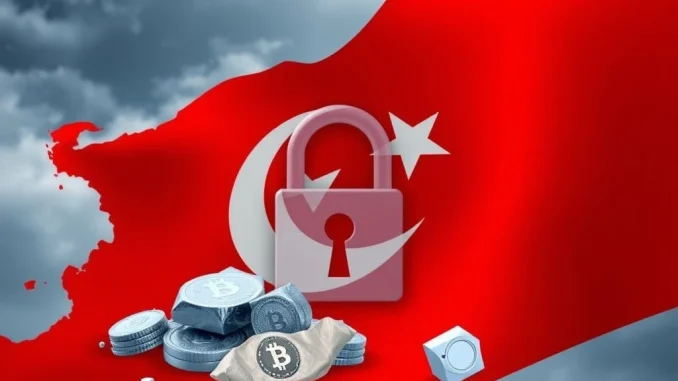
A significant development is unfolding in Turkey, capturing the attention of cryptocurrency enthusiasts globally. The nation is actively pursuing legislation that could drastically alter how digital assets are managed. This new bill aims to grant unprecedented powers to government bodies. It specifically targets the freezing of **cryptocurrency accounts** as part of a broader **anti-money laundering** initiative. This move signals a stricter regulatory environment for digital finance within the country.
Understanding the Turkey Crypto Freeze Legislation
Turkey’s proposed legislation marks a pivotal moment for its burgeoning crypto market. According to reports from Bloomberg, the bill focuses on combating financial crimes through enhanced oversight. The central provision of this new law empowers the Financial Crimes Investigation Board (MASAK). Consequently, MASAK would gain the ability to freeze and restrict access to various financial holdings. This includes both traditional bank accounts and, critically, **cryptocurrency accounts**.
The government justifies these measures as crucial steps in its ongoing battle against illicit financial activities. Such actions aim to bolster national security and protect the financial system. However, they also raise important questions about individual financial autonomy. They also impact the future of decentralized finance in Turkey. Many stakeholders are closely watching the bill’s progression through the legislative process.
MASAK Authority and Its Broad Reach
The scope of **MASAK authority** under the proposed bill is extensive. It extends far beyond simple monitoring. Firstly, MASAK would possess the power to unilaterally freeze assets. This means that if an account is flagged, access could be immediately halted. Secondly, it could restrict access to funds without prior court order in certain circumstances. Furthermore, the board would be able to blacklist specific cryptocurrency addresses. These addresses would be those definitively linked to criminal enterprises.
This empowerment allows for swift action against suspected money laundering, terrorist financing, and other financial offenses. The legislation aims to provide a robust framework for law enforcement. However, critics suggest such broad powers could also lead to potential misuse or unintended consequences for legitimate users. Therefore, transparency and clear guidelines for MASAK’s operations become paramount.
Global Context of Crypto Regulation Turkey
Turkey is not alone in its efforts to tighten controls over digital assets. Indeed, many nations worldwide are grappling with the challenges of regulating the crypto space. The global push for **anti-money laundering** (AML) and counter-terrorist financing (CTF) measures is intensifying. Jurisdictions from the European Union to the United States are implementing stricter rules. They often mandate Know Your Customer (KYC) procedures and transaction monitoring.
However, Turkey’s approach, particularly the direct power to freeze **cryptocurrency accounts**, appears quite assertive. This contrasts with some jurisdictions that rely more on judicial oversight for such actions. The country’s history of financial volatility and its previous efforts to stabilize the Lira may also influence this assertive stance. This legislative move positions Turkey firmly among countries adopting a strong regulatory hand in the crypto domain.
Impact on Cryptocurrency Accounts and Users
The potential impact on Turkish citizens and businesses holding digital assets is significant. If passed, the bill could create an environment of increased scrutiny for all **cryptocurrency accounts**. Users might face sudden restrictions on their funds if their activities are deemed suspicious by MASAK. This could affect both individual investors and businesses operating with crypto.
For crypto exchanges and service providers in Turkey, compliance burdens will likely increase substantially. They will need to implement robust systems to identify and report suspicious transactions. They will also need to cooperate fully with MASAK’s directives. The long-term effect could be a chilling effect on innovation in the Turkish crypto sector. It might also encourage users to seek unregulated offshore platforms, paradoxically increasing risks.
Navigating Anti-Money Laundering Efforts and Future Outlook
Governments globally recognize the dual nature of cryptocurrencies. They offer innovative financial solutions but also present new avenues for illicit activities. Therefore, **anti-money laundering** efforts are becoming a top priority for regulators. Turkey’s proposed bill is a clear reflection of this global trend. It underscores the urgency nations feel in establishing control over digital asset flows.
The future of **crypto regulation Turkey** remains somewhat uncertain. The bill still needs to navigate the legislative process. Its final form could see amendments. However, the intent is clear: Turkey aims to exert significant control over its digital financial landscape. Crypto users and businesses in Turkey must stay informed. They need to understand the evolving regulatory framework. This is crucial for navigating the changing environment effectively.
Frequently Asked Questions (FAQs)
Q1: What is the main purpose of Turkey’s new crypto bill?
A1: The bill primarily aims to enhance Turkey’s **anti-money laundering** efforts. It seeks to combat financial crimes by granting the Financial Crimes Investigation Board (MASAK) new powers over financial accounts.
Q2: What specific powers would MASAK gain over cryptocurrency accounts?
A2: Under the proposed bill, **MASAK authority** would include the power to freeze and restrict access to both bank and **cryptocurrency accounts**. It could also blacklist crypto addresses linked to criminal activity.
Q3: How might this legislation affect crypto users in Turkey?
A3: Crypto users in Turkey might experience increased scrutiny. Their **cryptocurrency accounts** could face sudden restrictions if flagged by MASAK. This could impact individual investors and businesses.
Q4: Is Turkey alone in implementing such strict crypto regulations?
A4: No, many nations are tightening **crypto regulation Turkey** and globally. However, Turkey’s direct power to freeze accounts appears more assertive than some other jurisdictions.
Q5: What is the significance of the term ‘Turkey crypto freeze’?
A5: The term ‘Turkey crypto freeze’ refers to the potential new legal power allowing authorities to freeze digital asset holdings. This is a key provision of the proposed anti-money laundering legislation.
Q6: What should Turkish crypto users do in response to this bill?
A6: Turkish crypto users should remain informed about the bill’s progress. They should understand the new regulatory framework. They must also ensure compliance with any new rules implemented by exchanges and service providers.
This article was produced with AI assistance and reviewed by our editorial team for accuracy and quality.