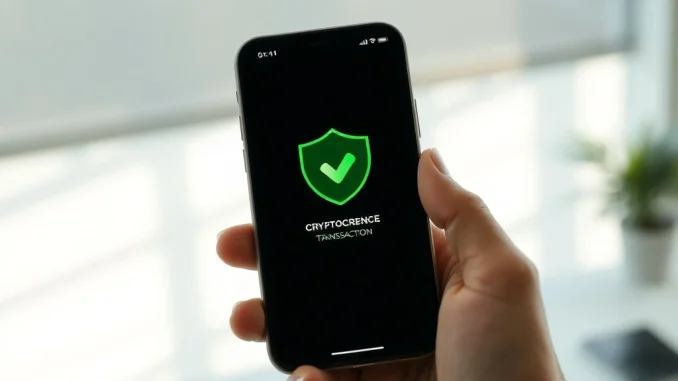
On Tuesday, February 18, 2026, in a major security upgrade, the non-custodial Trust Wallet announced the global rollout of real-time scam address checks designed to protect millions of users from address poisoning attacks. The new feature automatically screens destination addresses against a database of known malicious and lookalike wallets across 32 Ethereum Virtual Machine (EVM) compatible blockchains. This development arrives as the crypto industry grapples with over $500 million in confirmed losses from address poisoning, a phishing technique security experts label one of the fastest-growing threats in digital assets.
Trust Wallet’s Proactive Defense Against Address Poisoning
Trust Wallet’s new protection system represents a significant shift from reactive to proactive security. The wallet now performs an automatic check whenever a user enters a destination address for a transaction. Consequently, if the address matches a known scam or a deceptive lookalike entry in Trust Wallet’s threat intelligence database, the transaction is blocked with a clear warning. Initially, this safety net covers major networks including Ethereum, BNB Smart Chain, Polygon, Optimism, Arbitrum, Avalanche, and Base. The company’s internal data, cited in the announcement, points to more than 225 million recorded address poisoning attempts to date. This move directly responds to mounting pressure from the community and high-profile industry figures for wallet providers to implement more robust, preemptive security measures.
Address poisoning, also known as “address spoofing,” exploits a common user behavior: copying addresses from transaction history. Scammers first send tiny, worthless transactions to a target’s wallet from an address crafted to closely resemble a legitimate one the victim frequently uses. An unsuspecting user who later copies what they believe is a familiar address from their history inadvertently selects the scammer’s lookalike, sending funds directly to criminals. The subtlety of the attack makes it particularly effective. Trust Wallet’s solution aims to break this chain by intercepting the transaction before it is signed and broadcast.
The Escalating Financial Toll of Address Poisoning Scams
The urgency for such features is underscored by staggering recent losses. In December 2025, a single address poisoning incident resulted in a catastrophic $50 million loss of USDt (USDT). Merely weeks later, another investor lost $12 million to a similar scheme, bringing the two-month total to $62 million. These high-value thefts have triggered alarm across the cryptocurrency sector. Security analysts at Hacken’s Extractor team told Cointelegraph that beyond technological fixes, user education remains critical. “Investors must break the habit of blindly copying addresses from transaction history,” a team representative emphasized. “Verifying every character of an address, especially for large transactions, is the most basic and effective defense.”
- Mounting Losses: Confirmed losses now exceed $500 million, with single incidents reaching $50 million.
- Attack Volume: Over 225 million poisoning attempts have been recorded, indicating widespread criminal activity.
- Industry Pressure: High-profile losses have led to direct calls for wallet providers to implement mandatory screening.
Expert Calls for Mandatory Wallet Security Standards
The December 2025 $50 million theft prompted immediate and forceful reactions from industry leaders. Former Binance CEO Changpeng Zhao publicly called for universal security protocols in a Binance Square post. “All wallets should simply check if a receiving address is a poison address, and block the user. This is a blockchain query,” Zhao wrote on December 24, 2025. He added that wallets should not display similar spam transactions in a user’s history in the first place. This sentiment reflects a growing consensus that security cannot be an optional or premium feature as digital asset adoption increases. Trust Wallet’s implementation is a direct answer to this call, though it follows a serious security incident of its own. On the same day as Zhao’s post, Trust Wallet’s Chrome browser extension was compromised by malicious code, leading to approximately $7 million in user losses. The company swiftly released a patched version and committed to covering affected users, a move that placed additional scrutiny on its broader security roadmap.
The Competitive Landscape of Crypto Wallet Security
Trust Wallet is not operating in a vacuum. Several other wallet providers have introduced their own transaction screening and security layers, creating a competitive environment that ultimately benefits users. The Rabby Wallet, popular among DeFi users, offers pre-transaction simulation and risk warnings. Zengo Wallet uses a keyless, MPC-based security model that inherently reduces phishing risks. Meanwhile, the Solana-focused Phantom Wallet has also integrated malicious address detection, though its ecosystem is distinct from EVM chains. This table compares key security features across leading non-custodial wallets as of early 2026:
| Wallet | Core Security Feature | Address Poisoning Protection |
|---|---|---|
| Trust Wallet | Real-time scam DB check | Yes (New, across 32 EVM chains) |
| Rabby Wallet | Pre-transaction simulation & risk alerts | Via simulation warnings |
| Zengo Wallet | Keyless MPC (no seed phrase) | Reduced risk surface |
| Phantom Wallet | Built-in malicious address detection | Yes (Solana & EVM) |
The broader context is a cryptocurrency industry still reeling from the exploits and collapses of 2022-2023. Regulatory bodies worldwide are increasingly focusing on consumer protection in digital assets. Proactive security measures from major service providers like Trust Wallet can serve as both a market differentiator and a preemptive step against more stringent, potentially restrictive, future regulations. Security is evolving from a back-end concern to a primary front-end feature that directly influences user adoption and trust.
What’s Next for Crypto Wallet Security and User Protection
The rollout of real-time scam checks is likely just the beginning. Industry observers anticipate several developments throughout 2026. First, we may see the standardization and sharing of threat intelligence databases between competing wallet providers, creating a unified front against scammers. Second, integration with decentralized identity solutions or social verification proofs could add another layer of confirmation for high-value transactions. Finally, expect increased regulatory scrutiny on wallet security standards, potentially leading to certification requirements in certain jurisdictions. Trust Wallet has indicated it will expand its protection to non-EVM chains in future updates, suggesting a roadmap of continuous security enhancement.
Community and Developer Reactions to the Security Upgrade
Initial reactions from the crypto community have been largely positive, though tempered by caution. Many users on social media platforms welcomed the added layer of security, noting that it protects less technically savvy participants crucial for mass adoption. However, some developers and privacy advocates have raised questions about the centralized nature of the scam database, urging transparency in how addresses are flagged and a clear appeal process for false positives. The response from other wallet teams has been watchful; Trust Wallet’s move raises the bar for the entire sector, and competitors will now be expected to match or exceed this level of proactive protection. The coming months will reveal how quickly these features become industry standard.
Conclusion
Trust Wallet’s introduction of real-time scam address checks marks a pivotal moment in the evolution of cryptocurrency self-custody. By proactively blocking transactions to known malicious addresses across 32 blockchains, the wallet addresses a critical vulnerability that has led to over half a billion dollars in losses. This move responds directly to expert demands for stronger security defaults and follows a period of intense scrutiny after high-profile thefts. While user education remains essential, the industry’s shift towards building safety directly into wallet interfaces is a positive and necessary development. As the crypto landscape matures in 2026, the integration of advanced, real-time security features will likely become a baseline expectation, not a premium differentiator, shaping a safer ecosystem for all participants.
Frequently Asked Questions
Q1: How does Trust Wallet’s new scam address check actually work?
When you enter a destination address for a cryptocurrency transfer, Trust Wallet automatically checks it against a constantly updated database of known scam and lookalike addresses. If a match is found, the transaction is blocked, and you receive an immediate warning, preventing the funds from being sent.
Q2: Which blockchains are currently supported by this protection feature?
The feature initially launched on 32 Ethereum Virtual Machine (EVM) compatible chains. Major networks include Ethereum, BNB Smart Chain, Polygon, Optimism, Arbitrum, Avalanche, and Base. Support for non-EVM chains like Solana or Bitcoin is planned for future updates.
Q3: What should I do if I believe the wallet has incorrectly flagged a legitimate address?
Wallet providers implementing these systems typically have a process for reviewing false positives. Users should contact Trust Wallet support directly through official channels to report the issue. Transparency in the appeal process is a key point of discussion within the community.
Q4: Does this new feature eliminate all risk of me sending crypto to a scammer?
No. While it is a powerful layer of protection against known scams, it cannot catch brand-new, unknown malicious addresses. Users must still practice fundamental security: double-checking every address character, using address book features for frequent contacts, and never copying addresses from unsolicited messages or unverified sources.
Q5: Are other wallets implementing similar real-time security checks?
Yes, a competitive trend is emerging. Wallets like Rabby, Zengo, and Phantom offer various forms of transaction simulation, risk alerts, and malicious address detection. Trust Wallet’s broad rollout across many chains raises the competitive bar for the entire sector.
Q6: How does this affect decentralized finance (DeFi) users interacting with smart contracts?
The feature primarily screens destination addresses for direct transfers. Interactions with smart contract addresses (for swapping, staking, lending, etc.) involve different risk parameters, such as contract approval exploits. Users should continue to use dedicated security tools for DeFi, like contract audit checkers and approval managers, in addition to wallet-level protections.