Trust Wallet, a leading non-custodial cryptocurrency wallet, has deployed a critical new security feature designed to combat one of the fastest-growing threats in digital assets. On Tuesday, February 18, 2026, the global wallet provider announced the launch of real-time scam address checks across 32 Ethereum Virtual Machine (EVM) compatible blockchains. This urgent upgrade arrives directly in response to escalating address poisoning attacks, which security analysts confirm have already drained over $500 million from victims worldwide. The move signals a pivotal shift in wallet security, moving from reactive warnings to proactive, automated transaction blocking.
Trust Wallet’s Proactive Defense Against Address Poisoning
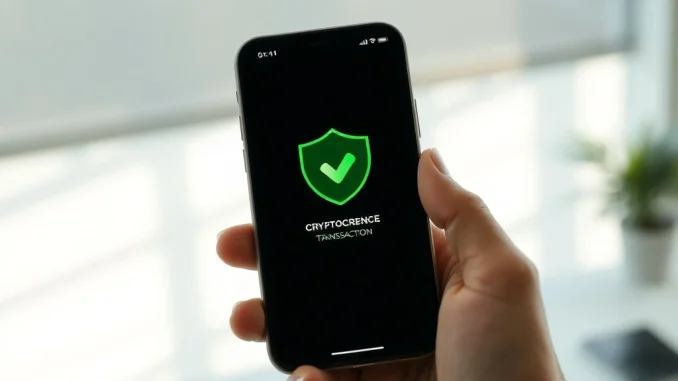
The newly launched feature automatically screens every destination address a user enters against a constantly updated database of known malicious and lookalike wallets. Consequently, if a user attempts to send funds to a flagged address, the transaction will be blocked before it reaches the blockchain. Initially, this protection covers major networks including Ethereum, BNB Smart Chain, Polygon, Optimism, Arbitrum, Avalanche, and Base. Trust Wallet’s Head of Security, in an exclusive statement, emphasized the feature’s necessity. “Address poisoning exploits human behavior, not blockchain code,” they explained. “By integrating real-time screening at the point of transaction initiation, we’re building a firewall against this specific social engineering tactic.”
Address poisoning, a sophisticated form of phishing, involves scammers sending tiny, worthless transactions to a victim’s wallet. The attacker’s address then appears in the victim’s transaction history. Later, when the victim intends to send a large sum to a legitimate contact, they may accidentally copy the scammer’s address from their history. This simple mistake has proven devastatingly effective. Industry data cited by Trust Wallet indicates more than 225 million such attacks have been recorded, with losses climbing steadily each quarter.
The Rising Financial Toll of Crypto Address Scams
The pressure on wallet providers to implement stronger safeguards intensified dramatically in late 2025 following two catastrophic losses. In December, a single investor lost $50 million in USDt (USDT) to an address poisoning scheme. Merely weeks earlier, another user forfeited $12 million. Together, these incidents spotlighted a glaring vulnerability in user-facing crypto infrastructure. “The $62 million lost in those two attacks alone could have funded entire security departments for years,” noted Clara Finley, a lead analyst at blockchain security firm Hacken. “It created an undeniable mandate for wallets to do more than just display information; they must actively protect.”
- Immediate Financial Impact: The $62 million in recent losses has triggered insurance claims, legal inquiries, and heightened user anxiety across the ecosystem.
- Reputational Pressure on Wallets: Providers like Trust Wallet face increased scrutiny from users and regulators demanding enterprise-grade security for self-custody tools.
- Industry-Wide Security Rethink: These high-profile heists are forcing a reevaluation of standard wallet design, shifting focus from mere key management to holistic threat prevention.
Expert Calls for Mandatory Wallet Security Filters
The December 2025 losses prompted direct calls to action from industry leaders. Former Binance CEO Changpeng Zhao publicly advocated for universal security measures in a Binance Square post on December 24. “All wallets should simply check if a receiving address is a poison address and block the user,” Zhao wrote. He stressed that the check is a straightforward blockchain query and argued wallets should not display spam transactions in history logs at all. His commentary reflected a growing consensus that the convenience of copying addresses from history carries an unacceptable risk. Meanwhile, Hacken’s Extractor team advised investors to adopt a simple but crucial habit: never copy wallet addresses from transaction history. Instead, they recommend using verified address books or scanning QR codes directly from trusted sources.
How Trust Wallet’s Solution Compares to Other Secure Wallets
Trust Wallet is not the first to implement preemptive transaction screening, but its scale across 32 chains marks a significant expansion. Other wallets have pioneered similar concepts with different approaches. Rabby Wallet, popular among DeFi users, employs a simulation engine that previews transaction outcomes and flags suspicious interactions. Zengo Wallet uses a keyless, MPC-based architecture that inherently lacks a private key to export, reducing some phishing vectors. Phantom Wallet on Solana has also integrated warnings for known malicious sites and addresses. The table below compares key security features focused on preventing user-error-based theft.
| Wallet | Core Security Feature | Primary Defense Against |
|---|---|---|
| Trust Wallet | Real-time scam address database check | Address poisoning, phishing addresses |
| Rabby Wallet | Transaction simulation & risk preview | Smart contract exploits, approval scams |
| Zengo Wallet | Keyless MPC (no seed phrase) | Seed phrase theft, phishing |
| Phantom Wallet | Blocklist for malicious sites/addresses | Malicious dApps, known scam addresses |
The Road Ahead for Crypto Wallet Security
The rollout of real-time checks is likely just the beginning of a more secure era for self-custody. Trust Wallet has indicated the feature will expand to non-EVM chains like Bitcoin and Solana in subsequent phases. Furthermore, the industry is exploring standardized threat intelligence sharing. A consortium of major wallets and security firms is reportedly drafting a proposal for a shared, anonymized database of malicious addresses, which would improve detection speed and accuracy for all providers. However, challenges remain. Scammers constantly generate new addresses, and false positives could block legitimate transactions. Trust Wallet states its system uses a combination of algorithmic detection and manual review to minimize such errors, but acknowledges the cat-and-mouse game is perpetual.
User Responsibility in the Age of Automated Protection
While automated features provide a vital safety net, security experts unanimously stress that user education remains irreplaceable. “A tool can block a known bad address, but it cannot yet interpret intent or verify the legitimacy of a person on the other end of a transaction,” explains Finley from Hacken. Users must still practice fundamental security hygiene: double-checking addresses character-by-character, using hardware wallets for large sums, and enabling all available in-app security settings like transaction signing delays. The introduction of features like Trust Wallet’s scam check shifts the security burden, but does not eliminate the need for vigilant user behavior.
Conclusion
Trust Wallet’s deployment of real-time scam address checks represents a decisive step toward safer cryptocurrency self-custody. Triggered by staggering losses exceeding $62 million in late 2025, this feature addresses the critical vulnerability of address poisoning attacks head-on. By automatically screening transactions across 32 EVM chains, the wallet moves from a passive tool to an active guardian of user funds. This development, alongside similar efforts from other wallet providers, signals an industry-wide maturation where security is becoming a default, integrated feature rather than an optional afterthought. For crypto users, the message is clear: the tools for protection are advancing, but combining them with personal vigilance is the ultimate key to security.
Frequently Asked Questions
Q1: How does Trust Wallet’s new scam address check feature actually work?
When you enter a destination address for a crypto transfer, Trust Wallet instantly checks it against a live-updated database of known scam and lookalike addresses. If a match is found, the transaction is blocked before it is broadcast to the blockchain, preventing the funds from being sent.
Q2: Which blockchains are currently supported by this protection?
The feature initially covers 32 Ethereum Virtual Machine (EVM) compatible chains, including Ethereum, BNB Smart Chain, Polygon, Arbitrum, Optimism, Avalanche, and Base. Support for non-EVM chains like Bitcoin and Solana is planned for future updates.
Q3: What is an address poisoning attack, and why is it so effective?
Address poisoning is a phishing tactic where a scammer sends a tiny, worthless transaction to your wallet. Their address then appears in your transaction history. The scammer hopes you will later accidentally copy their address (instead of a legitimate one) when sending a large payment, thereby sending your crypto directly to them.
Q4: Can this feature completely prevent me from losing crypto to scams?
While it is a powerful defense against sending funds to known malicious addresses, it cannot protect against all scam types, such as signing a malicious smart contract approval or interacting with a fraudulent website. It should be used alongside other security best practices.
Q5: What should I do if I think the feature wrongly blocked a legitimate transaction?
Trust Wallet advises users to first double-check the recipient address with extreme care using a separate, verified communication channel. If you are certain the address is correct, you should contact Trust Wallet support for a manual review of the blocked address.
Q6: How does this development affect the broader cryptocurrency wallet industry?
It sets a new standard for proactive security, increasing pressure on all wallet providers to integrate similar real-time protection features. It marks a shift from wallets as simple key managers to platforms with integrated threat prevention.