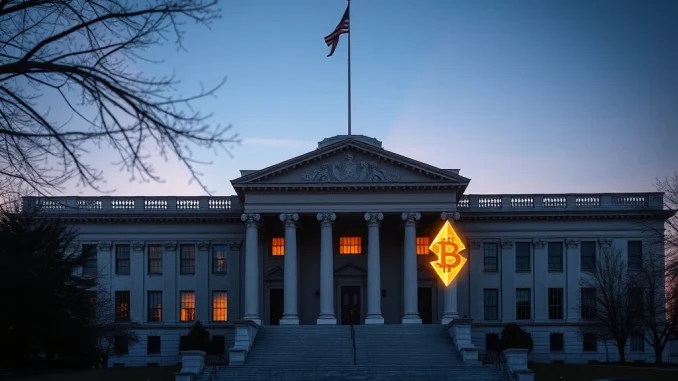
Washington D.C., May 2025: The U.S. Treasury Department has signaled a major shift in the nation’s approach to cryptocurrency regulation. Treasury Secretary Scott Bessent outlined a new policy direction that prioritizes the digital asset sector while enforcing strict adherence to existing U.S. regulatory and anti-money laundering (AML) standards. This announcement marks a pivotal moment for the crypto industry, potentially setting the stage for clearer federal oversight and a more integrated role for digital assets within the traditional financial system.
Crypto Regulation Takes Center Stage in New Treasury Agenda
In a detailed policy address, Treasury Secretary Scott Bessent confirmed the administration’s intent to bring digital assets to the forefront of its financial policy agenda. This move represents a significant departure from the often reactive and fragmented regulatory stance of previous years. The core principle, as articulated by Bessent, is to foster innovation and economic competitiveness while maintaining the integrity of the U.S. financial system. The Treasury’s plan involves a coordinated effort to apply established regulatory frameworks—particularly those governing securities, commodities, and money transmission—to the evolving digital asset landscape. Analysts view this as an attempt to provide regulatory certainty, a factor long cited by industry leaders as critical for sustainable growth and institutional investment.
Enforcing Strict AML and Regulatory Standards
A cornerstone of the announced shift is a reinforced commitment to Anti-Money Laundering (AML) and Counter-Terrorist Financing (CTF) compliance. Secretary Bessent emphasized that all digital asset service providers, including exchanges, wallet providers, and decentralized finance (DeFi) protocols with clear governance, must adhere to the same stringent standards applied to traditional financial institutions. This likely means broader enforcement of the Bank Secrecy Act (BSA) and closer collaboration with the Financial Crimes Enforcement Network (FinCEN). The Treasury’s focus includes:
- Enhanced KYC/AML Protocols: Mandating robust Know-Your-Customer and transaction monitoring systems.
- Travel Rule Compliance: Ensuring Virtual Asset Service Providers (VASPs) share sender and receiver information for cross-border transactions.
- Sanctions Enforcement: Applying Office of Foreign Assets Control (OFAC) sanctions lists explicitly to blockchain addresses and related entities.
This approach aims to mitigate risks associated with illicit finance without stifling legitimate technological development.
Historical Context and the Path to Regulatory Clarity
The Treasury’s new direction arrives after over a decade of regulatory ambiguity for cryptocurrencies in the United States. Jurisdictional debates between the Securities and Exchange Commission (SEC) and the Commodity Futures Trading Commission (CFTC) have created a complex compliance environment. The Biden administration pursued a more aggressive enforcement-centric strategy, particularly regarding the classification of many tokens as securities. The Trump Treasury’s signaled shift suggests a potential move towards a more principles-based framework, possibly leveraging existing statutory authority from multiple agencies under a unified Treasury-led directive. This could streamline the process for crypto businesses to operate legally while ensuring consumer protection and market stability.
Implications for the Cryptocurrency Industry and Investors
The policy shift carries profound implications. For established cryptocurrency exchanges and custodians, clearer rules could reduce legal overhead and facilitate banking relationships. However, the strict AML emphasis will increase compliance costs and operational complexity. For the broader ecosystem, including decentralized protocols, the key question will be how definitions of “financial service provider” are applied. Investors may benefit from reduced regulatory risk and potential fraud, possibly leading to greater market stability. Conversely, the crackdown on non-compliant entities could cause short-term disruption. The table below outlines potential impacts on key stakeholders:
| Stakeholder | Potential Benefits | Potential Challenges |
|---|---|---|
| Exchanges & Custodians | Regulatory clarity, institutional adoption, banking access | Higher compliance costs, increased reporting burdens |
| DeFi Projects | Legal definition, potential for regulated growth | Possible re-engineering for compliance, governance scrutiny |
| Investors & Users | Improved consumer protection, reduced fraud risk | Loss of anonymity, complexity in using non-compliant services |
| U.S. Financial System | Integration of innovation, maintained systemic integrity | Resource allocation for monitoring and enforcement |
The Global Competitive Landscape for Digital Assets
Secretary Bessent’s remarks implicitly acknowledged the global race to establish cryptocurrency hubs. Nations like the United Kingdom, Singapore, and the European Union with its Markets in Crypto-Assets (MiCA) regulation are advancing comprehensive frameworks. The U.S. strategy, as now outlined, appears to balance the pro-innovation stance of some jurisdictions with the rigorous compliance focus of others. By prioritizing digital assets under a “strict but clear” U.S. regulatory umbrella, the Treasury aims to position the United States as a leader in responsible financial technology innovation, attracting capital and talent while setting international standards.
Conclusion
The Trump Treasury’s announcement of a major shift in crypto regulation marks a decisive step toward formalizing the role of digital assets in America’s financial future. By prioritizing the sector within a framework of strict AML and regulatory standards, the policy seeks to unlock economic potential while safeguarding national security and financial stability. The success of this pivot will depend on precise rulemaking, inter-agency coordination, and ongoing dialogue with industry participants. For market observers and participants alike, this development underscores that the era of regulatory ambiguity for cryptocurrency in the United States may be drawing to a close, replaced by a new chapter of defined rules and heightened compliance expectations.
FAQs
Q1: What is the main change announced by the Trump Treasury regarding crypto?
The Treasury Department, under Secretary Scott Bessent, announced it will actively prioritize and integrate the digital asset sector into U.S. financial policy, enforcing existing strict regulatory and anti-money laundering standards with renewed focus and coordination.
Q2: How does this crypto regulation shift differ from the previous administration’s approach?
While the prior administration emphasized enforcement actions and legal challenges, the new direction signals a more structured, top-down policy effort to create regulatory clarity and apply rules consistently, potentially reducing jurisdictional conflicts between agencies.
Q3: What does “strict AML standards” mean for the average crypto user?
For users, it will likely mean more rigorous identity verification (KYC) processes on centralized exchanges, less anonymity for larger transactions due to Travel Rule compliance, and the potential blocking of interactions with non-compliant or sanctioned protocols or addresses.
Q4: Will this new policy help or hurt cryptocurrency innovation in the U.S.?
It presents a dual effect. Clear rules can help legitimate projects innovate with legal certainty and attract investment. However, the cost and complexity of strict compliance may hinder smaller startups or projects built on principles of full decentralization and privacy.
Q5: What are the next steps following this policy announcement?
The Treasury will likely engage in formal rulemaking processes, issue more detailed guidance, and coordinate with other agencies like the SEC, CFTC, and FinCEN to translate this policy direction into specific, enforceable regulations for different types of digital asset activities.