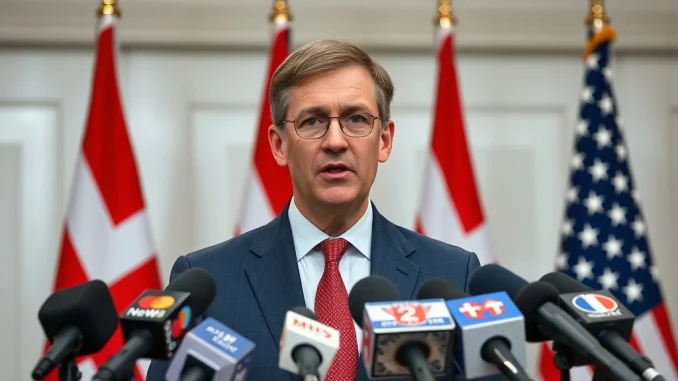
COPENHAGEN, Denmark – The Danish Foreign Minister delivered a nuanced response to former President Donald Trump’s recent foreign policy statements, cautiously welcoming his no-force declaration while firmly rejecting what Copenhagen views as unacceptable political ambitions. This diplomatic balancing act highlights Denmark’s commitment to dialogue while maintaining absolute sovereignty principles. The minister’s carefully measured comments reflect broader European concerns about shifting American foreign policy directions.
Trump’s No-Force Pledge Receives Cautious Danish Welcome
The Danish Foreign Ministry acknowledged President Trump’s statement regarding military force as a positive diplomatic signal. Specifically, the minister noted that any commitment to avoid military escalation contributes to regional stability. However, Danish officials immediately contextualized this welcome within their nation’s consistent foreign policy framework. Denmark has historically advocated for peaceful conflict resolution through established international institutions.
Foreign policy analysts point to Denmark’s active role in NATO and European Union security structures as crucial background. Consequently, the country evaluates all foreign policy statements through multilateral cooperation lenses. The minister emphasized that Denmark always prefers diplomatic channels over military options. This position aligns with Scandinavian diplomatic traditions emphasizing negotiation and international law.
Historical Context of Danish-American Relations
Denmark and the United States share a long diplomatic history dating to the early 19th century. Both nations fought as allies during World War II and the Cold War. More recently, Denmark contributed troops to American-led operations in Afghanistan and Iraq. However, relations experienced tensions during the Trump administration’s first term over climate policy and NATO spending discussions.
The current Danish government maintains a pragmatic approach to transatlantic relations. Officials consistently emphasize shared democratic values while acknowledging policy differences. This balanced perspective informs their response to Trump’s latest statements. Denmark’s foreign policy establishment monitors American political developments closely given the United States’ crucial role in European security architecture.
Unacceptable Political Ambitions Face Danish Resistance
Despite welcoming the no-force pledge, Danish officials expressed clear concerns about what they termed “unacceptable political ambitions.” The Foreign Minister declined to specify these ambitions publicly but indicated they relate to sovereignty matters. Diplomatic sources suggest these concerns involve potential policy positions affecting European autonomy and international agreements.
Denmark’s response reflects several core principles:
- Sovereignty protection: Absolute commitment to national decision-making autonomy
- Rule-based international order: Support for multilateral institutions and agreements
- Predictability: Preference for consistent, transparent foreign policies
- European solidarity: Coordination with EU and Nordic partners on transatlantic matters
These principles guide Denmark’s evaluation of all foreign policy statements, regardless of their origin. The minister explicitly stated that Denmark cannot compromise on sovereignty-related matters. This firm position aligns with similar statements from other European capitals monitoring American political developments.
Expert Analysis: Sovereignty in Modern Diplomacy
International relations scholars note that sovereignty remains a non-negotiable principle for smaller nations like Denmark. Professor Lars Jensen of Copenhagen University explains, “For Denmark, sovereignty protection isn’t just theoretical—it’s essential for maintaining influence in multilateral forums. Danish diplomacy successfully balances alliance commitments with independent policy formulation.”
This expert perspective highlights why Denmark responds cautiously to major powers’ political statements. The country’s diplomatic approach emphasizes principle-based flexibility rather than ideological rigidity. Consequently, Danish officials can welcome specific policy statements while rejecting broader political directions that might compromise national interests.
Dialogue Remains Open Despite Policy Differences
The Danish Foreign Minister emphasized that communication channels with American counterparts remain open despite policy disagreements. This commitment to continued dialogue reflects Denmark’s pragmatic diplomatic tradition. Officials stress that maintaining constructive relations serves both nations’ interests, particularly on security and economic matters.
Denmark’s diplomatic approach involves several key elements:
| Diplomatic Element | Danish Implementation |
|---|---|
| Communication Channels | Regular ministerial and official-level contacts maintained |
| Multilateral Forums | Active participation in NATO, EU, and UN discussions |
| Transparency | Clear public statements about policy positions and concerns |
| Coordination | Close consultation with European and Nordic partners |
This structured approach allows Denmark to manage relations with major powers effectively. The country maintains independence while pursuing shared objectives through established international frameworks. Danish diplomats emphasize that dialogue continuation doesn’t imply agreement with all policy positions but reflects commitment to diplomatic engagement.
Regional Implications and European Coordination
Denmark’s statement reflects broader European concerns about transatlantic relations. Multiple EU capitals monitor American political developments closely, particularly regarding security and trade policies. Danish officials coordinate responses with European partners through regular EU foreign policy meetings and Nordic cooperation mechanisms.
This coordination ensures European nations present unified positions when possible while respecting individual members’ specific concerns. Denmark’s response to Trump’s statements follows extensive consultation with close allies. The balanced nature of the Danish statement—welcoming specific elements while rejecting others—mirrors approaches developing across European foreign ministries.
Conclusion
The Danish response to Trump’s no-force pledge demonstrates careful diplomatic balancing. Officials welcome conflict avoidance commitments while firmly protecting national sovereignty interests. This approach reflects Denmark’s principled yet pragmatic foreign policy tradition. The country maintains open dialogue channels while clearly stating policy boundaries. As transatlantic relations evolve, Denmark’s response highlights smaller nations’ strategies for engaging major powers without compromising core principles. The diplomatic statement ultimately emphasizes Denmark’s commitment to stability, sovereignty, and structured international cooperation.
FAQs
Q1: What specific aspects of Trump’s statement did Denmark welcome?
Danish officials specifically welcomed the commitment to avoid military force, viewing it as contributing to regional stability and aligning with Denmark’s preference for diplomatic conflict resolution.
Q2: What political ambitions did Denmark find unacceptable?
While not specified publicly, diplomatic sources indicate concerns relate to potential policies affecting European autonomy, international agreements, and sovereignty matters that Denmark considers non-negotiable.
Q3: How does Denmark balance alliance commitments with sovereignty protection?
Denmark maintains active participation in NATO and EU structures while reserving the right to independent policy positions. The country coordinates with allies but makes final decisions based on national interests and principles.
Q4: What is Denmark’s historical relationship with the United States?
Denmark and the US have been allies since World War II, cooperating on security, economic, and political matters. The relationship includes both close cooperation and periodic policy disagreements managed through diplomatic channels.
Q5: How does Denmark’s response compare to other European nations?
Denmark’s balanced response—welcoming specific elements while expressing concerns—mirrors approaches developing across European capitals. Most EU nations prefer diplomatic engagement while protecting sovereignty and multilateral commitments.
Updated insights and analysis added for better clarity.
This article was produced with AI assistance and reviewed by our editorial team for accuracy and quality.