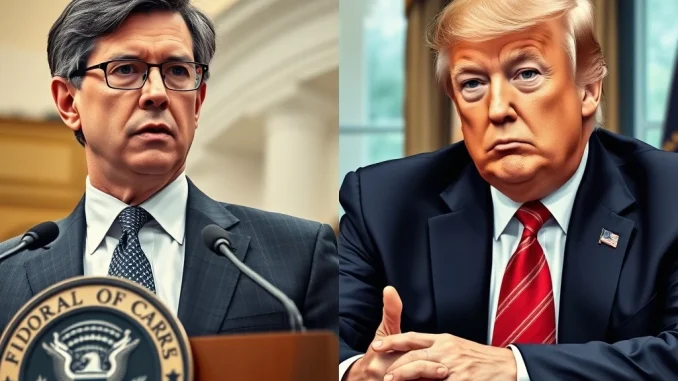
Washington D.C., January 30, 2026: The Federal Reserve stands at a potential historic turning point as President Donald Trump prepares to announce Kevin Warsh as his nominee for Chair of the central bank. This move, confirmed by multiple White House sources, would replace current Chair Jerome Powell and signal a significant shift in U.S. monetary policy direction during a period of economic uncertainty and evolving financial markets.
Kevin Warsh: The Unconventional Candidate for Federal Reserve Leadership
Kevin Warsh brings a unique profile to the potential role of Federal Reserve Chair. Serving as a Fed Governor from 2006 to 2011 during the global financial crisis, Warsh developed deep institutional knowledge while maintaining a reputation for independent thinking. His background combines traditional monetary policy experience with unexpected perspectives on emerging financial technologies, particularly cryptocurrency.
Market prediction platforms Polymarket and Kalshi show Warsh’s nomination probability surging from approximately 30% to over 90% following his Thursday meeting with President Trump. This dramatic shift reflects both political calculations and Warsh’s specific appeal to different constituencies within the Republican party and financial markets.
Warsh’s professional history includes:
- Federal Reserve Governor (2006-2011)
- Special Assistant to the President for Economic Policy (2002-2006)
- Morgan Stanley executive and mergers & acquisitions specialist
- Hoover Institution distinguished visiting fellow
- Board positions at several major corporations
The Trump-Powell Rift and Political Pressure on Monetary Policy
The potential appointment follows months of public tension between President Trump and current Fed Chair Jerome Powell. Trump has repeatedly criticized Powell’s monetary policy decisions, particularly regarding interest rates. In recent social media posts, the President has argued for significantly lower rates, claiming current policy costs America “hundreds of billions of dollars” in unnecessary interest expenses.
This conflict represents a fundamental challenge to Federal Reserve independence, a cornerstone of U.S. monetary policy since the 1970s. The 1913 Federal Reserve Act established the central bank’s operational independence, but political pressure has periodically tested these boundaries. The Trump administration’s approach appears to represent the most direct challenge in decades.
Historical context shows that presidential influence on Fed appointments has varied significantly:
| President | Fed Chair Appointee | Political Pressure Level | Economic Context |
|---|---|---|---|
| Jimmy Carter | Paul Volcker | Low (initial) | High inflation era |
| Ronald Reagan | Alan Greenspan | Moderate | Post-Volcker disinflation |
| Barack Obama | Janet Yellen | Low | Post-financial crisis recovery |
| Donald Trump (first term) | Jerome Powell | High (evolving) | Late-cycle expansion |
Warsh’s Crypto Stance: Regulatory Tool Rather Than Threat
Perhaps the most distinctive aspect of Warsh’s potential leadership involves his publicly stated views on cryptocurrency. In a July interview with the Hoover Institution, Warsh articulated an unconventional perspective: “Bitcoin doesn’t bother me. I consider it an important asset that can help policymakers know when they are doing things right or wrong. I think it can often be a very good policeman for policy.”
This represents a significant departure from traditional central banking views of cryptocurrency as either a threat to monetary sovereignty or a speculative asset class with limited macroeconomic relevance. Warsh appears to view Bitcoin and similar digital assets as potential indicators of policy effectiveness and public trust in traditional financial systems.
Financial analysts note that this perspective aligns with several emerging trends:
- Institutional adoption of cryptocurrency as an alternative asset class
- Growing recognition of blockchain technology’s potential applications
- Increasing mainstream acceptance of digital assets among younger demographics
- Global competition in central bank digital currency development
Market Implications and Institutional Constraints
Financial markets have reacted cautiously to the potential leadership change. The U.S. dollar has strengthened modestly against major currencies, while long-term Treasury yields have edged higher. Equity markets show sector-specific movements, with financial stocks particularly sensitive to the news.
However, institutional constraints may limit any immediate dramatic policy shifts. Jerome Powell’s term as a Fed Governor extends until 2028, meaning he would remain on the Federal Open Market Committee even if replaced as Chair. This creates a potential scenario of divided leadership and competing perspectives within the central bank’s decision-making structure.
The Federal Reserve’s institutional design includes several checks on rapid policy changes:
- Seven-member Board of Governors with staggered 14-year terms
- Twelve regional Federal Reserve Banks with their own presidents
- Federal Open Market Committee voting structure
- Congressional oversight requirements
- Established policy frameworks and communication protocols
Economic Context and Policy Expectations
The potential leadership transition occurs during a delicate economic period. Growth has slowed from post-pandemic peaks, inflation remains above the Fed’s 2% target despite recent moderation, and financial markets show increased volatility. Global economic conditions, including European stagnation and Chinese structural challenges, further complicate the policy landscape.
Warsh’s previous public statements suggest several policy priorities:
- Greater emphasis on fiscal discipline and debt sustainability
- Potentially more aggressive interest rate adjustments
- Enhanced focus on financial market stability mechanisms
- Modernized regulatory approaches to digital assets
- Revised communication strategies for policy transparency
These priorities would represent both continuity and change from current Fed approaches. The balance between traditional inflation fighting and newer concerns about financial innovation will likely define Warsh’s potential tenure.
Historical Precedents and Institutional Norms
Federal Reserve leadership transitions have historically occurred during periods of economic stress or policy reevaluation. The appointment of Paul Volcker in 1979 addressed runaway inflation, while Ben Bernanke’s background in Great Depression scholarship proved relevant during the 2008 financial crisis.
Warsh’s potential appointment follows this pattern of selecting leaders whose backgrounds align with perceived current challenges. His crisis-era experience at the Fed, combined with private sector financial expertise and unconventional views on digital assets, creates a profile arguably suited to contemporary economic conditions.
However, the political context differs significantly from previous transitions. The explicit tension between the executive branch and the Fed, combined with Warsh’s perceived political alignment with the administration, raises questions about institutional independence that previous appointments largely avoided.
Conclusion: A Potential Watershed for Monetary Policy
The potential appointment of Kevin Warsh as Federal Reserve Chair represents more than a personnel change. It signals a possible reorientation of U.S. monetary policy toward greater political alignment, different approaches to emerging financial technologies, and potentially revised priorities regarding inflation fighting versus growth promotion. The Kevin Warsh Fed Chair nomination process will test institutional norms, market stability, and the evolving relationship between traditional finance and digital asset ecosystems. As confirmation proceedings approach, financial markets, policymakers, and institutional stakeholders will closely monitor how these tensions resolve and what they portend for the future of American central banking.
FAQs
Q1: Who is Kevin Warsh and what is his background?
Kevin Warsh served as a Federal Reserve Governor from 2006 to 2011, through the global financial crisis. He previously worked as a mergers and acquisitions specialist at Morgan Stanley and served in the White House as Special Assistant to the President for Economic Policy. He currently holds positions at the Hoover Institution and several corporate boards.
Q2: How would Warsh’s appointment affect Federal Reserve independence?
Warsh’s appointment would likely increase political influence on Fed decisions given his perceived alignment with the Trump administration’s economic priorities. However, institutional constraints including other Governors’ terms and established policy frameworks would limit rapid changes.
Q3: What are Warsh’s views on cryptocurrency and digital assets?
Warsh has publicly stated that he views Bitcoin as a potential “policeman for policy” rather than a threat. He sees cryptocurrency as an indicator that can help policymakers assess the effectiveness of their decisions, representing an unconventional perspective for a potential Fed Chair.
Q4: Can President Trump immediately replace Jerome Powell as Fed Chair?
The President can nominate a new Fed Chair when Powell’s term ends or if Powell resigns. However, Powell’s term as a Governor continues until 2028, meaning he would remain on the Federal Open Market Committee even if replaced as Chair.
Q5: How have financial markets reacted to the potential appointment?
Markets have shown cautious reactions with dollar strengthening, slightly higher Treasury yields, and sector-specific equity movements. Prediction markets indicate high probability of Warsh’s nomination, suggesting markets are pricing in this potential change.