
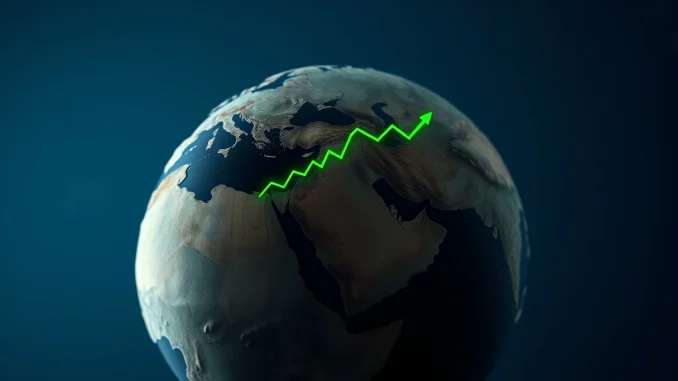
Cryptocurrency markets jumped sharply on Monday, April 6, 2026, as volatile geopolitical rhetoric from former US President Donald Trump created a whirlwind of uncertainty over the Strait of Hormuz. The total crypto market cap climbed 2.5%, adding roughly $70 billion, while Bitcoin briefly touched $69,500. This move came alongside conflicting reports of a potential 45-day ceasefire deal between the US and Iran, highlighting how digital assets remain sensitive to global instability.
Mixed Signals from Trump Drive Market Volatility
According to a post on his Truth Social platform, Trump issued a stark ultimatum to Iran. “There will be nothing like it!!! Open the fuckin’ Strait, you crazy bastards, or you’ll be living in Hell – JUST WATCH!” he wrote. The post suggested a deadline of Tuesday, April 7, for Iran to reopen the critical waterway, threatening attacks on infrastructure if it refused.
Also read: Bitcoin Price Surge: A Critical Bull Signal Emerges for the First Time Since 2025
But in a separate Fox News interview, the tone shifted. Trump stated Iran was “negotiating now” and expressed optimism about a “good chance” of a deal within 24 hours. He added, “If they don’t make a deal and fast, I’m considering blowing everything up and taking over the oil.” This back-and-forth created a classic risk-on, risk-off scenario for traders. The immediate fear of escalation pushed money into perceived hedges like Bitcoin. Subsequent hope for de-escalation then fueled a broader market rally.
Data from CoinGlass shows the price swing led to about $255 million in total liquidations across crypto derivatives markets in 24 hours. Notably, 73% of these were short positions, indicating a rapid squeeze against traders betting on further declines.
Also read: Prediction Markets Surge as Vital Real-Time Macro Radar for Crypto Traders Amid Iran Tensions
Ceasefire Reports Add Another Layer
Adding to the complex picture, a report from Axios indicated that the US, Iran, and regional mediators were discussing terms for a 45-day ceasefire. This report, while unconfirmed, provided a tangible basis for the market’s positive reaction to Trump’s more conciliatory comments. The implication is that behind the aggressive public statements, diplomatic channels may be active.
Industry watchers note that crypto has increasingly acted as a barometer for global macro stress, particularly when traditional markets are closed or slow to react. “The speed of the move is telling,” said one analyst who requested anonymity due to firm policy. “It shows how quickly capital can reposition in crypto based on geopolitical headlines, even on a weekend. This isn’t just about inflation bets anymore; it’s about pure geopolitical risk.”
The Oil and Inflation Pressure Cooker
The core issue remains oil. The Strait of Hormuz is a chokepoint for roughly 20% of global oil consumption. Its closure over the past month has had direct consequences. On Monday morning, crude oil prices were near $112 per barrel.
According to analysis from The Kobeissi Letter, sustained prices at this level could push US Consumer Price Index (CPI) inflation toward 3.7% within weeks. The group also estimated that Americans have spent an extra $240 million daily on fuel since the conflict escalated on February 28. This creates a difficult environment for central banks, potentially delaying interest rate cuts that many investors had anticipated.
What this means for investors is a tangled web. Higher oil prices threaten economic growth, which is typically bad for risk assets. But they also reinforce Bitcoin’s narrative as a hedge against currency debasement and system instability. The market’s positive reaction suggests the latter narrative is currently dominant.
Crypto’s Role as a Geopolitical Hedge
This event is part of a broader pattern. During the initial phases of the Russia-Ukraine war in 2022, Bitcoin and other cryptocurrencies saw significant inflows from affected regions. The asset class’s borderless, 24/7 nature makes it a unique tool for moving and preserving value during crises.
However, the correlation is not perfect. Crypto markets can also sell off sharply on news that triggers a broad “risk-off” sentiment, where investors flee all but the safest assets like US Treasuries. The difference often lies in the nature of the threat. Direct military escalation between major powers tends to cause panic selling. A contained regional conflict with inflationary consequences, as seen here, can boost crypto’s appeal.
This suggests the market interpreted Trump’s comments and the Axios report as reducing the probability of a direct, immediate US-Iran conflict. Instead, it raised the possibility of a negotiated solution, however temporary. That scenario reduces extreme tail risk but keeps inflationary pressures high—a mix that some traders see as favorable for hard assets.
Market Technicals and Trader Sentiment
From a technical perspective, the bounce reclaimed important short-term levels. Bitcoin’s push to $69,500 approached a key resistance zone that had capped its price for over a week. The broader market’s 2.5% gain brought total capitalization to $2.44 trillion, its highest point in 11 days.
This could signal a shift in short-term momentum. The high rate of short liquidations indicates that bearish positioning was overcrowded. When such a squeeze occurs, it can fuel a sharper rally as those traders are forced to buy back assets to cover their losses. Yet, sustainability is the real question. Without follow-through on the ceasefire talks or a clear de-escalation, these gains could prove fragile.
Conclusion
The crypto market surge driven by the chaotic Trump-Iran deadline underscores the asset class’s acute sensitivity to geopolitical winds. Bitcoin’s rise to $69,500 and the broader market’s 2.5% gain were direct reactions to conflicting signals of war and peace. While hopes for a ceasefire provided a lift, the underlying pressures from high oil prices and persistent inflation remain. For now, traders are treating digital assets as a hedge against the instability flowing from the Strait of Hormuz, demonstrating that in today’s interconnected world, crypto prices are written not just by code, but by global events.
FAQs
Q1: Why did crypto prices rise on Trump’s Iran comments?
The market reacted to two things. First, initial aggressive comments increased demand for hedge assets like Bitcoin. Second, subsequent comments about a potential deal and reports of ceasefire talks reduced immediate war risk, encouraging broader buying.
Q2: What is the Strait of Hormuz and why is it important?
The Strait of Hormuz is a narrow sea passage between Oman and Iran. It is critically important because approximately 20% of the world’s oil consumption passes through it. Its closure disrupts global energy supplies.
Q3: How does the Iran situation affect oil and inflation?
Closure or threat of closure reduces oil supply, driving up prices. Higher oil prices increase costs for transportation and manufacturing, which feeds into broader consumer inflation, as measured by indexes like the CPI.
Q4: Is crypto a reliable hedge during geopolitical crises?
It can be, but it’s not consistent. Crypto sometimes acts as a “risk-off” hedge during inflation shocks or regional conflicts. However, during events that cause widespread panic and a rush to ultra-safe assets like US dollars, crypto prices can fall alongside stocks.
Q5: What were the market losses from the price swing?
Data from CoinGlass shows around $255 million in positions were liquidated due to the volatility. The majority (73%) were traders who had bet against the market (short positions), who were forced to buy as prices rose.

This article was produced with AI assistance and reviewed by our editorial team for accuracy and quality.




Be the first to comment