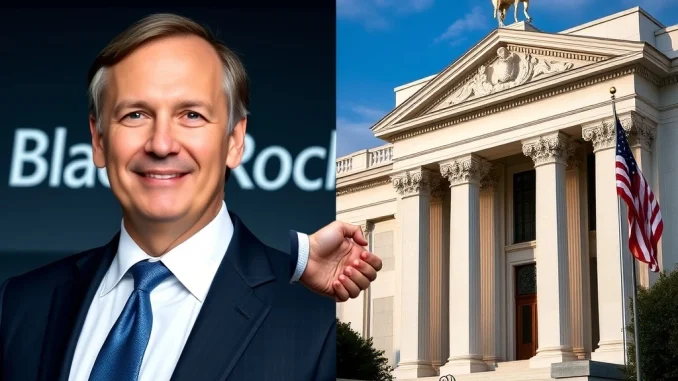
WASHINGTON, D.C. — November 2025 — President Donald Trump’s scheduled interview with BlackRock Chief Investment Officer Rick Rieder for the Federal Reserve Chair position represents a potentially transformative moment for American monetary policy, signaling a possible shift toward financial markets expertise at the helm of the world’s most influential central bank.
Federal Reserve Chair Selection Process Enters Critical Phase
President Trump will conduct formal interviews this week with leading candidates for the Federal Reserve Chair position. According to multiple sources including Walter Bloomberg reports, BlackRock’s Chief Investment Officer Rick Rieder has emerged as a serious contender. The President plans to announce his final selection before month’s end. This decision carries significant implications for interest rate policy, financial regulation, and economic stability through 2026 and beyond.
The Federal Reserve Chair appointment represents one of the most consequential economic decisions any president makes. Consequently, the position influences everything from mortgage rates to employment levels. Historically, Fed chairs have come from academic, government, or central banking backgrounds. However, Rieder’s candidacy breaks this pattern with his extensive asset management experience.
Rick Rieder’s Financial Markets Background and Qualifications
Rick Rieder serves as BlackRock’s Chief Investment Officer of Global Fixed Income. He manages approximately $2.4 trillion in assets. Previously, Rieder held senior positions at Lehman Brothers and Credit Suisse. He brings thirty-five years of financial markets experience to the selection process. His background contrasts sharply with traditional Fed chair candidates who typically emerge from economics academia or Federal Reserve system roles.
Rieder’s potential appointment reflects several important trends. First, it emphasizes practical markets experience over theoretical economics. Second, it suggests closer alignment between monetary policy and financial market realities. Third, it represents continuity with Trump’s previous Fed appointments favoring non-traditional candidates. Market analysts note Rieder’s extensive crisis management experience during the 2008 financial collapse and 2020 pandemic volatility.
Comparative Analysis of Recent Fed Chair Backgrounds
| Fed Chair | Background | Appointing President | Key Policy Focus |
|---|---|---|---|
| Alan Greenspan | Economic Consulting | Reagan | Inflation Control |
| Ben Bernanke | Academic Economics | Bush | Financial Crisis Response |
| Janet Yellen | Academic/Regulatory | Obama | Labor Market Recovery |
| Jerome Powell | Investment Banking | Trump | Policy Normalization |
| Rick Rieder (Potential) | Asset Management | Trump | Market Integration |
Potential Policy Implications of a Rieder-Led Federal Reserve
A Rieder chairmanship would likely emphasize several policy approaches. First, greater attention to market functioning and liquidity conditions. Second, potential modernization of the Fed’s communication strategies with financial institutions. Third, continued focus on employment maximization within inflation constraints. Fourth, careful management of the Federal Reserve’s balance sheet normalization process.
Market participants have identified several key areas to watch:
- Interest Rate Trajectory: How would Rieder approach the current rate cycle?
- Regulatory Stance: Would he maintain or modify post-2008 banking regulations?
- Digital Currency: What position would he take on central bank digital currencies?
- Climate Risk: How would he incorporate climate considerations into supervision?
- International Coordination: How would he approach global central bank relationships?
Financial markets have shown measured reactions to the news. Bond markets exhibited slight volatility while equity markets remained generally stable. This response suggests investors view Rieder as a continuity candidate rather than a radical departure. However, some analysts express concerns about potential conflicts of interest given his BlackRock background and the firm’s substantial Fed interactions.
Historical Context of Federal Reserve Leadership Transitions
The Federal Reserve has experienced only four chair transitions since 1987. Each transition occurred during distinct economic environments. Greenspan succeeded Volcker during declining inflation. Bernanke took over during housing market expansion. Yellen assumed leadership during post-crisis recovery. Powell began his tenure during economic expansion. A 2025 transition would occur amid moderate growth with persistent inflation concerns.
Presidential relationships with Fed chairs have varied significantly. Some presidents maintained distant, formal relationships with their appointees. Others developed closer advisory connections. Trump’s relationship with potential Fed chairs will likely follow his established pattern of expecting policy alignment. The selection process timing suggests careful consideration of economic conditions heading into the next election cycle.
Expert Perspectives on the Selection Process
Former Federal Reserve officials emphasize the importance of institutional knowledge. “The Fed chair must understand both economics and politics,” notes a former Board member. “Market experience provides valuable perspective but requires complementary understanding of monetary theory.” Congressional response has been mixed with some lawmakers praising practical experience while others emphasize traditional economics training.
International observers watch the process closely. Global central banks maintain intricate coordination mechanisms. Leadership changes at the Fed can affect worldwide monetary policy alignment. European and Asian central bankers typically prefer predictable, transparent transitions. They value continuity in international financial diplomacy and crisis management protocols.
Conclusion
President Trump’s interview with BlackRock CIO Rick Rieder for the Federal Reserve Chair position represents a significant development in central banking leadership selection. The potential appointment of a financial markets veteran rather than traditional economist signals evolving approaches to monetary policy management. This Federal Reserve Chair decision will influence interest rates, financial stability, and economic growth for years. Markets and policymakers await the President’s final announcement with particular attention to how this leadership might navigate ongoing inflation management, employment goals, and financial system resilience.
FAQs
Q1: What is Rick Rieder’s professional background?
Rick Rieder serves as BlackRock’s Chief Investment Officer of Global Fixed Income, managing approximately $2.4 trillion in assets with thirty-five years of financial markets experience at firms including Lehman Brothers and Credit Suisse.
Q2: When will President Trump announce the Federal Reserve Chair selection?
The President plans to announce his final selection later this month, following interviews with multiple candidates including Rick Rieder and potentially other contenders.
Q3: How would a Rieder Fed chairmanship differ from previous leaders?
A Rieder-led Fed would likely emphasize greater market experience, potentially different communication approaches with financial institutions, and continued focus on employment within inflation constraints while bringing asset management perspective to monetary policy.
Q4: What are the main concerns about appointing someone from asset management?
Potential concerns include conflicts of interest given BlackRock’s substantial Fed interactions, possible overemphasis on financial markets versus broader economic considerations, and departure from traditional economics expertise in monetary policy decision-making.
Q5: How have financial markets reacted to this news?
Markets have shown measured reactions with bond markets experiencing slight volatility and equities remaining generally stable, suggesting investors view Rieder as a continuity candidate rather than radical departure from current policy approaches.
Q6: What historical precedents exist for non-traditional Fed chairs?
Current Chair Jerome Powell came from investment banking rather than academic economics, establishing some precedent for non-traditional backgrounds, though no previous Fed chair has come directly from asset management leadership.
This article was produced with AI assistance and reviewed by our editorial team for accuracy and quality.