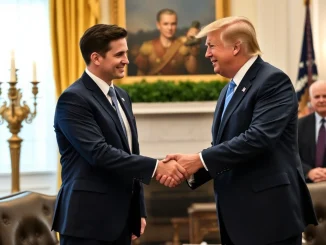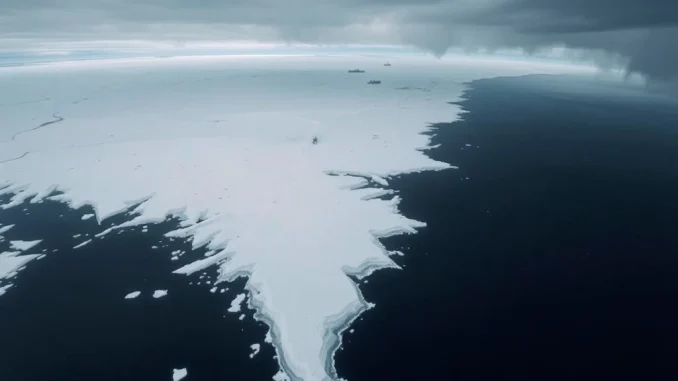
WASHINGTON, D.C., March 2025 – President Donald Trump’s recent statement about not ruling out military options for Greenland has ignited intense geopolitical analysis and strategic discussions about Arctic sovereignty, resource competition, and shifting international power dynamics in one of the world’s most strategically important regions.
Trump’s Greenland Military Consideration Sparks Global Analysis
According to verified intelligence reports from Solid Intel, President Trump has explicitly stated he will not rule out military force as a potential option regarding Greenland. This declaration immediately triggered diplomatic consultations across NATO capitals and prompted strategic reassessments among Arctic Council members. The statement represents a significant escalation in rhetoric about U.S. strategic interests in the Arctic region, particularly following previous discussions about purchasing Greenland that dominated headlines during Trump’s first term.
Military analysts quickly noted the timing coincides with increased Russian and Chinese activities in the Arctic. Furthermore, climate change continues to open new shipping routes and resource extraction opportunities in previously inaccessible areas. The U.S. Department of Defense recently released its updated Arctic Strategy, emphasizing the need for enhanced presence and capabilities in the region. Greenland’s strategic location between North America and Europe makes it particularly valuable for early warning systems and force projection.
Historical Context of Greenland’s Geopolitical Significance
Greenland’s strategic importance is not a new development in international relations. During World War II, the United States established several military bases on the island under an agreement with Denmark. The Thule Air Base, established in 1943, remains America’s northernmost military installation and plays a crucial role in missile defense and space surveillance. The base’s strategic value has only increased with technological advancements and changing security threats.
The Cold War transformed Greenland into a critical component of North American defense architecture. Soviet bombers and missiles would have traversed Arctic routes during any conflict scenario. Consequently, early warning radar systems on Greenland provided vital minutes of response time. Today, these same geographical advantages apply to monitoring Russian military activities and potential missile launches from multiple directions.
Resource Competition Intensifies Arctic Tensions
Beyond military considerations, Greenland possesses substantial natural resources that have attracted international interest. The island contains significant deposits of rare earth elements, uranium, iron ore, and potential oil and gas reserves. As global demand for these resources increases, particularly for technologies like electric vehicles and renewable energy systems, control over Arctic resources becomes increasingly contentious.
China has actively pursued mining investments in Greenland through various state-owned enterprises. Russian companies continue exploration activities in adjacent Arctic territories. The European Union has expressed concern about resource dependency on non-democratic nations. Consequently, Greenland’s resources represent not just economic opportunity but strategic leverage in global supply chains.
Legal and Diplomatic Frameworks Governing Arctic Relations
The Arctic region operates under multiple overlapping legal and diplomatic frameworks that would complicate any unilateral military action. The United Nations Convention on the Law of the Sea (UNCLOS) governs maritime boundaries and resource rights, though the United States has not ratified this treaty. The Arctic Council, comprising eight member states including the U.S., Russia, and Denmark (representing Greenland), promotes cooperation on environmental protection and sustainable development.
Denmark maintains sovereignty over Greenland’s foreign and defense policy through the 1979 Home Rule Act and subsequent self-government agreements. Any military action would violate Danish sovereignty and potentially trigger Article 5 of the NATO treaty, which considers an attack on one member as an attack on all. This creates complex legal and alliance implications for any potential U.S. military action.
| Location | Country | Primary Function | Established |
|---|---|---|---|
| Thule Air Base | Greenland (US) | Missile warning, space surveillance | 1943 |
| Nagurskoye Base | Russia | Northernmost Russian base, air defense | 2015 |
| Alert Station | Canada | Signals intelligence, Arctic monitoring | 1958 |
| Pituffik Space Base | Greenland (US) | Space Force operations, satellite tracking | 2023 |
Regional Reactions and Security Implications
Danish officials immediately responded to President Trump’s statement with firm declarations of Greenland’s status as an integral part of the Kingdom of Denmark. The Danish Ministry of Foreign Affairs emphasized its commitment to peaceful resolution of any disputes and reaffirmed Greenland’s right to self-determination under existing agreements. Meanwhile, Greenland’s own government reiterated its opposition to any military action and emphasized its growing autonomy in foreign affairs.
NATO allies expressed concern about potential divisions within the alliance. European members particularly worry about precedent-setting actions that might encourage similar behavior by other powers in contested regions. Russian media extensively covered the development, framing it as evidence of American expansionism and disregard for international law. Chinese analysts noted the statement’s implications for Arctic governance and resource access.
The statement’s timing raises important questions about broader U.S. strategic priorities. The Pentagon’s latest budget requests include substantial investments in Arctic-capable equipment, including icebreakers, cold-weather gear, and specialized vehicles. Military exercises in the region have increased in frequency and scale, with NATO conducting regular operations in Norwegian and Icelandic territories.
Climate Change Reshapes Arctic Geopolitics
Rapid environmental transformation fundamentally alters Arctic security calculations. Sea ice retreat opens the Northern Sea Route along Russia’s coast and the Northwest Passage through Canadian waters. These shipping lanes could reduce transit times between Asia and Europe by 40% compared to traditional routes through the Suez or Panama Canals. Control over these passages carries substantial economic and strategic implications.
Melting permafrost also affects military infrastructure stability and requires new engineering solutions. Additionally, increased human activity in the Arctic creates new search-and-rescue requirements and environmental protection challenges. The U.S. Coast Guard has highlighted capacity gaps in its Arctic capabilities, particularly regarding icebreaking vessels and cold-weather operations.
Economic Dimensions of Arctic Competition
Beyond military considerations, economic factors significantly influence Arctic geopolitics. Greenland’s economy relies heavily on Danish subsidies and fishing revenues, but its government seeks greater economic independence through resource development. International mining companies have invested billions in exploration, though projects face environmental opposition and technical challenges.
The potential for offshore oil and gas development remains controversial given climate commitments and technical difficulties. Tourism represents a growing sector, with cruise ships increasingly visiting Greenland’s fjords and settlements. However, infrastructure limitations constrain economic growth, creating dependency relationships that external powers might exploit.
Key economic considerations include:
- Rare earth elements: Essential for electronics, renewable energy, and defense systems
- Shipping routes: Potential time and cost savings for global trade
- Fishing rights: Rich fisheries increasingly accessible as waters warm
- Scientific research: Unique opportunities for climate and environmental studies
- Tourism potential: Growing interest in Arctic destinations
Conclusion
President Trump’s statement about military options for Greenland reveals deepening geopolitical tensions in the Arctic region. This development reflects broader strategic competition involving military positioning, resource access, and sovereignty claims. The statement’s implications extend beyond bilateral U.S.-Denmark relations to affect NATO cohesion, international law interpretations, and global resource security. As climate change transforms the Arctic’s physical and political landscape, responsible governance and cooperative frameworks become increasingly essential for regional stability and international security. The Trump Greenland military consideration serves as a reminder that seemingly remote regions can quickly become focal points for great power competition with global implications.
FAQs
Q1: What exactly did President Trump say about military options for Greenland?
According to intelligence reports from Solid Intel, President Trump stated he would not rule out the possibility of using military force regarding Greenland, though specific scenarios or conditions were not detailed in the initial reporting.
Q2: Does the United States have legal grounds for military action in Greenland?
International law experts generally agree the U.S. lacks legal justification for unilateral military action in Greenland, which remains part of the Kingdom of Denmark with its own self-government agreements and international recognition.
Q3: How has Denmark responded to these statements?
Danish officials have firmly rejected any suggestion of military action, reaffirming Greenland’s status as part of Denmark and emphasizing commitment to peaceful resolution of any disputes through diplomatic channels.
Q4: Why is Greenland strategically important to the United States?
Greenland’s location provides strategic advantages for early warning systems, missile defense, force projection between continents, and monitoring capabilities in the increasingly accessible Arctic region.
Q5: What are the potential consequences of military tensions in the Arctic?
Increased military activity risks environmental damage, escalates great power competition, undermines cooperative governance frameworks, and could trigger alliance obligations under NATO’s collective defense provisions.
Q6: How does climate change affect Arctic geopolitics?
Melting ice opens new shipping routes, reveals previously inaccessible resources, affects military infrastructure stability, and increases human activity requiring enhanced governance and security arrangements.
Updated insights and analysis added for better clarity.
This article was produced with AI assistance and reviewed by our editorial team for accuracy and quality.