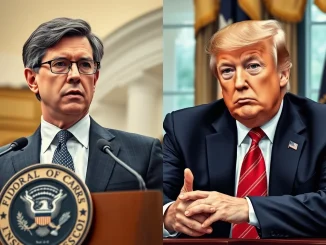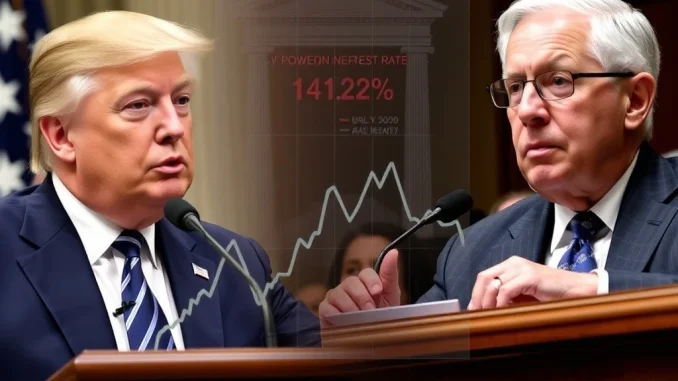
Washington, D.C., April 2025: Former President Donald Trump has publicly urged the Federal Reserve to implement what he describes as a “significant and immediate” reduction in interest rates. This call, reported by financial news service Walter Bloomberg, reignites a longstanding debate about presidential influence over monetary policy and the appropriate tools for managing the U.S. economy. Trump’s argument hinges on a competitive global stance, suggesting other nations benefit from lower borrowing costs at America’s expense.
Trump’s Direct Appeal to the Federal Reserve
Walter Bloomberg reported that Trump believes the central bank should act swiftly to lower rates. The former president framed his argument in international terms, stating that other countries currently “enjoy low interest rates because of the United States.” This statement implies a belief that U.S. monetary policy sets a global benchmark or that other nations gain a competitive advantage from America’s relatively higher rates. This is not the first time Trump has publicly pressured the Fed. During his presidency from 2017 to 2021, he frequently criticized then-Chair Jerome Powell for raising rates too quickly or not cutting them aggressively enough, breaking with a modern tradition of presidents avoiding direct commentary on Fed decisions to preserve its perceived independence.
The Federal Reserve, established by Congress, operates with a dual mandate: to promote maximum employment and maintain stable prices (low inflation). Its decisions on the federal funds rate—the interest rate at which depository institutions lend reserve balances to other banks overnight—are made by the Federal Open Market Committee (FOMC). These decisions are intended to be data-driven, based on economic indicators like inflation reports, employment figures, and GDP growth, rather than political directives.
The Economic Context of Rate Cut Demands
To understand the weight of this call, one must examine the current economic landscape. Interest rates are a primary lever of monetary policy. When the Fed lowers rates, borrowing becomes cheaper. This typically encourages business investment, consumer spending on big-ticket items like homes and cars, and can stimulate economic growth. Conversely, the Fed raises rates to cool an overheating economy and combat high inflation by making borrowing more expensive.
The period following the COVID-19 pandemic saw the Fed engage in an aggressive rate-hiking cycle to tackle surging inflation. As of early 2025, the economic picture is mixed, with analysts debating whether the economy is headed for a soft landing, a recession, or continued growth with persistent inflation. Trump’s call suggests he views the current rate environment as a headwind to economic expansion. His global competitiveness argument likely references countries like Japan or China, where central banks have maintained more accommodative policies for extended periods.
- Business Investment: Lower rates reduce the cost of capital for companies looking to expand, hire, or upgrade equipment.
- Consumer Debt: Rates affect mortgages, auto loans, and credit card APRs, directly impacting household budgets.
- Government Debt: The cost of servicing the national debt is influenced by interest rates, affecting federal budgeting.
- Currency Valuation: Higher U.S. rates can strengthen the dollar, making exports more expensive and imports cheaper.
Historical Precedent and Central Bank Independence
The tension between the White House and the Federal Reserve has historical roots, but the norm of public non-interference held for decades before the Trump presidency. President Lyndon B. Johnson reportedly confronted Fed Chair William McChesney Martin in the 1960s. President Richard Nixon pressured Arthur Burns in the early 1970s, an episode many economists link to the Great Inflation that followed. These experiences solidified the principle of central bank independence within the government—operationally separate from direct political control to make tough, sometimes unpopular, decisions for long-term economic health.
Modern Fed chairs, from Alan Greenspan to Ben Bernanke to Janet Yellen, have occasionally faced political pressure but largely maintained a public stance focused on economic data. Trump’s renewed public pressure tests this institutional norm. It raises questions about how a potential future administration might approach the Fed and whether public commentary from major political figures can influence market expectations and the Fed’s decision-making calculus, even if not its formal votes.
Potential Consequences of Aggressive Rate Cuts
While the prospect of lower interest rates may sound beneficial for borrowers, economists warn of significant risks if cuts are mistimed or too severe. The primary danger is reigniting inflation. If the economy is still running hot or if inflation expectations become “unanchored,” premature rate cuts could cause price pressures to surge again, undoing the progress of the previous tightening cycle. This could force the Fed to reverse course abruptly, causing market volatility and a loss of credibility.
Furthermore, very low interest rates for prolonged periods can have distorting effects on the economy. They can encourage excessive risk-taking in financial markets as investors “reach for yield,” potentially inflating asset bubbles in real estate or stocks. They also punish savers and retirees who rely on interest income from bonds and savings accounts. The Fed must balance these competing concerns, a task complicated by public pressure from influential figures.
| Policy Action | Intended Effect | Primary Risk |
|---|---|---|
| Significant Rate Cut | Stimulate growth, weaken dollar, boost asset prices | Resurgent inflation, asset bubbles, reduced policy space |
| Hold Rates Steady | Maintain stability, await more data, combat inflation | Slowing growth too much, political criticism |
| Rate Increase | Tighten financial conditions, ensure inflation control | Triggering a recession, increasing debt costs |
Conclusion
Donald Trump’s public call for the Federal Reserve to slash interest rates represents more than a simple policy suggestion. It is a direct engagement with the delicate balance of monetary policy and central bank independence. While the argument centers on global competitiveness and immediate economic stimulation, the Fed’s mandate requires a broader, data-centric view that considers inflation, employment, and financial stability over a longer horizon. The debate underscores a fundamental tension in economic governance: the desire for rapid growth versus the need for sustainable stability. How the Federal Reserve navigates this public pressure while adhering to its statutory mandates will be a critical story for the U.S. economy in the months ahead, making the topic of Trump Federal Reserve interest rates a focal point for investors, policymakers, and the public.
FAQs
Q1: What exactly did Donald Trump say about the Federal Reserve?
According to a report by Walter Bloomberg, former President Trump called for a “significant and immediate” reduction in interest rates by the Fed, arguing that other nations benefit from low rates because of the United States.
Q2: Can the President force the Federal Reserve to change interest rates?
No. By design, the Federal Reserve is an independent central bank. Its policy decisions are made by the Federal Open Market Committee (FOMC) based on economic analysis. While presidents appoint Fed chairs and governors, they cannot directly mandate rate changes, preserving operational independence.
Q3: Why would lower interest rates be considered stimulative for the economy?
Lower interest rates reduce the cost of borrowing for businesses and consumers. This can lead to increased investment in expansion and equipment, higher consumer spending on homes and durable goods, and generally more economic activity, which can boost growth and employment.
Q4: What is the main risk if the Fed cuts rates too quickly?
The paramount risk is reigniting inflation. If the economy has not sufficiently cooled, injecting stimulus via lower rates could cause prices to surge again. This could force a painful policy reversal and damage the Fed’s credibility in controlling inflation.
Q5: Has a sitting or former president criticized the Fed like this before?
While private pressure has occurred historically, the public frequency and tone of criticism during Trump’s presidency marked a significant shift from recent decades. His renewed comments continue this pattern of direct public pressure on the central bank.