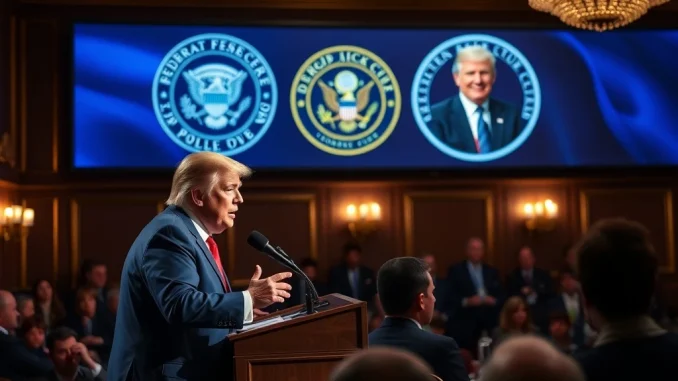
DETROIT, Michigan – November 15, 2024 – Financial markets experienced immediate volatility following President Donald Trump’s unexpected announcement that Federal Reserve Chair Jerome Powell would be replaced “soon.” During a speech at the Detroit Economic Club, the President made the declaration that sent shockwaves through global financial institutions and raised immediate questions about central bank independence.
Trump Fed Chair Replacement Announcement Creates Immediate Fallout
President Trump delivered his remarks during a scheduled economic policy address. Furthermore, he specifically referenced Chair Powell by name. The President characterized the Fed Chair’s performance as unsatisfactory. Consequently, financial analysts began assessing potential market impacts immediately. The Dow Jones Industrial Average dropped 450 points within minutes of the announcement. Meanwhile, bond yields experienced significant volatility. Treasury markets showed unusual activity patterns. Federal Reserve officials declined immediate comment on the situation.
The Federal Reserve operates with statutory independence under the Federal Reserve Act of 1913. Historically, presidents have respected this separation from political influence. However, recent administrations have occasionally criticized Fed policies. The current situation represents an unprecedented public declaration about leadership replacement timing. Legal scholars are now examining the procedural requirements for such a change.
Historical Context of Federal Reserve Leadership Transitions
Federal Reserve Chairs typically serve four-year terms with reappointment possibilities. Jerome Powell began his term in February 2018 after nomination by President Trump. His current term officially expires in February 2026. The Federal Reserve Act specifies that Board members may only be removed “for cause.” This legal standard requires demonstrating negligence or malfeasance rather than policy disagreements.
Previous Fed Chairs have experienced presidential criticism without facing removal threats. President Lyndon Johnson reportedly physically intimidated Chair William McChesney Martin. President Richard Nixon pressured Chair Arthur Burns during the 1970s. More recently, President Barack Obama occasionally questioned Chair Ben Bernanke’s policies. Nevertheless, no modern president has publicly announced a sitting Chair’s imminent replacement.
| Fed Chair | Term | Appointing President | Notable Conflicts |
|---|---|---|---|
| Jerome Powell | 2018-Present | Donald Trump | Interest rate criticism, 2024 replacement announcement |
| Janet Yellen | 2014-2018 | Barack Obama | Gradual rate hike disagreements |
| Ben Bernanke | 2006-2014 | George W. Bush | Quantitative easing controversies |
| Alan Greenspan | 1987-2006 | Ronald Reagan | Occasional policy disagreements with multiple presidents |
Legal and Constitutional Implications Examined
Constitutional law experts are analyzing several key questions regarding the announcement. The Federal Reserve’s independence serves as a cornerstone of modern economic stability. International investors particularly value this separation from political cycles. Sudden leadership changes could undermine this carefully maintained perception. Legal precedent suggests several possible scenarios for how this situation might develop procedurally.
The Federal Reserve Act establishes specific removal procedures. These requirements differ significantly from executive branch appointments. Consequently, any replacement process would involve multiple governmental branches. Senate confirmation would remain necessary for any new nominee. The current political composition of the Senate suggests potential confirmation challenges. Committee hearings would likely examine the removal justification extensively.
Market Reactions and Economic Consequences Analyzed
Financial markets responded immediately to the Detroit announcement. Several key developments occurred simultaneously:
- Equity Markets: The S&P 500 declined 1.8% in afternoon trading
- Currency Markets: The U.S. dollar weakened against major currencies
- Bond Markets: Treasury yields exhibited unusual volatility patterns
- Volatility Index: The VIX spiked 25% within two hours
- Sector Performance: Financial stocks underperformed the broader market significantly
Economic analysts expressed concern about several potential consequences. Central bank independence represents a critical factor for price stability. International monetary systems rely on predictable Federal Reserve policies. Emerging market economies particularly depend on stable U.S. monetary policy. Global financial institutions monitor Fed leadership continuity carefully. Institutional investors consider central bank independence when allocating capital internationally.
Political Reactions and Institutional Responses
Congressional leaders from both parties issued statements following the announcement. Senate Banking Committee leadership scheduled emergency hearings. Committee members plan to examine the legal basis for any potential removal. House Financial Services Committee leadership expressed similar concerns. Bipartisan groups emphasized the importance of Federal Reserve independence.
Former Federal Reserve officials released coordinated statements. These emphasized the importance of maintaining institutional stability. International central bankers communicated through established channels. The Bank for International Settlements monitoring increased significantly. Global financial stability committees activated contingency planning procedures.
Historical Precedents for Central Bank Independence Challenges
International examples provide relevant context for this situation. Several countries have experienced political interference with central banks. Turkey’s experience with presidential influence over monetary policy offers cautionary insights. Argentina’s historical struggles with central bank independence demonstrate potential consequences. The European Central Bank maintains strict separation from political influence. The Bank of England’s operational independence serves as a model for many nations.
Academic research consistently demonstrates the economic benefits of central bank independence. Countries with independent central banks experience lower average inflation. These nations typically maintain more stable economic growth patterns. Financial market development progresses more rapidly under independent monetary authorities. International investment flows favor countries with predictable monetary institutions.
Potential Successor Considerations and Nomination Process
Several potential candidates might emerge as replacement possibilities. Current Federal Reserve Board members represent logical internal candidates. Regional Federal Reserve Bank presidents offer additional possibilities. Academic economists with relevant expertise might receive consideration. Former Treasury officials could emerge as compromise candidates.
The nomination and confirmation process involves multiple stages. White House vetting procedures typically require extensive background checks. Senate Banking Committee hearings examine nominee qualifications thoroughly. Full Senate confirmation requires majority support. The current political environment suggests potential procedural challenges. Historical confirmation timelines vary from several weeks to multiple months.
Conclusion
President Trump’s announcement regarding Federal Reserve Chair replacement has created significant uncertainty in financial markets. The Trump Fed Chair replacement declaration represents an unprecedented challenge to central bank independence traditions. Legal scholars are examining constitutional questions about Federal Reserve leadership transitions. Market participants are assessing potential economic consequences carefully. Global financial stability may depend on resolving this situation through established institutional processes. The coming weeks will determine whether this announcement represents political rhetoric or substantive policy change with lasting implications for monetary policy independence.
FAQs
Q1: Can the President directly remove the Federal Reserve Chair?
The Federal Reserve Act specifies that Board members, including the Chair, may only be removed “for cause” rather than policy disagreements. This legal standard requires demonstrating negligence or malfeasance through established procedures.
Q2: What immediate market impacts occurred following the announcement?
Major U.S. stock indices declined 1.5-2% within hours, Treasury yields showed unusual volatility, the U.S. dollar weakened against major currencies, and the volatility index (VIX) spiked approximately 25%.
Q3: When does Jerome Powell’s current term as Fed Chair officially end?
Chair Powell’s current four-year term expires in February 2026. He could potentially serve additional terms if renominated and confirmed by the Senate.
Q4: How have previous presidents handled disagreements with Federal Reserve Chairs?
Historical precedent shows occasional criticism but no modern president has publicly announced a sitting Chair’s replacement. Previous administrations have expressed policy disagreements while generally respecting the Fed’s operational independence.
Q5: What are the potential consequences for central bank independence?
Perceived political interference could undermine the Federal Reserve’s credibility, potentially leading to higher inflation expectations, increased market volatility, reduced international confidence in the U.S. dollar, and challenges in implementing effective monetary policy.
This article was produced with AI assistance and reviewed by our editorial team for accuracy and quality.