On March 15, 2026, a high-value investor on the TON blockchain transferred $220,000 worth of TON tokens to a fraudulent wallet in what security experts identify as a sophisticated address poisoning scam. The incident, which occurred at approximately 14:30 UTC, represents one of the most significant cryptocurrency security breaches on the TON network this year. Remarkably, the anonymous scammer returned $203,000 of the stolen funds within hours, keeping only $17,000 as what they described in an on-chain message as a “finder’s fee.” This unprecedented partial refund has sparked intense discussion within the cryptocurrency security community about evolving scammer tactics and the psychological dimensions of blockchain fraud.
Anatomy of the TON Blockchain Address Poisoning Attack
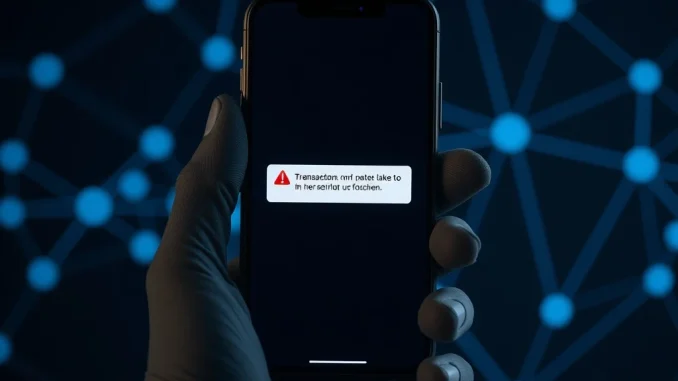
The TON blockchain whale, whose identity remains confidential at their request, fell victim to a meticulously executed address poisoning scheme. According to blockchain security firm CertiK, which analyzed the transaction patterns, the attacker first monitored the whale’s public wallet address for outgoing transactions. Subsequently, they generated a new wallet address that mimicked the first and last four characters of one of the whale’s frequent transaction partners. “This technique exploits human pattern recognition,” explains Dr. Elena Rodriguez, Chief Security Officer at CertiK. “When users quickly verify addresses by checking only the beginning and ending characters, they can be deceived by these poisoned addresses.” The whale initiated the 220,000 TON token transfer to what they believed was a legitimate recipient, only discovering the error after the transaction confirmed on-chain.
Blockchain analysis reveals the scammer’s wallet received the funds at 14:32:17 UTC. Within three hours, at 17:45:03 UTC, the attacker initiated a return transaction of 185,000 TON tokens, valued at approximately $203,000. Attached to this return was an on-chain message reading: “My apologies for the inconvenience. I will keep 15,000 TON as compensation for my time. Please be more careful next time.” This message, visible through TON’s message functionality, represents an unusual departure from typical scammer behavior where funds are immediately laundered through mixing services. The remaining $17,000 was transferred through three intermediary wallets before reaching what appears to be the scammer’s primary storage address.
Immediate Impacts and Security Implications
The incident has triggered immediate responses across multiple sectors of the cryptocurrency ecosystem. First, TON Foundation’s security team issued an alert to all wallet providers on their network, urging enhanced address verification protocols. Second, major cryptocurrency exchanges temporarily increased withdrawal confirmation times for TON tokens while investigating potential connections to known bad actors. Third, decentralized applications (dApps) on TON have begun implementing additional warnings when users interact with addresses that share suspicious character patterns with their saved contacts.
- Investor Confidence Impact: The TON token price experienced a 2.3% decline in the 24 hours following the incident announcement, though it recovered most losses as news of the partial refund spread.
- Security Protocol Changes: Three major TON wallet providers—Tonkeeper, MyTonWallet, and TON Wallet—announced they would implement address poisoning detection features within 30 days.
- Regulatory Attention: The European Blockchain Observatory has added address poisoning to its 2026 threat assessment report, potentially influencing upcoming MiCA regulation amendments.
Expert Analysis from Blockchain Security Researchers
Dr. Marcus Chen, lead researcher at the Blockchain Security Institute in Singapore, suggests the partial refund represents a calculated strategy rather than remorse. “This creates a bizarre precedent where scammers position themselves as ethical actors,” Chen explains. “By returning most funds, they potentially reduce law enforcement priority while still profiting. Furthermore, they’ve garnered significant attention that might inspire copycats using similar psychological tactics.” The Blockchain Security Institute’s 2025 report documented 47 confirmed address poisoning attacks across various blockchains, totaling $4.2 million in losses, with zero instances of voluntary refunds prior to this case.
Meanwhile, TON Foundation’s Head of Ecosystem Security, Alexandra Petrov, emphasized technical countermeasures in development. “We’re implementing a transaction simulation feature that will show users exactly what an address’s history looks like before they confirm,” Petrov stated in an official response. “Additionally, we’re working with wallet developers to create visual indicators for addresses that share suspiciously similar patterns to users’ saved contacts.” These features, scheduled for Q3 2026 release, represent the most direct technical response to address poisoning threats since the technique emerged in late 2024.
Comparative Analysis of Blockchain Scam Techniques
Address poisoning represents the latest evolution in cryptocurrency social engineering attacks, distinct from earlier methods in both execution and psychological manipulation. Unlike phishing attacks that redirect users to fake websites, or malware that directly compromises private keys, address poisoning operates entirely within legitimate transaction flows. The scammer doesn’t need to breach security systems—they simply need to create confusion during the address verification step that precedes every blockchain transaction.
| Scam Type | Typical Loss per Incident | Recovery Rate | Primary Defense |
|---|---|---|---|
| Address Poisoning | $50K-$500K | <5% (prior to this case) | Full address verification |
| Phishing | $1K-$100K | 8-12% | URL verification, 2FA |
| Smart Contract Exploit | $100K-$10M+ | 15-25% | Code audits, limits |
| Private Key Theft | Full wallet balance | 2-5% | Hardware wallets, air-gapping |
Data from Chainalysis’s 2025 Crypto Crime Report indicates address poisoning attacks increased 340% between Q1 2024 and Q4 2025, with total losses approaching $18 million annually. The technique initially gained prominence on Ethereum and BNB Chain before spreading to newer networks like TON, Solana, and Avalanche. What makes the TON case particularly noteworthy is not the attack mechanism—which follows established patterns—but the unprecedented partial refund that challenges conventional understanding of scammer behavior and motivations.
Future Developments and Security Recommendations
The cryptocurrency security community anticipates several developments following this incident. First, wallet developers are accelerating integration of address verification tools that compare transaction addresses against users’ contact lists using similarity algorithms. Second, regulatory bodies may consider whether partial refunds affect legal classifications of blockchain fraud. Third, insurance providers for cryptocurrency custodians are likely to adjust premiums and coverage terms based on this new pattern of post-theft negotiation.
TON Foundation has confirmed it will host a security summit in March 2026 focusing specifically on social engineering defenses. The event will bring together wallet developers, security researchers, and regulatory representatives from fifteen countries. “This incident demonstrates that technical security measures alone are insufficient,” states Foundation spokesperson Dmitri Volkov. “We must address the human factors in cryptocurrency transactions through better interface design, education, and verification protocols.”
Community and Industry Reactions
The cryptocurrency community has responded with mixed reactions to the partial refund. Some view it as evidence of evolving “honor among thieves,” while others suspect more calculated motives. Crypto influencer and security educator “Blockchain Brian” posted: “This refund doesn’t make the scammer a hero—it makes them smarter. They’ve turned a theft into a viral story that educates people about their technique while keeping $17K.” Meanwhile, the victim has chosen to remain anonymous but issued a statement through their legal representative: “I am relieved to recover most funds but remain concerned about this sophisticated attack vector. I urge all cryptocurrency users to verify every character of every address, no matter how familiar it appears.”
Major exchanges including Binance, Coinbase, and Kraken have issued advisories reminding users to employ address whitelisting features, which require manual approval for any new withdrawal address. These features, while adding friction to the user experience, provide substantial protection against address poisoning by forcing explicit verification of unfamiliar destinations.
Conclusion
The address poisoning scam on the TON blockchain represents a critical inflection point in cryptocurrency security. While the partial recovery of funds offers the victim substantial relief, the incident exposes fundamental vulnerabilities in how users verify transaction addresses. The security community must now address not only technical defenses but also the psychological dimensions of blockchain interactions. As cryptocurrency adoption accelerates toward projected 2027 milestones, developing robust protections against social engineering attacks like address poisoning becomes increasingly urgent. Users should immediately implement address whitelisting, verify full addresses character-by-character, and utilize wallet features that highlight suspicious address similarities. The TON whale’s $220,000 mistake—and the scammer’s unprecedented partial refund—will likely catalyze significant security improvements across the entire blockchain ecosystem.
Frequently Asked Questions
Q1: What exactly is an address poisoning scam in cryptocurrency?
An address poisoning scam occurs when an attacker generates a wallet address that mimics the beginning and ending characters of a legitimate recipient’s address. When users verify addresses quickly by checking only these visible portions, they may mistakenly send funds to the fraudulent address instead of the intended destination.
Q2: Why did the scammer return most of the stolen TON tokens?
While the scammer’s exact motivation remains unknown, security experts suggest several possibilities: reducing law enforcement priority, creating a psychological precedent for future scams, or generating publicity that might inspire copycats. The accompanying apology message suggests calculated strategy rather than genuine remorse.
Q3: What security measures can prevent address poisoning attacks?
Users should verify every character of a wallet address before sending funds, utilize address whitelisting features that require approval for new destinations, employ wallet software that highlights suspicious address similarities, and avoid copying addresses from transaction histories without double-checking the full string.
Q4: How common are address poisoning scams across different blockchains?
According to Chainalysis data, address poisoning attacks increased 340% between 2024 and 2025, with approximately $18 million in annual losses. The technique has been observed on Ethereum, BNB Chain, Solana, Avalanche, and now TON, suggesting it’s becoming a standardized attack vector across multiple networks.
Q5: Does the partial refund change how this incident is classified legally?
Legal experts indicate the partial refund doesn’t change the fundamental classification as theft, though it might influence sentencing considerations if the perpetrator is identified and prosecuted. The initial unauthorized transfer of funds constitutes fraud regardless of subsequent partial restitution.
Q6: What should I do if I suspect I’ve fallen victim to an address poisoning scam?
Immediately contact your wallet provider, report the fraudulent address to blockchain analytics firms like Chainalysis or Elliptic, file a report with appropriate law enforcement agencies, and publicly share the details (without revealing personal information) to warn other community members about the specific malicious address.
Updated insights and analysis added for better clarity.
This article was produced with AI assistance and reviewed by our editorial team for accuracy and quality.