NEW YORK, March 26, 2026 — The market for tokenized real-world assets (RWAs) has exploded, reaching a staggering $23.6 billion in total value as of Wednesday. This represents a dramatic 66% surge since the start of the year, according to the latest data from DeFiLlama. The rapid growth, primarily driven by tokenized funds, gold, and equities, signals a pivotal shift in investor behavior. Consequently, the demand for financial markets that operate beyond traditional hours is now a primary catalyst, moving the sector beyond mere technological novelty into a phase defined by accessibility and utility.
Tokenized Asset Market Cap Climbs to $23.6 Billion
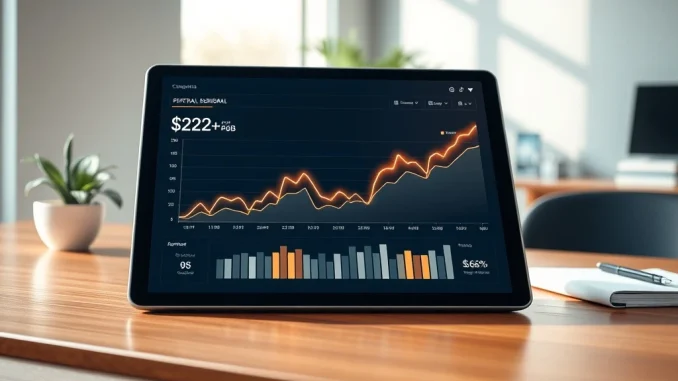
Data from the on-chain analytics platform DeFiLlama reveals the total value locked (TVL) in tokenized RWAs stood at approximately $14.1 billion on January 1, 2026. The market then embarked on a steady ascent through the first quarter. By late March, it hit the $23.6 billion milestone. This growth trajectory is not uniform across asset classes. Tokenized funds, which include products backed by U.S. Treasury bills, bonds, and money market funds, dominate the landscape. They command a 44.5% share of the total market, equating to $10.5 billion in value.
Following funds, tokenized gold and other commodities represent the second-largest segment, holding roughly $6.5 billion. Tokenized equities, a category that recently surpassed $1 billion in on-chain value, now account for nearly $4 billion. Other areas like private credit and various yield-generating products constitute smaller, yet growing, portions of the ecosystem. This data paints a clear picture of institutional-grade assets leading the charge onto public blockchains.
Always-On Markets Drive Investor Adoption Beyond Tokenization Hype
The narrative surrounding RWAs is evolving. Industry leaders report that the current growth wave is less about proving the tokenization concept and more about solving practical investor frustrations with legacy systems. Distribution, ease of access, and the fundamental appeal of assets that can trade and settle around the clock are now the key drivers. A spokesperson for RWA.xyz told Cointelegraph, “The real breakthrough here is that a handful of products have become significantly easier to access, distribute, and use.”
- 24/7 Market Access: Investors are no longer constrained by the 9-to-5 schedules of traditional exchanges, enabling global participation and reaction to news in real-time.
- Reduced Intermediary Friction: Blockchain settlement reduces the layers of custodians and brokers, potentially lowering costs and speeding up transactions.
- Enhanced Liquidity: Tokenization can fractionalize high-value assets, making them accessible to a broader range of investors and creating new liquidity pools.
Industry Executives Cite Fatigue with Legacy Systems
Ross Shemeliak, co-founder and COO of digital assets firm Stobox, articulated a sentiment echoed by many in the space. “Investors are tired of financial markets that close at 4 pm and require layers of intermediaries just to move capital,” Shemeliak stated. He also emphasized that growing institutional experimentation has been crucial for legitimizing the tokenization model. Over the past year, major financial institutions like BlackRock and Franklin Templeton have launched blockchain-based versions of Treasury instruments and funds, providing a significant credibility boost.
Comparing the Leaders: A Breakdown of the Tokenized RWA Ecosystem
The composition of the $23.6 billion market highlights where institutional and retail interest is converging. While funds are the clear leader, the rapid rise of tokenized equities and commodities shows diversification is underway. The entry of traditional finance giants has created a competitive landscape with specialized platforms catering to different asset niches.
| Asset Class | Approximate Value (March 2026) | Key Platforms/Examples | Primary Driver |
|---|---|---|---|
| Tokenized Funds (T-Bills, MMFs) | $10.5 Billion | Ondo Finance, Maple Finance | Yield in a high-rate environment, institutional entry |
| Tokenized Gold & Commodities | $6.5 Billion | PAX Gold (PAXG), Tether Gold (XAUT) | Inflation hedge, blockchain-based custody |
| Tokenized Equities | $4.0 Billion | xStocks, Backed Finance | 24/7 trading, fractional ownership of global stocks |
| Private Credit & Real Estate | $2.6 Billion | Centrifuge, Propy | Access to alternative asset yields |
The Road Ahead: Mainstream Integration and Regulatory Clarity
The next phase for tokenized RWAs will likely focus on deeper integration with existing financial infrastructure. Observers point to several developing trends. Firstly, the bridging of tokenized assets across multiple blockchain networks to enhance liquidity. Secondly, the development of clearer regulatory frameworks in major jurisdictions like the U.S. and EU, which will provide certainty for larger-scale adoption. Finally, the evolution of secondary markets for these tokens will be critical to realizing the promised liquidity benefits.
Market Participants Weigh In on Sustainability
Beyond the headline numbers, analysts are cautiously optimistic but note challenges. Some question whether the growth is overly concentrated in a few products, like Treasury funds, which benefited from a high-interest-rate cycle. Others point to technical hurdles around oracle reliability for real-world data and the need for robust, compliant custody solutions. The consensus, however, is that the genie is out of the bottle. The demand for always-on, efficient markets is a structural shift, not a passing trend.
Conclusion
The surge of tokenized assets to a $23.6 billion market cap marks a definitive maturation point for blockchain in finance. The 66% growth in 2026 underscores that utility—specifically, solving the pain points of market hours and intermediation—is now the primary engine. While tokenized funds lead the charge, the expansion into equities and commodities shows broadening appeal. The involvement of major financial institutions provides essential validation. Moving forward, the sector’s success will hinge on seamless distribution, regulatory progress, and proving that these digital assets can deliver resilient liquidity through market cycles. The era of 24/7 global capital markets, built on blockchain rails, is visibly accelerating.
Frequently Asked Questions
Q1: What exactly are tokenized real-world assets (RWAs)?
Tokenized RWAs are traditional financial assets like bonds, stocks, or commodities represented as digital tokens on a blockchain. Each token signifies ownership or a claim to the underlying real-world asset, enabling it to be traded and settled on digital networks.
Q2: Why did the tokenized asset market grow 66% in early 2026?
The growth is driven by increased institutional adoption, high yields on tokenized U.S. Treasury products, and rising investor demand for markets that operate 24/7, unlike traditional stock exchanges which have set trading hours.
Q3: What is the largest category within the tokenized RWA market?
Tokenized funds, particularly those holding U.S. Treasury bills and money market funds, are the largest segment. They account for $10.5 billion, or about 44.5%, of the total $23.6 billion market.
Q4: How do “always-on” markets benefit the average investor?
They allow investors to buy, sell, or react to global news at any time, not just during exchange hours. This can provide more flexibility, potentially better pricing, and access to a global pool of liquidity.
Q5: Are tokenized assets safe and regulated?
Safety and regulation vary by asset and jurisdiction. Tokenized assets issued by major institutions often comply with existing securities laws. However, the regulatory landscape is still evolving, and investors must assess the issuer’s compliance, custody solutions, and underlying asset backing.
Q6: What does this growth mean for the future of traditional finance?
It signals a gradual convergence. Traditional finance is adopting blockchain for efficiency, while crypto-native projects are incorporating regulated, yield-bearing real-world assets. This hybrid model is likely to define the next generation of financial infrastructure.