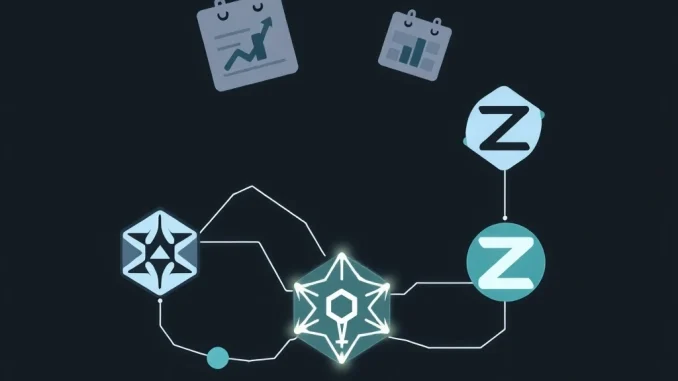
Global, May 2025: The cryptocurrency market faces a pivotal week defined by significant scheduled events from major blockchain projects. According to data from CryptoRank.io, planned token unlocks and protocol upgrades for Sei Network, Axie Infinity, and ZetaChain are set to inject new dynamics into market liquidity, investor sentiment, and network functionality. These events represent critical inflection points that historically influence asset volatility and long-term project trajectories.
Understanding Token Unlocks and Protocol Upgrades
Token unlocks and protocol upgrades are fundamental, yet distinct, mechanisms in the blockchain ecosystem. A token unlock refers to the scheduled release of previously locked or vested tokens into circulating supply. Teams, investors, and foundations often agree to lock-up periods to align incentives and prevent immediate sell pressure after a token launch. Conversely, a protocol upgrade is a planned improvement to a blockchain’s underlying software. These upgrades can enhance security, introduce new features, or improve scalability. While unlocks directly affect market supply, upgrades impact network utility and long-term value proposition. This week, both forces will converge, creating a complex landscape for traders and long-term holders alike.
Sei Network: Accelerating the Parallelized EVM
The Sei Network, a blockchain specializing in high-speed trading, is preparing for a substantial token unlock. Data indicates a release of tokens allocated to its ecosystem development fund and early backers. Historically, large unlocks can lead to increased selling pressure if recipients decide to liquidate portions of their holdings. However, the market impact often depends on broader sentiment and concurrent developments. Sei recently completed its “v2” upgrade, transitioning to a parallelized Ethereum Virtual Machine (EVM). This technical overhaul allows developers to deploy Ethereum-native applications on Sei while leveraging its inherent speed. The unlock this week tests market confidence in Sei’s newly enhanced technological foundation and its ability to attract sustainable developer activity post-upgrade.
The Mechanics of Vesting Schedules
Vesting schedules are contractual agreements that dictate the timing of token releases. They typically follow a cliff-and-linear model. A cliff is an initial period where no tokens unlock, followed by a linear release over months or years. For example, a project might have a one-year cliff, after which 25% of tokens unlock, with the remainder vesting monthly over the next three years. This structure aims to ensure that key contributors remain invested in the project’s success. The unlocks for Sei, Axie Infinity, and ZetaChain this week are not random events but predetermined milestones written into their respective project economies.
Axie Infinity: Balancing Ecosystem Rewards and Market Stability
Axie Infinity, the pioneering play-to-earn gaming platform, faces a scheduled unlock primarily consisting of tokens earmarked for its treasury and in-game rewards pool. This event is particularly significant given Axie’s history. The project’s native token, AXS, experienced dramatic volatility during its previous major unlock cycles, closely tied to fluctuations in its player economy and token utility. The current unlock occurs as the Axie team continues to refine its economic model, shifting from hyper-inflationary rewards to a more sustainable structure. The market will closely watch whether these released tokens are deployed for ecosystem incentives or if they contribute to sell-side liquidity. The balance between rewarding participants and maintaining token stability remains a central challenge for gaming-centric cryptocurrencies.
ZetaChain: Unlocking Amidst Omnichain Expansion
ZetaChain, a blockchain designed as a foundational layer for omnichain decentralized applications, also has tokens scheduled for release. This unlock involves portions allocated to its core team and advisors. ZetaChain’s value proposition hinges on its ability to enable smart contracts that can manage assets and data across multiple blockchains, including Bitcoin and Ethereum. The unlock coincides with a period of active protocol development. A successful, uneventful unlock, where recipients show confidence by holding, could be interpreted as a positive signal regarding the project’s developmental progress and the team’s long-term commitment. Conversely, it presents a liquidity test for a token whose utility is still being actively built out in a competitive interoperability sector.
Historical Precedents and Market Reactions
Analysis of past unlock events reveals no uniform market reaction. In bullish macro conditions, unlocks can be absorbed with minimal price impact, sometimes even serving as a liquidity catalyst. In bearish or neutral markets, they often precede short-term price declines as the market discounts the increased supply. The key differentiator is often context. An unlock paired with a major protocol upgrade or significant positive news can mitigate negative pressure. For instance, when Ethereum completed its “Merge” upgrade, subsequent unlocks for staking rewards were viewed positively as they represented earned yield, not investor dilution. This week’s events must therefore be analyzed within the current context of regulatory developments, Bitcoin ETF flows, and overall crypto market sentiment.
Protocol Upgrades: The Long-Term Value Engine
While token unlocks dominate short-term trader discussions, protocol upgrades often hold greater significance for a network’s fundamental health. An upgrade is a demonstration of a project’s execution capability. Successful upgrades can:
- Enhance Security: Patching vulnerabilities and implementing robust consensus improvements.
- Reduce Costs: Optimizing transaction fees or gas mechanics.
- Enable New Use Cases: Introducing novel smart contract functionalities or interoperability features.
- Improve User Experience: Speeding up transaction finality and simplifying interactions.
For the projects in focus, their recent or upcoming upgrades aim to solidify their competitive positions. Sei’s parallelized EVM targets developer mindshare, Axie’s economic adjustments aim for sustainability, and ZetaChain’s omnichain progress seeks to capture a foundational role in the multi-chain future. The market’s assessment of these upgrades will ultimately influence token demand far more than any single unlock event.
Conclusion: A Week of Fundamental Tests
This week’s confluence of token unlocks and ongoing protocol upgrades presents a series of fundamental tests for Sei Network, Axie Infinity, and ZetaChain. These events will measure market depth, holder conviction, and the perceived success of recent technological developments. For investors, the week underscores the importance of looking beyond price charts to understand vesting schedules, treasury management, and roadmap execution. While short-term volatility may arise from the unlocking of tokens, the long-term trajectory for these projects will be determined by the utility and adoption driven by their protocol upgrades. The cryptocurrency market continues to mature, with these scheduled events providing clear, data-driven moments to assess progress and risk.
FAQs
Q1: What is a token unlock?
A token unlock is the scheduled release of cryptocurrency tokens from a locked or vested state into the circulating supply. These are often allocated to team members, investors, or ecosystem funds and are released according to a pre-defined vesting schedule to align long-term incentives.
Q2: Why do token unlocks sometimes cause price decreases?
Unlocks increase the immediate supply of tokens available for trading. If a significant portion of the newly unlocked tokens is sold on the market by recipients, it can create downward price pressure. The impact depends on market conditions, the size of the unlock relative to daily trading volume, and holder sentiment.
Q3: What is a protocol upgrade?
A protocol upgrade, also known as a hard fork or network update, is a change to the underlying rules of a blockchain. These upgrades can introduce new features, improve security, enhance transaction speed, or reduce costs, and require network validators or nodes to adopt the new software.
Q4: How can I find data on upcoming token unlocks?
Data aggregators like CryptoRank.io, TokenUnlocks.app, and CoinMarketCap provide calendars and detailed breakdowns of upcoming token unlock events, including the number of tokens, their value, and which entity (e.g., team, investors) they are being released to.
Q5: Are all token unlocks bad for a cryptocurrency’s price?
No, not necessarily. While unlocks increase supply, they are a normal part of a project’s lifecycle. If the unlock is small, occurs during strong bullish sentiment, or is accompanied by major positive developments like a successful protocol upgrade, the price impact can be neutral or even positive as it increases market liquidity.
This article was produced with AI assistance and reviewed by our editorial team for accuracy and quality.