Singapore, April 2025: In a significant move for commodity digitization, TitanRWA, a leader in real-world asset (RWA) tokenization, has announced a strategic partnership with RubberVerseX, a specialized digital exchange for natural rubber. This collaboration aims to systematically tokenize the complex, worldwide rubber supply chain. According to the official announcement, the initiative will place considerable emphasis on integrating compliant payment rails with exclusive, verifiable production data, potentially setting a new standard for transparency and efficiency in a multi-billion dollar industry.
TitanRWA and RubberVerseX Forge a New Path for Commodities
The partnership between TitanRWA and RubberVerseX represents a convergence of specialized expertise. TitanRWA brings its established framework for legally compliant tokenization of physical assets, converting rights to real-world value into digital tokens on a blockchain. RubberVerseX provides the industry-specific platform and network, connecting producers, traders, and manufacturers within the rubber ecosystem. Their joint mission is to apply blockchain’s inherent traits—immutability, transparency, and fractional ownership—to an industry historically challenged by opacity, price volatility, and complex logistics.
This move is not occurring in a vacuum. The global push for supply chain transparency, driven by both corporate sustainability goals and regulatory pressures, has accelerated the adoption of traceability technologies. Furthermore, the broader RWA tokenization sector has seen explosive growth, with financial institutions exploring the digitization of everything from treasury bonds to real estate. Applying this model to a foundational industrial commodity like natural rubber is a logical, yet ambitious, next step.
Decoding the Core Components: Compliant Payments and Production Data
The announcement highlights two critical, interlinked pillars of the project: compliant payment infrastructure and exclusive production data. These are not mere features but foundational requirements for institutional adoption and market trust.
Compliant Payment Infrastructure: Tokenizing a physical commodity’s financial flow requires systems that adhere to global anti-money laundering (AML), know-your-customer (KYC), and sanctions regulations. TitanRWA’s role likely involves embedding these compliance protocols directly into the smart contracts that govern token transactions. This means payments for tokenized rubber batches can be automated and settled near-instantly while maintaining a full audit trail for regulators. It removes a significant friction point in cross-border commodity trade.
Exclusive Production Data: The “exclusive” nature of the data is key to the token’s value proposition. Each token representing a specific lot of rubber would be digitally linked to a unique dataset verifying its origin. This dataset could include, but is not limited to:
- Geolocation coordinates of the plantation.
- Harvest dates and processing timestamps.
- Quality metrics and certification reports (e.g., Sustainable Natural Rubber guidelines).
- Carbon footprint calculations from production.
- Chain-of-custody logs from farm to factory.
By making this data an inseparable part of the token, the partnership aims to create a new asset class: physically-backed, digitally-native rubber with proven provenance.
The Tangible Impact on the Global Rubber Industry
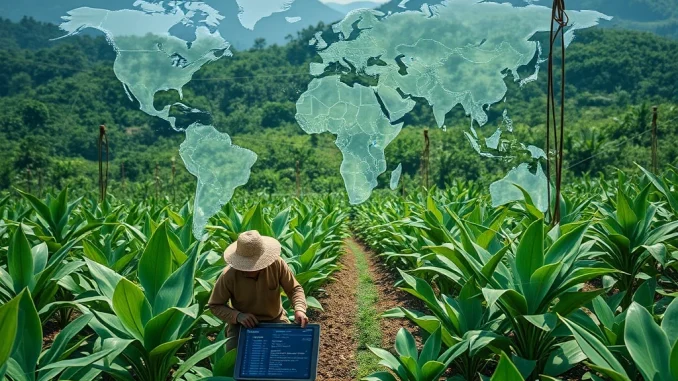
The implications of a successfully tokenized rubber supply chain are profound. For producers, often smallholder farmers in regions like Southeast Asia, it promises faster payments, access to a broader global market without traditional intermediaries, and the potential for premium pricing tied to verifiable sustainable practices. For manufacturers, such as tire and medical equipment companies, it guarantees supply chain integrity, reduces the risk of sourcing from disputed or deforested areas, and simplifies logistics tracking.
From a market perspective, tokenization could enhance liquidity. Large, physical batches of rubber can be fractionally owned and traded 24/7 on a digital exchange like RubberVerseX, attracting a new class of investors to commodity markets. This could lead to more efficient price discovery. The timeline for full-scale implementation will be phased, likely starting with pilot programs with select plantation groups and major buyers to validate the model before a broader rollout.
Overcoming Historical Challenges in Commodity Digitization
Previous attempts to digitize commodities have faced hurdles. The primary challenge is the “oracle problem”—ensuring the data about the physical world (e.g., rubber quality, storage conditions) fed into the blockchain is accurate and tamper-proof. TitanRWA and RubberVerseX must deploy robust systems, potentially combining Internet of Things (IoT) sensors at processing facilities with trusted third-party audits, to bridge this gap. Another challenge is achieving critical mass; the network’s value depends on widespread adoption by all key players in the supply chain. The partnership’s focus on compliant infrastructure is a direct response to this, designed to meet the stringent requirements of large, regulated corporations.
The table below outlines a comparison between traditional and tokenized rubber trading models:
| Aspect | Traditional Model | Tokenized Model (Proposed) |
|---|---|---|
| Settlement | Days or weeks, paper-heavy | Near-instant, automated via smart contract |
| Transparency | Limited, often opaque chain of custody | High, with immutable production data attached to asset |
| Accessibility | Restricted to large traders and institutions | Potentially fractional, open to broader investor base |
| Compliance | Manual, back-office processes | Programmed into asset token logic |
Conclusion
The partnership between TitanRWA and RubberVerseX marks a pivotal experiment at the intersection of traditional industry and decentralized finance. By focusing on the dual engines of regulatory-compliant finance and irrefutable production data, they are addressing the core barriers to commodity tokenization. If successful, this initiative could do more than just streamline the rubber supply chain; it could provide a replicable blueprint for tokenizing other vital physical assets, from coffee to copper, ushering in a new era of transparency and efficiency in global trade. The industry will be watching closely as the first tokenized rubber batches move from plantation to digital ledger.
FAQs
Q1: What does tokenizing a rubber supply chain actually mean?
It means creating a digital token on a blockchain that represents ownership or a claim to a specific, physical quantity of natural rubber. This token contains embedded data about the rubber’s origin, quality, and journey, making it a tradable digital asset with a transparent physical backing.
Q2: Why is compliant payment infrastructure so important for this project?
For large-scale adoption by corporations and financial institutions, the system must automatically adhere to global financial regulations. Building compliance (like KYC/AML checks) directly into the payment process ensures legal security and makes the platform trustworthy for serious commercial use.
Q3: How does this benefit rubber farmers?
Farmers could receive faster, more secure payments directly via digital settlement. Verifiable data on their sustainable practices could also allow them to command premium prices for their tokenized crop, improving income stability.
Q4: Is the rubber tokenization model similar to cryptocurrency?
While it uses similar blockchain technology, the key difference is backing. Cryptocurrencies like Bitcoin derive value from network consensus and utility. A rubber token derives its fundamental value from a specific physical asset—the rubber itself—with its price influenced by traditional commodity market factors as well as digital trading.
Q5: What are the biggest challenges this partnership needs to overcome?
The main challenges are ensuring the physical data linked to tokens is 100% accurate and secure (the oracle problem), achieving widespread adoption across a fragmented global industry, and navigating the evolving regulatory landscape for digital assets in different countries.
Updated insights and analysis added for better clarity.
This article was produced with AI assistance and reviewed by our editorial team for accuracy and quality.