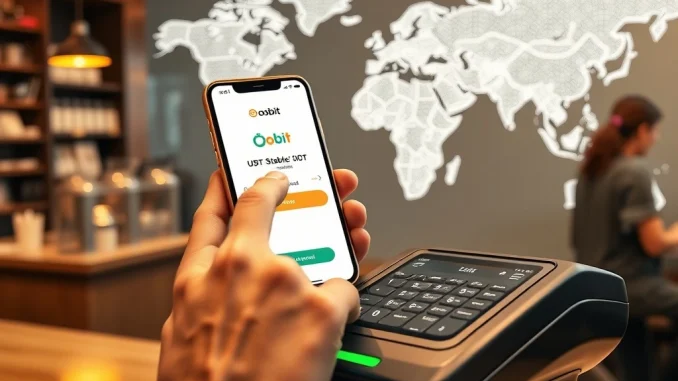
Global, May 2025: Tether Operations Limited, the issuer of the world’s largest stablecoin, has significantly expanded the real-world utility of its USDT token. Through a new technical integration with the payment application Oobit, USDT on the Stable network is now directly accessible for instant “Tap & Pay” transactions at a reported network of over 100 million merchants worldwide. This move represents a pivotal step in bridging the gap between digital asset holdings and everyday consumer spending, potentially reshaping the landscape for cryptocurrency payments.
Tether USDT and the Strategic Push for Mainstream Payments
The integration of USDT on the Stable network with Oobit’s payment platform is not an isolated development. It is the latest in a series of strategic initiatives by Tether to transition its stablecoin from a predominantly trading and settlement asset within cryptocurrency exchanges to a viable medium for daily transactions. For years, a primary critique of leading stablecoins has been their limited use cases outside digital asset ecosystems. This partnership directly addresses that gap by leveraging existing point-of-sale (POS) infrastructure.
The Stable network, a layer-1 blockchain designed for high-speed and low-cost transactions, serves as the foundational rails for this service. By utilizing Stable instead of other networks like Ethereum or Tron for this specific use case, the partnership aims to ensure transaction finality and cost efficiency are suitable for retail micropayments. This technical choice underscores a focus on user experience, where slow settlement times or high network fees would render a “Tap & Pay” feature impractical.
How the Oobit Integration Transforms USDT into Spendable Currency
The operational mechanism behind this service involves several key steps that convert a user’s digital USDT into a completed merchant payment. Understanding this flow is crucial for grasping the innovation’s practical implications.
- User Onboarding and Funding: A user downloads the Oobit application, completes identity verification procedures compliant with financial regulations, and deposits USDT from their external wallet onto the Stable network into their Oobit account.
- Real-Time Conversion and Authorization: When the user initiates a “Tap & Pay” transaction at a compatible contactless terminal, Oobit’s backend systems perform a near-instantaneous conversion. The user’s USDT is exchanged for fiat currency at the prevailing rate.
- Merchant Settlement: Crucially, the merchant receives settlement in their local fiat currency, not in USDT. This eliminates volatility risk and accounting complexity for the business, as they interact solely with traditional currency. Oobit and its payment partners handle the foreign exchange and settlement process.
- Network Infrastructure: The entire transaction leverages the Stable network for the initial asset transfer and the traditional card networks (like Visa or Mastercard, via Oobit’s partnerships) for the final authorization at the merchant terminal.
This model effectively uses USDT as a top-up mechanism for a digital spending account, with the complexity of crypto-to-fiat conversion handled seamlessly in the background. The user experience mirrors that of using a mobile banking app or services like Apple Pay, but with a cryptocurrency as the funding source.
The Competitive Landscape and Historical Context
The quest to enable cryptocurrency payments at point-of-sale has a long and challenging history. Early attempts, such as direct Bitcoin payment processors in the early 2010s, struggled with price volatility, slow block times, and poor consumer adoption. The rise of stablecoins in the late 2010s solved the volatility issue, creating a digital asset with a stable value pegged to the US dollar.
However, merchant adoption remained a hurdle. Previous solutions often required businesses to install specialized hardware or use specific software to accept crypto directly. The Oobit model, by contrast, is merchant-agnostic. It works anywhere standard contactless NFC payments are accepted because it interfaces with the existing global card payment infrastructure. This bypasses the need for individual merchants to consciously “accept crypto,” dramatically expanding the potential user base overnight.
This approach places the Tether-Oobit integration in competition with other crypto card providers and neobanks that offer similar spend-from-crypto features. Its differentiation lies in the direct use of the Stable network and the sheer scale of Tether’s USDT, which boasts a market capitalization in the tens of billions and is the most liquid stablecoin in the world.
Implications for Users, Merchants, and the Crypto Ecosystem
The widespread availability of USDT for Tap & Pay transactions carries significant consequences for multiple stakeholders in the financial and technological sectors.
For consumers, it provides a direct utility for their stablecoin holdings beyond trading or earning yield. It offers a potential alternative for cross-border travelers, who could fund their spending account with USDT and avoid traditional foreign exchange fees. It also represents a step toward financial inclusion for individuals in regions with underdeveloped banking systems but access to cryptocurrency markets.
For merchants, the primary benefit is indirect. They gain access to a new cohort of customers who prefer to spend from their digital asset portfolios without having to change their own payment processing systems or assume any cryptocurrency-related risk. Transaction settlement remains in familiar fiat currency, preserving their existing accounting practices.
For the broader cryptocurrency ecosystem, this integration is a validation of stablecoins as a functional component of the payment layer. It demonstrates a clear path to real-world adoption that does not require a wholesale replacement of legacy systems. Success in this arena could spur further innovation and regulatory clarity around the use of stablecoins for payments, influencing policy discussions globally.
Regulatory Considerations and Future Challenges
A deployment of this scale inevitably interacts with complex regulatory frameworks. Oobit, as the payment service provider, must operate under strict Money Services Business (MSB) and Anti-Money Laundering (AML) regulations in every jurisdiction it serves. The integration likely involves partnerships with licensed financial institutions that handle the fiat settlement side of transactions.
Key challenges moving forward will include maintaining compliance across diverse international markets, ensuring the security of user funds against sophisticated threats, and managing the scalability of the underlying Stable network as transaction volume grows. Furthermore, the competitive response from other stablecoin issuers and payment platforms will shape the evolution of this market niche.
Conclusion
The integration of Tether’s USDT on the Stable network with the Oobit payment platform marks a substantial evolution in the practical application of cryptocurrency. By enabling instant “Tap & Pay” functionality at tens of millions of existing merchant terminals, it moves stablecoins from the realm of speculative assets and trading pairs into the hands of everyday consumers. This development leverages the stability of USDT, the efficiency of the Stable network, and the ubiquity of global card infrastructure to create a seamless payment experience. While regulatory and competitive hurdles remain, this partnership represents one of the most significant steps to date in demonstrating how digital assets can integrate with and enhance the traditional global payments landscape. The success of this Tether USDT initiative will be closely watched as a bellwether for the future of consumer cryptocurrency adoption.
FAQs
Q1: What exactly does the Tether and Oobit integration do?
It allows users to load USDT stablecoins on the Stable network into the Oobit app and then spend them instantly at any merchant that accepts standard contactless payments, using a “Tap & Pay” feature on their phone.
Q2: Do merchants need to do anything special to accept this form of payment?
No. Merchants receive payment in their local fiat currency through the existing card network. They do not need new hardware or software, and they never directly handle USDT.
Q3: What is the Stable network, and why is it used for this?
The Stable network is a blockchain designed for fast and low-cost transactions. Using it for this service helps ensure that the underlying transfer of USDT is quick and inexpensive, making it suitable for small, everyday purchases.
Q4: Are there any fees associated with using USDT to “Tap & Pay” via Oobit?
While specific fee structures are set by Oobit, users should generally expect fees related to currency conversion (from USDT to fiat) and potential transaction fees, similar to other financial services. The details would be available in the app’s terms of service.
Q5: How does this differ from using a regular debit card or Apple Pay?
The funding source differs. Instead of drawing from a traditional bank account, the funds come from the user’s holdings of the USDT cryptocurrency. The experience at the payment terminal, however, is designed to be identical to using a standard digital wallet.