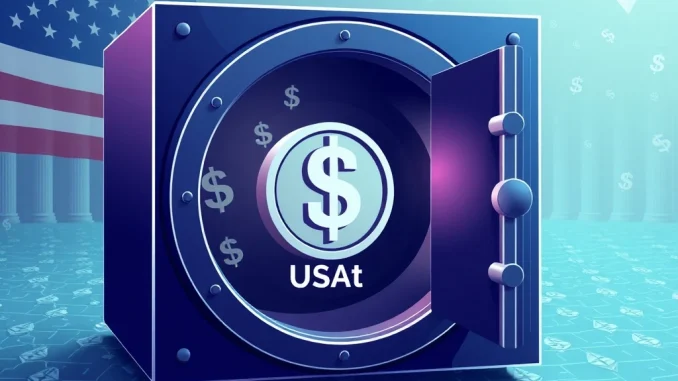
New York, January 27, 2026: Tether has officially launched USAt, marking the stablecoin giant’s first domestically issued digital dollar token designed specifically for the U.S. market under federal regulatory oversight. This groundbreaking development represents a significant shift in the cryptocurrency landscape, as the world’s largest stablecoin issuer enters the regulated domestic arena with a $10 million initial supply and institutional-grade custody arrangements.
USAt Stablecoin: Tether’s Regulated Domestic Debut
The launch of USAt represents a strategic pivot for Tether, which has dominated the global stablecoin market with its USDt token for over a decade. Unlike its internationally focused predecessor, USAt operates under the newly established GENIUS Act framework, which became federal law in July 2025. This legislation created the first comprehensive federal regulatory structure for payment stablecoins in the United States, addressing long-standing concerns about consumer protection and financial stability.
Anchorage Digital Bank, a federally chartered cryptocurrency bank, serves as the official issuer of USAt tokens. This institutional partnership provides the stablecoin with a level of regulatory legitimacy previously unavailable to most cryptocurrency projects. The token exists as an ERC-20 asset on the Ethereum blockchain, ensuring compatibility with the existing decentralized finance ecosystem while operating within a regulated framework.
Institutional Infrastructure and Reserve Management
Cantor Fitzgerald, a major U.S. financial institution, acts as the custodian for USAt’s reserve assets and serves as the preferred primary dealer. This arrangement introduces unprecedented transparency and institutional oversight to Tether’s stablecoin operations. The involvement of established financial institutions represents a maturation of the stablecoin sector, bridging traditional finance with digital asset innovation.
The reserve management structure addresses persistent concerns about stablecoin backing that have plagued the industry since its inception. By placing reserve custody with a recognized financial institution subject to federal oversight, Tether provides institutional investors with greater confidence in the token’s stability and redeemability. This model contrasts with earlier stablecoin approaches that relied on less transparent reserve management practices.
The GENIUS Act Framework and Regulatory Compliance
The Generative Economic Networks and Institutional Underwriting Standards (GENIUS) Act established clear guidelines for stablecoin issuance, reserve requirements, and consumer protections. Under this framework, payment stablecoin issuers must maintain full backing of circulating tokens with high-quality liquid assets, undergo regular audits, and implement robust anti-money laundering protocols.
USAt’s compliance with the GENIUS Act positions it as a regulated alternative to both traditional USDt and other dollar-pegged digital assets. The legislation requires issuers to obtain federal charters or partner with federally regulated institutions, creating barriers to entry that favor established players with institutional partnerships. This regulatory environment aims to protect consumers while fostering innovation in digital payments.
Market Availability and Exchange Listings
USAt launched with immediate availability on several major cryptocurrency platforms, including MoonPay, Crypto.com, OKX, Kraken, and Bybit. This broad distribution strategy ensures accessibility for both institutional and retail users across multiple jurisdictions. The token’s ERC-20 standard facilitates integration with decentralized exchanges and DeFi protocols, though regulatory compliance requirements may limit certain applications.
The initial $10 million supply represents a conservative launch strategy, allowing Tether to test market reception and operational infrastructure before scaling. Industry analysts anticipate gradual supply increases as institutional adoption grows and regulatory comfort with the new framework develops. This measured approach contrasts with the rapid scaling typical of earlier cryptocurrency launches.
Leadership and Strategic Positioning
Bo Hines, formerly associated with President Donald Trump’s Council of Advisers on Digital Assets, serves as CEO of Tether USAt. His appointment underscores the project’s emphasis on regulatory alignment and policy expertise. Hines brings both political insight and financial industry experience to the role, positioning USAt as a bridge between Washington policymakers and the cryptocurrency industry.
Tether CEO Paolo Ardoino framed USAt as providing institutions with “a dollar-backed digital asset issued within the United States” under federal oversight. This domestic focus represents a strategic response to growing regulatory scrutiny of globally issued stablecoins and increasing demand for compliant digital dollar alternatives from traditional financial institutions.
Historical Context and Industry Implications
The launch of USAt occurs against a backdrop of increasing stablecoin adoption and regulatory evolution. Since the first stablecoins emerged in 2014, the sector has grown to represent over $150 billion in market capitalization, with Tether’s USDt commanding approximately 70% of the market. However, regulatory uncertainty has limited institutional participation and created compliance challenges for global operations.
The GENIUS Act represents Congress’s response to these challenges, creating a pathway for compliant stablecoin issuance while addressing concerns about financial stability, consumer protection, and monetary sovereignty. USAt serves as an early test case for this regulatory framework, potentially establishing precedents for future stablecoin projects seeking federal approval.
Comparative Analysis: USAt vs. Traditional USDt
While both tokens represent dollar-pegged stablecoins issued by Tether, significant differences exist in their regulatory frameworks, target markets, and operational structures. USDt operates as a global stablecoin with reserves held across multiple jurisdictions and currencies, while USAt maintains exclusively U.S. dollar reserves under federal custody requirements.
The regulatory distinction creates different risk profiles and use cases for each token. USDt continues to serve international markets and decentralized finance applications where regulatory compliance varies by jurisdiction. USAt targets U.S. institutions and applications requiring clear regulatory status and federal oversight, potentially including traditional finance integration and government-related transactions.
Future Developments and Market Impact
Industry observers will monitor several key metrics following USAt’s launch, including supply growth, trading volume, institutional adoption rates, and regulatory developments. The token’s success could influence broader cryptocurrency regulation and traditional financial institution participation in digital assets. Additionally, USAt’s performance may affect competitive dynamics among stablecoin issuers and blockchain platforms.
Potential future developments include expanded exchange listings, integration with traditional payment systems, and development of regulated DeFi applications. The token’s ERC-20 standard enables compatibility with Ethereum’s evolving ecosystem, including layer-2 scaling solutions and emerging smart contract platforms. However, regulatory considerations may limit certain applications to maintain compliance with the GENIUS Act framework.
Conclusion
The launch of USAt represents a landmark development in cryptocurrency regulation and institutional adoption. As Tether’s first domestically issued stablecoin operating under the GENIUS Act, USAt bridges traditional finance and digital assets through federal oversight and institutional partnerships. The token’s emphasis on transparency, regulatory compliance, and institutional-grade infrastructure addresses longstanding concerns about stablecoin stability and oversight. While initial supply remains modest, USAt’s regulatory framework and institutional backing position it for potential growth as digital dollar adoption accelerates among regulated entities. The stablecoin’s performance will provide valuable insights into the practical implementation of federal cryptocurrency regulation and the future of dollar-denominated digital assets.
FAQs
Q1: What is the USAt stablecoin?
USAt is Tether’s first U.S.-domestically issued stablecoin, operating under the federal GENIUS Act with full dollar backing and institutional custody by Cantor Fitzgerald.
Q2: How does USAt differ from traditional USDt?
USAt operates under U.S. federal regulation with reserves held by Cantor Fitzgerald, while USDt functions as a global stablecoin with international reserves and varying regulatory status across jurisdictions.
Q3: What is the GENIUS Act?
The Generative Economic Networks and Institutional Underwriting Standards Act, passed in July 2025, establishes the first federal regulatory framework for payment stablecoins in the United States.
Q4: Which institutions are involved with USAt?
Anchorage Digital Bank serves as issuer, Cantor Fitzgerald as custodian and primary dealer, with exchange availability through MoonPay, Crypto.com, OKX, Kraken, and Bybit.
Q5: What blockchain does USAt use?
USAt operates as an ERC-20 token on the Ethereum blockchain, ensuring compatibility with existing decentralized finance infrastructure and wallet systems.
This article was produced with AI assistance and reviewed by our editorial team for accuracy and quality.