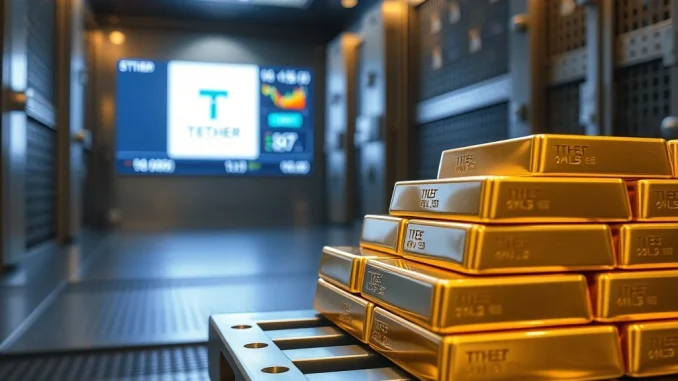
Global, April 2025: In a move that sent ripples through both the cryptocurrency and traditional finance sectors, stablecoin giant Tether Holdings Ltd. confirmed a massive acquisition in the final quarter of 2024. According to reports verified by the company, Tether purchased approximately 27 metric tons of physical gold. Based on prevailing market prices, this colossal haul carries an estimated value of $4.4 billion. This transaction represents one of the most significant single purchases of physical gold by a private financial entity in recent history and marks a pivotal strategic shift for the world’s largest stablecoin issuer.
Tether Gold Purchase Signals a New Era for Stablecoin Reserves
The scale of this acquisition is difficult to overstate. Twenty-seven tons of gold is equivalent to roughly 870,000 troy ounces. To visualize, if minted into standard 400-ounce London Good Delivery bars, this purchase would amount to over 2,175 individual bars. This strategic allocation directly impacts the composition of Tether’s USDT stablecoin reserves. USDT, with a circulating supply exceeding $110 billion, maintains a 1:1 peg to the US dollar through a basket of reserve assets. Historically, these reserves have consisted primarily of US Treasury bills, cash, and other liquid instruments. The integration of a substantial, direct physical gold holding introduces a tangible, non-sovereign asset class into this mix, potentially altering the risk profile and perceived stability of the entire USDT ecosystem.
Analyzing the Impact on Gold and Crypto Markets
Tether’s entry as a major physical buyer has immediate and long-term implications for the global gold market. While central banks have been net buyers of gold for over a decade, a private digital asset company making a purchase of this magnitude is unprecedented. Industry analysts point to several potential motivations and consequences.
- Diversification and De-risking: Adding physical gold diversifies Tether’s reserves away from purely fiat-currency-denominated assets and traditional banking system exposure. Gold is often viewed as a hedge against inflation and geopolitical uncertainty.
- Enhanced Transparency and Trust: Following past scrutiny over its reserve composition, Tether has increased its attestation reports. A verifiable, auditable stockpile of physical gold provides a concrete, easily understood asset backing a portion of USDT.
- Market Demand Shock: A single purchase of 27 tons represents a meaningful portion of annual global mine production and can influence physical market premiums and liquidity, particularly in the wholesale bar market.
- Institutional Bridge: This move may make Tether and its underlying reserves more palatable to institutional investors who are familiar with gold as a reserve asset but wary of purely digital collateral.
Historical Context and Strategic Precedents
Tether’s foray into gold is not entirely without precedent. The company already offers a digital token, Tether Gold (XAUT), where each token represents ownership of one troy ounce of physical gold on a specific bar stored in Switzerland. However, the Q4 2025 purchase appears to be for the company’s own corporate treasury and primary USDT reserves, not solely for backing XAUT. This distinction is critical. It echoes strategies employed by nations for centuries—building a sovereign gold reserve—but executed by a 21st-century digital finance entity. The move also follows a broader trend of technology and finance firms, like MicroStrategy with Bitcoin, allocating significant capital to non-traditional reserve assets, challenging conventional corporate treasury management.
The Mechanics and Security of a Multi-Billion Dollar Gold Holding
Acquiring 27 tons of gold is one challenge; storing, securing, and insuring it is another. Industry standards dictate that such a holding would likely be stored across multiple, highly secure, LBMA-approved vaults in major financial hubs like London, New York, or Zurich. These facilities offer allocated storage, meaning Tether owns specific, identifiable bars, with regular audits to confirm existence and purity. The logistical and security overhead is substantial, involving armored transport, 24/7 monitoring, and complex insurance policies. This operational reality underscores Tether’s commitment to treating this gold as a permanent, strategic reserve asset rather than a short-term trade.
Conclusion
Tether’s purchase of 27 tons of gold is far more than a simple treasury transaction. It is a profound statement on the evolution of stablecoin reserves and the convergence of digital and traditional finance. By anchoring a portion of its $4.4 billion in value to physical gold, Tether is pursuing enhanced stability, greater transparency, and deeper credibility in a competitive and scrutinized market. This landmark Tether gold purchase will likely prompt competitors to reevaluate their own reserve strategies and may accelerate the integration of tangible commodities into the digital asset ecosystem. The move solidifies gold’s enduring role as a foundational store of value, even within the most innovative frontiers of modern finance.
FAQs
Q1: How much gold did Tether actually buy?
Tether purchased approximately 27 metric tons, or about 870,000 troy ounces, of physical gold in Q4 2024.
Q2: What is the value of Tether’s gold purchase?
Based on gold prices at the time of reporting, the 27-ton acquisition is valued at roughly $4.4 billion.
Q3: Why would a cryptocurrency company buy physical gold?
Tether likely aims to diversify its USDT stablecoin reserves, add a non-sovereign, inflation-resistant asset, and enhance overall trust and transparency in its backing.
Q4: Where will Tether store all this gold?
The gold is expected to be stored under high-security, allocated custody in LBMA-approved vaults in major global financial centers, similar to how central banks and large ETFs store bullion.
Q5: Does this affect the price of Tether’s USDT stablecoin?
The primary goal is to strengthen the 1:1 USD peg by adding a solid asset to its reserves. It should not directly affect the peg but could influence market confidence in USDT’s long-term stability.
Q6: Has any other crypto company made a purchase like this?
While other firms hold Bitcoin or offer gold-backed tokens, a direct physical gold purchase of this scale by a private crypto entity is unprecedented in the industry’s history.