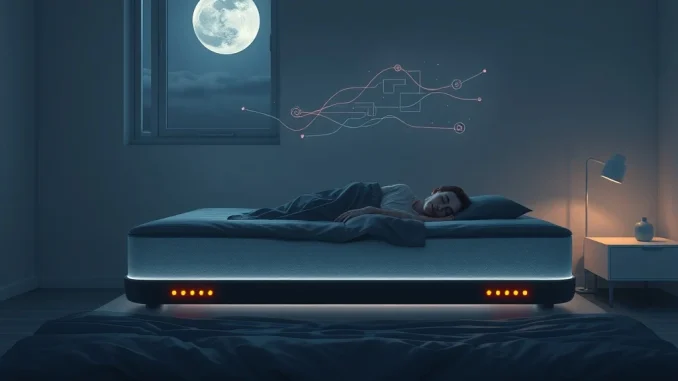
NEW YORK, March 4, 2026 – In a landmark move bridging digital assets and consumer health technology, Tether Investments has spearheaded a $50 million funding round for Eight Sleep, catapulting the sleep technology company’s valuation to $1.5 billion. The deal, finalized today, represents a strategic pivot for the stablecoin giant, directly integrating its proprietary QVAC AI platform into Eight Sleep’s flagship Pod smart mattress. This investment signals a aggressive push by cryptocurrency entities into tangible, high-growth consumer hardware sectors, with sleep technology positioned as the next frontier for AI-driven wellness.
Tether’s Strategic $50 Million Investment in Sleep Tech
Tether Investments, the venture arm of the company behind the world’s largest stablecoin USDT, led the financing round exclusively. Consequently, the capital infusion immediately values Eight Sleep at $1.5 billion, a significant premium from its previous valuation. The transaction is not merely financial. Specifically, it includes a deep technology integration mandate. Eight Sleep will embed Tether’s QVAC (Quantum Vector Analysis for Consumer) AI platform into the next generation of its Pod systems. According to a joint statement released by both companies, this AI layer will enhance the mattress’s biometric tracking, predictive temperature regulation, and personalized sleep coaching algorithms. The deal follows Eight Sleep’s reported 140% year-over-year revenue growth in 2025, as detailed in a market analysis by PitchBook Data.
Matteo Bocchi, a senior analyst at the Consumer Technology Association, provided immediate context. “This isn’t a passive investment,” Bocchi stated. “Tether is acquiring a direct channel into the homes and sleep data of a premium consumer base. The QVAC platform’s integration suggests they view sleep biometrics as a valuable, structured data set, potentially for future fintech or wellness applications.” The funding will accelerate Eight Sleep’s manufacturing scale-up and its planned expansion into Asian and European markets in late 2026.
Impact on the Competitive Sleep Technology Landscape
The valuation surge fundamentally reshapes the competitive dynamics of the sleep technology market. Previously dominated by fitness trackers and basic smart mattresses, the sector now sees a well-capitalized player with direct AI expertise. The immediate impacts are multifaceted. First, it raises the capital barrier for entry. Second, it sets a new benchmark for what constitutes a ‘smart’ sleep system—shifting from reactive adjustments to AI-predictive personalization. Third, it attracts scrutiny regarding data privacy for highly intimate biometric information.
- Market Valuation Reset: Eight Sleep’s $1.5B valuation sets a new high for dedicated sleep tech firms, pressuring rivals like Sleep Number and Withings to justify their own market caps.
- Technology Arms Race: The QVAC integration creates a new product tier, forcing competitors to seek similar AI partnerships or develop capabilities in-house.
- Investor Attention Shift: Venture capital and corporate investment groups are now likely to re-evaluate the entire wellness tech sector, particularly companies with unique biometric data aggregation.
Expert Analysis on Data and Integration
Dr. Anya Sharma, a neurologist and sleep researcher at the Stanford Sleep Medicine Center, highlighted the medical implications. “The promise is profound—continuous, non-invasive sleep staging and vital sign monitoring,” Dr. Sharma explained. “However, the critical question is governance. Who owns the sleep data? How is it anonymized and secured? A cryptocurrency-adjacent firm entering this space will inevitably face heightened scrutiny from regulators like the FTC and healthcare authorities.” Tether’s announcement included a commitment to HIPAA-compliant data handling for U.S. users and adherence to the EU’s General Data Protection Regulation (GDPR), a direct response to these anticipated concerns.
Broader Context: Crypto Ventures into Real-World Assets
This investment is part of a larger, deliberate strategy by major cryptocurrency firms to diversify beyond volatile digital asset trading and into revenue-generating, real-world businesses. Following the regulatory clarity established by the 2025 U.S. Digital Asset Framework, entities like Tether, Coinbase Ventures, and Andreessen Horowitz’s crypto fund have aggressively targeted sectors like renewable energy, data centers, and now, consumer health tech. The move mitigates their exposure to crypto market cycles while leveraging their substantial capital reserves.
| Cryptocurrency Entity | Recent Major Investment (2025-2026) | Sector | Reported Valuation |
|---|---|---|---|
| Tether Investments | Eight Sleep | Sleep Technology / Consumer Health | $1.5B |
| Coinbase Ventures | CoreWeave (AI Cloud Infrastructure) | Artificial Intelligence / Compute | $18B |
| Andreessen Horowitz (a16z Crypto) | Helion Energy (Fusion Power) | Clean Energy | $4.2B |
What Happens Next for Eight Sleep and the Market
The immediate roadmap is clear. Eight Sleep will debut its first QVAC-integrated Pod 4 system in Q4 2026, according to a product timeline shared with investors. Furthermore, the company plans to double its research and development staff by the end of the year. Industry observers will closely monitor the consumer response to the AI features and any regulatory inquiries into the data partnership. Concurrently, competing firms are expected to announce their own strategic partnerships or technology roadmaps within the next two quarters to counter this move. The sleep tech market, valued at $25 billion globally in 2025 by Grand View Research, is now poised for accelerated consolidation and innovation.
Stakeholder and Industry Reactions
Initial reactions from the tech and finance communities have been mixed but engaged. On social platform X, prominent tech investors praised the deal’s strategic logic. Conversely, some data privacy advocates expressed concern. The Consumer Technology Association, however, issued a statement welcoming the investment as a validation of the high-growth wellness tech category. Notably, there has been no immediate comment from traditional mattress manufacturers, suggesting they may view this as competition in a different, more technological product category altogether.
Conclusion
Tether’s $50 million investment in Eight Sleep is far more than a simple financial transaction. It represents a convergence of cryptocurrency capital, artificial intelligence, and consumer health technology, creating a new heavyweight in the sleep tech arena. The resulting $1.5 billion valuation resets expectations for the entire sector. Key takeaways include the strategic use of crypto reserves for real-world asset acquisition, the rising value of biometric sleep data, and the imminent arrival of more sophisticated AI-driven wellness products. Observers should watch for the Q4 2026 product launch, regulatory statements on health data privacy, and the competitive responses from established players in both the mattress and wearable technology spaces.
Frequently Asked Questions
Q1: What is the QVAC AI platform that Tether is integrating into Eight Sleep?
The QVAC (Quantum Vector Analysis for Consumer) platform is Tether’s proprietary artificial intelligence system. Initially developed for analyzing blockchain transaction patterns, it is being adapted to process complex biometric data from Eight Sleep’s Pod mattress, aiming to predict and optimize sleep cycles through advanced temperature and environmental adjustments.
Q2: How does this funding round affect current Eight Sleep Pod owners?
Existing Pod owners will not receive hardware upgrades from this deal. However, Eight Sleep has indicated that some software-based AI features from the QVAC integration may be delivered via over-the-air updates to compatible recent Pod 3 models in 2027, though core predictive hardware features will require the new Pod 4.
Q3: What is the timeline for the new AI-enhanced Eight Sleep product?
The first product featuring the integrated QVAC AI, tentatively called the Pod 4, is scheduled for a limited release in the fourth quarter of 2026, with full consumer availability expected in the first quarter of 2027.
Q4: Why would a cryptocurrency company invest in a smart mattress company?
Tether, like other large crypto entities, holds vast reserves of capital. Investing in fast-growing, tangible businesses like Eight Sleep diversifies their assets, generates potential returns outside the volatile crypto market, and provides a direct pipeline into valuable consumer data and a premium brand.
Q5: How does this investment compare to other big deals in the sleep technology industry?
This $50 million round at a $1.5 billion valuation is among the largest single investments in a pure-play sleep tech company. It surpasses most venture rounds for wellness wearables and positions Eight Sleep’s valuation closer to established public companies in the broader home furnishings sector.
Q6: What should potential customers concerned about data privacy know?
According to the joint announcement, all health and sleep data from the Pod will be encrypted, and users will have granular control over data sharing. The companies state they will comply with HIPAA in the U.S. and GDPR in Europe, treating sleep data with the protections of clinical health information.
Updated insights and analysis added for better clarity.
This article was produced with AI assistance and reviewed by our editorial team for accuracy and quality.