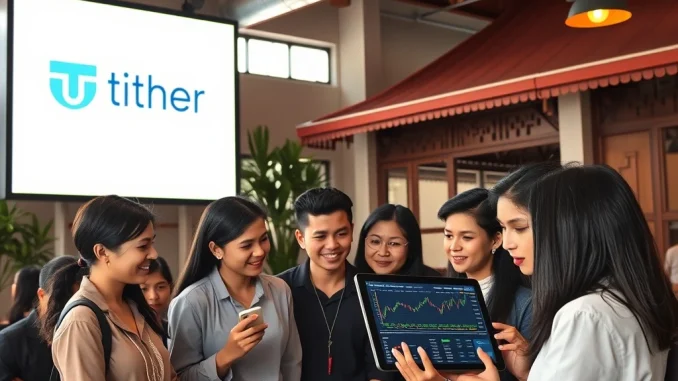
VIENTIANE, Laos – December 2024 – In a significant development for Southeast Asia’s cryptocurrency landscape, Tether Operations Limited, the issuer of the world’s largest stablecoin USDT, has announced a groundbreaking partnership with Bitqik, one of Laos’s leading licensed cryptocurrency exchanges. This collaboration represents a strategic initiative to enhance financial literacy and promote practical cryptocurrency adoption across Laos through comprehensive educational programs and real-world use case demonstrations.
Tether’s Strategic Partnership with Bitqik Exchange
Tether’s partnership with Bitqik marks a calculated expansion into Laos’s emerging digital economy. The collaboration specifically focuses on developing localized educational content and organizing practical demonstrations in major urban centers including Vientiane, Luang Prabang, and Pakse. Consequently, this initiative aims to bridge knowledge gaps about blockchain technology while promoting financial inclusion through stablecoin adoption.
Furthermore, this partnership arrives during a period of regulatory evolution in Laos. The Bank of the Lao PDR has been developing frameworks for digital asset oversight since 2021. Additionally, Laos has shown increasing interest in blockchain applications beyond cryptocurrency, particularly in supply chain management and cross-border payments. Therefore, Tether’s educational efforts align with national digital transformation goals while supporting regulatory compliance awareness.
Laos’s Emerging Cryptocurrency Ecosystem
Laos represents one of Southeast Asia’s most intriguing cryptocurrency markets due to its unique economic position and regulatory approach. The country has authorized several cryptocurrency mining operations since 2021, leveraging its abundant hydroelectric power resources. Moreover, Laos maintains close economic ties with neighboring China and Vietnam, both significant cryptocurrency markets despite varying regulatory stances.
The following table illustrates Laos’s cryptocurrency regulatory timeline:
| Year | Development | Impact |
|---|---|---|
| 2021 | Pilot cryptocurrency mining approval | Established regulatory testing framework |
| 2022 | Bitqik receives exchange license | Created licensed trading infrastructure |
| 2023 | Digital asset committee formation | Enhanced regulatory oversight capacity |
| 2024 | Tether partnership announcement | Expanded educational and adoption initiatives |
Simultaneously, Laos faces specific financial inclusion challenges that cryptocurrency could potentially address. According to World Bank data, approximately 30% of Laotian adults remain unbanked. Meanwhile, mobile phone penetration exceeds 90%, creating ideal conditions for mobile-based financial solutions. Stablecoins like USDT offer particular advantages for remittances, which constitute approximately 1.5% of Laos’s GDP according to 2023 International Monetary Fund estimates.
Educational Initiatives and Real-World Applications
Tether’s educational program with Bitqik will emphasize practical cryptocurrency applications rather than speculative trading. The curriculum reportedly includes modules on:
- Stablecoin fundamentals: Understanding price stability mechanisms and reserve backing
- Remittance applications: Cost comparison between traditional and cryptocurrency transfers
- Merchant adoption: Technical implementation for business payment systems
- Security practices: Wallet management and fraud prevention techniques
Additionally, demonstration centers in major cities will showcase actual cryptocurrency transactions. These centers will feature point-of-sale systems accepting USDT payments and remittance simulation stations. The program also includes train-the-trainer components to ensure sustainable knowledge transfer beyond initial implementation phases.
Regional Context and Competitive Landscape
Southeast Asia represents one of cryptocurrency’s most dynamic adoption regions. Thailand has established comprehensive digital asset regulations since 2018. Vietnam leads in cryptocurrency adoption rates despite regulatory ambiguities. Singapore maintains its position as a regional blockchain hub with clear licensing frameworks. Conversely, Laos offers distinct advantages including lower market saturation and government willingness to explore blockchain applications.
Tether’s partnership strategy in Laos follows similar educational initiatives in Georgia and Uruguay. These programs consistently emphasize three core components: localized content development, practical demonstration facilities, and partnership with regulated local entities. This approach has demonstrated effectiveness in markets with developing cryptocurrency infrastructure but strong mobile technology adoption.
Bitqik’s role as implementation partner provides crucial local market understanding. The exchange has operated under Laotian regulatory oversight since 2022 and understands regional payment preferences and technological constraints. This local expertise complements Tether’s global stablecoin experience and educational resource development capabilities.
Economic Implications and Future Projections
The Tether-Bitqik partnership could influence several economic dimensions in Laos. First, enhanced financial literacy may increase formal financial system participation. Second, efficient remittance channels could reduce transfer costs for Laotian workers abroad. Third, merchant cryptocurrency acceptance might attract technology-focused tourism and business investment.
Industry analysts note that successful cryptocurrency education programs typically correlate with increased stablecoin adoption for specific use cases rather than broad speculative trading. Previous initiatives in similar markets show that remittance applications often drive initial adoption, followed by merchant payment systems in tourist areas and finally broader retail applications.
Potential challenges include technological infrastructure limitations in rural areas and currency volatility concerns among traditionally conservative users. However, stablecoins specifically address volatility concerns through their fiat currency pegs. Meanwhile, mobile network expansion continues to improve technological access across Laos.
Conclusion
Tether’s partnership with Bitqik represents a strategic investment in Laos’s digital financial future. This collaboration focuses on sustainable cryptocurrency adoption through education and practical demonstration rather than speculative promotion. The initiative aligns with national digital transformation goals while addressing specific financial inclusion challenges. Consequently, this partnership may establish a model for cryptocurrency integration in emerging markets with similar characteristics. As Laos continues developing its digital economy framework, educational initiatives like the Tether-Bitqik program provide essential foundations for informed cryptocurrency adoption and regulatory compliance.
FAQs
Q1: What specific educational content will Tether provide through this partnership?
Tether will develop localized online materials covering stablecoin fundamentals, remittance applications, merchant payment systems, and security practices. The content will be available in Laotian language and tailored to regional financial contexts.
Q2: How does this partnership benefit ordinary Laotian citizens?
The initiative provides free financial education about digital assets, demonstrates practical cryptocurrency applications for remittances and payments, and promotes awareness of regulated cryptocurrency services that may offer advantages over informal financial channels.
Q3: Is cryptocurrency legal and regulated in Laos?
Laos has established a regulatory framework for digital assets since 2021, licensing specific cryptocurrency mining and exchange operations. Bitqik operates under this regulatory framework, and Tether’s educational program emphasizes compliance with existing regulations.
Q4: How might this partnership affect Laos’s economy?
Potential economic impacts include reduced remittance costs, increased financial inclusion through digital asset access, attraction of technology-focused investment, and development of digital payment infrastructure that could benefit various economic sectors.
Q5: What distinguishes this educational initiative from general cryptocurrency promotion?
This program emphasizes practical applications and financial literacy rather than investment speculation. The curriculum focuses on stablecoin utility for specific use cases like remittances and merchant payments, with strong emphasis on security practices and regulatory compliance.
Updated insights and analysis added for better clarity.
This article was produced with AI assistance and reviewed by our editorial team for accuracy and quality.