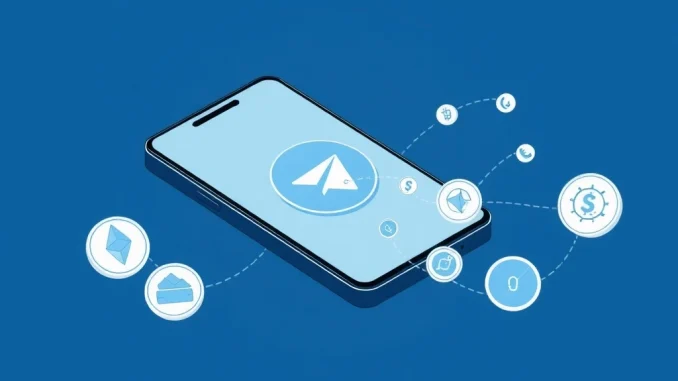
Ile Du Port, Seychelles, 11th February 2026: In a significant development for the integration of cryptocurrency and mainstream communication platforms, Wallet, the native crypto service within the Telegram messaging app, has officially launched cross-chain deposit functionality for its self-custodial TON wallet. This pivotal upgrade, announced from the project’s operational base, fundamentally transforms the wallet from a TON-centric asset holder into a multi-chain hub directly accessible to Telegram’s vast user base. The move addresses a long-standing barrier in decentralized finance by allowing users to deposit assets from external blockchains like Ethereum and Solana directly into their Telegram-based self-custody wallet, all without leaving the app’s familiar environment.
Wallet in Telegram Expands Beyond TON with Cross-Chain Capability
The core of this announcement is the technical implementation of cross-chain deposit bridges. Previously, the self-custodial Wallet in Telegram primarily supported assets native to The Open Network (TON) blockchain, on which Telegram’s Web3 initiatives are built. The new functionality employs secure, audited bridge protocols to lock assets on a source chain (e.g., Ethereum) and mint corresponding wrapped representations on the TON blockchain within the user’s wallet. This process is abstracted from the end-user, who simply selects a network, enters a destination address (their Telegram Wallet), and confirms the transaction from their external wallet like MetaMask or Phantom. Industry analysts view this as a strategic necessity, as the dominance of multiple blockchain ecosystems with substantial liquidity meant a TON-only wallet had limited utility for the average crypto user holding diverse assets.
Technical Mechanics and Self-Custody Security Model
Understanding the technical underpinnings is crucial for assessing the update’s impact. The cross-chain deposit system does not compromise the wallet’s foundational self-custody principle. Users retain sole control of their private keys, which are stored locally on their device. The bridge infrastructure acts as a neutral, verifiable conduit. When a user initiates a deposit, the assets move to a secure, audited smart contract on the origin chain. Upon verification, a corresponding vault on the TON blockchain issues the wrapped asset to the user’s wallet address. This model differs significantly from custodial exchange wallets, where the platform controls the keys. The security burden and freedom both remain with the user, aligning with the core ethos of decentralized finance. The Wallet interface reportedly provides clear transaction status tracking and network fee transparency for these cross-chain actions.
The Strategic Context: Telegram’s Evolving Web3 Ambition
This launch is not an isolated feature drop but a calculated step in Telegram’s broader Web3 strategy. Since distancing itself from its initial deep involvement with TON in 2020 following regulatory scrutiny, Telegram has cautiously re-engaged by endorsing and integrating with the independent TON Foundation’s blockchain. The introduction of usernames auctionable as NFTs on TON, and later, the native Wallet bot, signaled a recommitment. Enabling cross-chain deposits directly serves to onboard Telegram’s estimated 900 million monthly active users into its ecosystem by removing the initial friction of acquiring TON to pay for gas. A user can now bridge a portion of their existing Ethereum holdings to start interacting with TON-based dApps and services directly from Telegram, creating a powerful funnel.
Implications for Users and the Broader Crypto Landscape
The practical implications of this development are multifaceted. For the everyday Telegram user, it simplifies the crypto experience dramatically. The app morphs from a messaging tool into a potential all-in-one portal for chat, community engagement (via groups/channels), and now, seamless multi-chain asset management. This integration could accelerate the concept of “social finance” or SocialFi, where community interactions and financial transactions coexist. For the TON ecosystem, it represents a massive potential liquidity inflow. By making TON the settlement layer for bridged assets from other major chains, it increases network activity, utility, and the value proposition of TON itself. Competitively, it positions Telegram’s wallet as a more formidable rival to other all-in-one crypto apps and browser extension wallets by leveraging its unparalleled distribution channel.
The table below outlines the primary changes this update introduces:
| Aspect | Before Update | After Update |
|---|---|---|
| Supported Assets | Primarily TON blockchain assets (TON coin, Jetons, NFTs). | TON assets + bridged assets from Ethereum, BNB Chain, Solana, etc. |
| User Onboarding | Required users to acquire TON from an external exchange first. | Allows users to bridge existing assets from other chains to start. |
| Wallet Utility | Functioned mainly within the TON ecosystem. | Becomes a multi-chain hub inside Telegram. |
| Key Value Proposition | Convenience of in-app access to TON. | Convenience of in-app access to a unified multi-chain portfolio. |
Expert Analysis on Market Impact and Regulatory Considerations
Blockchain infrastructure experts point to the architectural significance of choosing a bridge-based model. “By utilizing bridges, the Telegram Wallet team leverages existing, battle-tested security models rather than building a proprietary custodial swap service,” notes a fintech analyst specializing in interoperability. “This maintains decentralization alignment but introduces the inherent risks of the bridge protocols themselves, which have been major hacking targets in the past. The choice of bridge partners will be critical for user security.” From a regulatory perspective, the self-custodial nature of the wallet may offer some insulation to Telegram itself, as it positions the service as a non-custodial interface tool rather than a financial service provider holding user funds. However, the feature will likely attract increased scrutiny from global regulators watching the intersection of massive social platforms and financial services.
Conclusion
The launch of cross-chain deposits for the self-custodial TON wallet within Telegram marks a transformative moment in the convergence of social media and decentralized finance. This move by Wallet in Telegram strategically dismantles a key onboarding barrier, empowering its colossal user base to interact with a multi-chain crypto universe without abandoning the platform’s intuitive interface. By transforming the wallet into a versatile hub for assets from Ethereum, Solana, and beyond, Telegram significantly elevates the utility of its entire Web3 ecosystem and solidifies its position as a major gateway for the next wave of crypto adoption. The success of this feature will depend on its seamless user experience, the robust security of its underlying bridge infrastructure, and the evolving regulatory landscape governing such integrated services.
FAQs
Q1: What exactly are cross-chain deposits in the context of the Telegram Wallet?
A1: Cross-chain deposits allow you to transfer cryptocurrency assets from a blockchain like Ethereum or Solana directly into your self-custodial TON wallet inside Telegram. The technology uses secure “bridge” protocols to lock your assets on the original chain and create a corresponding wrapped version on the TON blockchain, all within your control.
Q2: Does this new feature mean Telegram holds or controls my crypto?
A2: No. The Wallet remains self-custodial. You control your private keys, which are stored on your device. The cross-chain bridge is a neutral protocol. Telegram provides the interface to access it but does not custody the assets during or after the transfer.
Q3: Which blockchains are supported for cross-chain deposits into the Wallet?
A3: While the initial launch focuses on major networks, the announcement indicates support for leading ecosystems. You can expect compatibility with Ethereum, BNB Smart Chain, and Solana at a minimum, with more chains likely to be added based on user demand and technical integration.
Q4: Are there fees associated with making a cross-chain deposit?
A4: Yes. You will typically pay two sets of fees: a network gas fee on the blockchain you are sending from (e.g., ETH for Ethereum) and a bridge processing fee charged by the bridge protocol facilitating the cross-chain transfer. The Wallet interface should display estimated costs before you confirm.
Q5: Why is this feature important for the average Telegram user interested in crypto?
A5: It dramatically simplifies getting started. Previously, a user needed to buy TON on an exchange and send it to their Telegram Wallet to have funds for transactions. Now, if they already own Ethereum or another supported crypto elsewhere, they can bridge it directly in, lowering the initial hurdle to using TON-based apps and services within Telegram.
Updated insights and analysis added for better clarity.
This article was produced with AI assistance and reviewed by our editorial team for accuracy and quality.