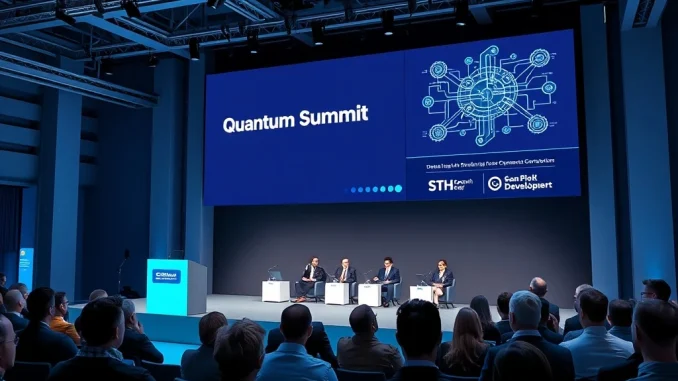
Denver, Colorado, February 19, 2026: The blockchain community faces a silent, long-term threat that could unravel its cryptographic foundations. In response, Tectonic, a leader in decentralized finance infrastructure, will host the inaugural Quantum Summit at ETHDenver 2026. This pivotal event marks a significant shift in the Web3 industry’s focus toward post-quantum cryptography readiness. The summit aims to convene leading cryptographers, core protocol developers, and security researchers to address the existential challenge quantum computers pose to current blockchain security models.
Why Post-Quantum Cryptography is a Web3 Imperative
Modern blockchain technology relies heavily on cryptographic algorithms like Elliptic Curve Cryptography (ECC) and the SHA-256 hashing function. These systems secure everything from wallet private keys to transaction signatures. However, a sufficiently powerful quantum computer, leveraging Shor’s algorithm, could theoretically break these cryptographic schemes. This vulnerability threatens the entire value proposition of decentralized, trustless systems. The Quantum Summit represents a proactive, industry-wide effort to confront this challenge before it becomes a crisis. Transitioning Web3 to quantum-resistant algorithms is a complex, multi-year undertaking requiring unprecedented coordination.
Decoding the Agenda of the Inaugural Quantum Summit
The summit’s agenda is structured to move from foundational understanding to actionable roadmaps. It will begin with sessions explaining the quantum threat model in accessible terms for developers. Subsequently, panels will delve into the current state of post-quantum cryptographic candidates, such as lattice-based, hash-based, and multivariate schemes. A core focus will be the performance and implementation trade-offs of these new algorithms within the constraints of blockchain networks. Experts will present analysis on how quantum-resistant signatures impact transaction size, verification speed, and gas costs on networks like Ethereum. The goal is to translate theoretical cryptography into practical engineering requirements for the next generation of Web3 protocols.
- Threat Assessment Workshops: Interactive sessions to evaluate specific vulnerabilities in DeFi, NFTs, and layer-2 solutions.
- Algorithm Deep Dives: Technical reviews of NIST-standardized post-quantum algorithms like CRYSTALS-Kyber and CRYSTALS-Dilithium.
- Migration Pathway Panels: Discussions on hard fork strategies, grace periods, and backward compatibility challenges.
- Industry Collaboration Forums: Meetings aimed at establishing shared standards and testing benchmarks across different blockchain ecosystems.
The Historical Context and Urgent Timeline
The conversation about quantum computing and cryptography is not new, but its urgency for Web3 has accelerated. The National Institute of Standards and Technology (NIST) began its post-quantum cryptography standardization process in 2016, with the first selected algorithms announced in the 2020s. While a cryptographically relevant quantum computer (CRQC) may still be years or decades away, the “harvest now, decrypt later” attack model is a present danger. Adversaries could record encrypted blockchain traffic today to decrypt it later with a quantum computer. This reality creates a hard deadline for the industry. The Quantum Summit at ETHDenver 2026 is positioned as a critical milestone to ensure the trillion-dollar Web3 ecosystem begins its transition with adequate lead time.
Implications for Developers, Projects, and Investors
The shift to post-quantum cryptography will have profound implications across the Web3 stack. For smart contract developers, it will necessitate learning new cryptographic primitives and auditing tools. Blockchain core developers will face the immense task of designing and executing consensus-level upgrades. Projects building long-term value, such as decentralized identity or asset tokenization platforms, must now factor quantum resistance into their architectural designs. For investors and users, understanding a project’s post-quantum roadmap will become a key due diligence factor for assessing long-term viability. The summit will provide a framework for all stakeholders to understand their role in this necessary evolution.
| Cryptographic Element | Current Standard (Vulnerable) | Post-Quantum Candidate | Key Challenge for Web3 |
|---|---|---|---|
| Digital Signatures | ECDSA (secp256k1) | CRYSTALS-Dilithium | Larger signature size increasing transaction data. |
| Key Encapsulation | ECDH | CRYSTALS-Kyber | Integration with wallet key generation and management. |
| Hashing | SHA-256, Keccak-256 | SPHINCS+ | Slower verification speeds impacting block production. |
ETHDenver as the Ideal Convergence Point
ETHDenver has grown into the world’s largest Web3 innovation festival. Its audience of thousands of builders, founders, and researchers makes it the optimal venue for launching a conversation of this magnitude. By anchoring the Quantum Summit here, Tectonic ensures the topic reaches the engineers who will ultimately implement the solutions. The collaborative “BUIDL” ethos of ETHDenver aligns perfectly with the summit’s goal of fostering open-source development and cross-community standards. This event could catalyze the formation of dedicated working groups within major ecosystem organizations like the Ethereum Foundation, Polygon, and Coinbase.
Conclusion
The inaugural Quantum Summit at ETHDenver 2026 represents a watershed moment for Web3 security. By focusing intensely on post-quantum cryptography readiness, Tectonic is steering the industry toward essential, long-term preparedness. The transition to quantum-resistant blockchains will be one of the most complex technical challenges the space has undertaken. Success requires early education, collaborative research, and careful planning—all goals of this pivotal summit. The decisions and conversations started in Denver in February 2026 will lay the groundwork for securing the decentralized internet against future threats, ensuring the enduring trust and integrity of the Web3 ecosystem.
FAQs
Q1: What is post-quantum cryptography?
Post-quantum cryptography refers to cryptographic algorithms designed to be secure against attacks by both classical and quantum computers. They are based on mathematical problems believed to be hard for quantum computers to solve.
Q2: Is quantum computing an immediate threat to Bitcoin and Ethereum today?
No, a quantum computer powerful enough to break current cryptography does not exist today. However, the threat is considered long-term, and preparation must start now due to the “harvest now, decrypt later” risk and the long timeline required for ecosystem-wide upgrades.
Q3: Why is Tectonic, a DeFi infrastructure project, hosting this summit?
As a core infrastructure provider, Tectonic’s security and longevity are directly tied to the underlying cryptographic security of the blockchains it operates on. Hosting the summit demonstrates industry leadership and a vested interest in ensuring the entire Web3 foundation is future-proof.
Q4: Will moving to post-quantum cryptography require a new blockchain?
Not necessarily. Most experts believe existing blockchains like Ethereum can transition via a coordinated hard fork that replaces vulnerable cryptographic modules with quantum-resistant ones, though this is a highly complex process.
Q5: How can developers prepare for this transition?
Developers can start by educating themselves on the NIST post-quantum cryptography standards, experimenting with new libraries, and considering quantum resistance in the design of new long-term systems and standards.