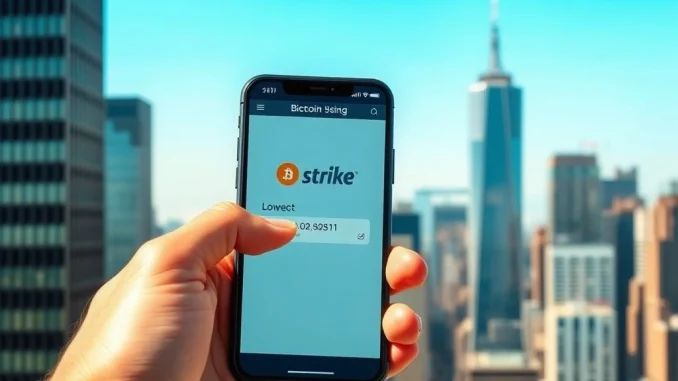
On February 26, 2026, in New York City, the cryptocurrency payments company Strike achieved a pivotal regulatory milestone. The New York State Department of Financial Services (NYDFS) granted the company both a virtual currency license (BitLicense) and a money transmitter license (MTL). This dual approval, confirmed in an official release, immediately authorizes Strike to offer its full suite of Bitcoin financial services to millions of New York residents and businesses. The licenses represent a significant victory for founder and CEO Jack Mallers and mark a crucial phase in the company’s strategic expansion within the United States’ most stringent digital asset regulatory framework.
Strike’s New York Licensing Breakthrough
The NYDFS formally added Zap Solutions, Inc., which operates as Strike, to its regulated entities list in late February. Consequently, New York users can now directly access services that were previously unavailable. These services include buying and selling Bitcoin (BTC), setting up automated recurring purchases, executing price-targeted buys, and converting direct-deposit paychecks into Bitcoin. Furthermore, the platform enables users to pay bills directly from Bitcoin balances and withdraw funds to self-custody wallets. “Receiving our BitLicense is a defining milestone for Strike,” Mallers stated in the company’s announcement. He emphasized that the approval unlocks the potential to expand Bitcoin-based financial services in one of the world’s largest and most influential financial markets.
This regulatory green light follows a comprehensive application and review process that typically spans several months. The NYDFS framework mandates that license holders maintain specific capital reserves, implement robust Anti-Money Laundering (AML) and Know Your Customer (KYC) controls, and submit to regular regulatory examinations. Strike’s successful navigation of this process signals its operational maturity and compliance readiness. The company’s appearance on the NYDFS roster alongside established firms like Coinbase and Circle provides immediate legitimacy and trust signals to potential users in the state.
Impact on New York’s Crypto Ecosystem and Users
The immediate impact of this licensing decision is multifaceted, affecting both the competitive landscape and consumer choice. Primarily, it introduces a new, focused Bitcoin brokerage and payment option into a market historically dominated by larger, multi-asset exchanges. For the estimated hundreds of thousands of crypto-interested New Yorkers, this means greater access to specific Bitcoin-centric financial tools, potentially at competitive rates. Industry analysts note that Strike’s model, which emphasizes low-cost Bitcoin transactions and integration with traditional finance, could pressure existing providers on fee structures.
- Consumer Access: New York residents gain immediate access to Strike’s unique “paycheck-to-Bitcoin” service and recurring buy features, tools designed for long-term adoption rather than speculative trading.
- Market Competition: The entry of a well-funded, compliance-focused player like Strike intensifies competition in a state where regulatory barriers have limited the number of operational firms.
- Regulatory Precedent: The approval reinforces New York’s “regulated access” model, demonstrating that companies with strong compliance programs can successfully operate under the BitLicense regime.
Expert Analysis on Regulatory Significance
Michelle Lee, a fintech regulatory attorney at Perkins Coie who has advised multiple BitLicense applicants, provided context. “The NYDFS approval for Strike is noteworthy not just for the company, but for the signaling effect it sends to the market,” Lee explained. “It shows the regulator is willing to license companies with specific, narrow use cases—in this case, Bitcoin-focused payments—provided they demonstrate exceptional compliance controls. This could encourage other niche fintech firms to apply.” Lee referenced the NYDFS’s 2024 Annual Report, which highlighted a 15% year-over-year increase in completed virtual currency licensing examinations, indicating a maturing and more efficient process.
New York’s BitLicense Landscape and Enforcement History
Strike now joins a selective group of companies holding the coveted New York BitLicense. According to current NYDFS records, this group includes Coinbase, Robinhood Crypto, Circle, eToro, and, as of late 2025, MoonPay. However, holding a license is not a permanent guarantee. The NYDFS has demonstrated a consistent willingness to take enforcement action against licensees that fail to maintain standards. In a prominent 2024 case, Genesis Global Trading agreed to surrender its BitLicense and pay an $8 million penalty after investigators identified significant failures in its AML and cybersecurity programs.
| Company | License Type | Year Approved | Notable Service |
|---|---|---|---|
| Coinbase | BitLicense & MTL | 2017 | Retail trading & custody |
| Circle | BitLicense & MTL | 2015 | USDC stablecoin |
| Robinhood Crypto | BitLicense | 2019 | Commission-free trading |
| MoonPay | BitLicense | 2025 | Fiat on-ramp services |
| Strike | BitLicense & MTL | 2026 | Bitcoin payments & brokerage |
This enforcement history underscores the ongoing compliance burden Strike now assumes. Adrienne Harris, the former superintendent of the NYDFS, highlighted the state’s influential role in a 2025 speech. “New York has an outsized role to play in the digital asset ecosystem,” Harris stated. “Lawmakers and regulators from other states and federal agencies frequently look to our framework and our enforcement actions when drafting their own policies.” This statement confirms that Strike’s performance under the New York license will be scrutinized far beyond state borders.
The Road Ahead for Strike’s US Expansion
With the New York hurdle cleared, Strike’s strategic roadmap likely involves aggressive expansion into other key US markets. The New York license does not authorize nationwide operations; therefore, the company must pursue money transmitter licenses (MTLs) on a state-by-state basis. This process is arduous and costly, but success in New York often streamlines applications elsewhere due to the state’s reputation for rigorous standards. Industry observers predict Strike will prioritize high-population states with active crypto user bases, such as California, Texas, and Florida, throughout 2026 and 2027.
Industry and Community Reaction
Initial reactions from the cryptocurrency community have been largely positive. Many Bitcoin advocates view Strike’s approval as a validation of the asset’s utility beyond speculation. “This is about normalizing Bitcoin as a tool for everyday financial management, not just an investment,” commented Sarah Brenner, a moderator of a large New York-based Bitcoin meetup group. “Having a licensed, compliant option for things like recurring buys and bill pay makes it more accessible for people who are curious but wary of unregulated platforms.” Conversely, some competitors have pointed out that the concentrated regulatory power of New York continues to create a high barrier to entry, potentially stifling innovation from smaller startups.
Conclusion
Strike’s acquisition of New York’s BitLicense and money transmitter license is a defining event in the 2026 cryptocurrency regulatory landscape. The approval grants millions of New Yorkers access to novel Bitcoin financial services while cementing the state’s role as the de facto standard-setter for US digital asset regulation. For Jack Mallers and Strike, the license is both a reward for past compliance efforts and a passport to future growth. However, it also brings the intense, perpetual scrutiny of the NYDFS. The company’s ability to scale its services while maintaining flawless compliance will now serve as a key test case for the viability of focused, Bitcoin-native financial platforms operating within the world’s most rigorous regulatory frameworks. Observers should monitor user adoption rates in New York and the pace of Strike’s subsequent state licensing announcements as the primary indicators of its expansion trajectory.
Frequently Asked Questions
Q1: What specific services can New Yorkers now access on Strike?
New York residents can use Strike to buy and sell Bitcoin, set up automatic recurring purchases, execute buys at specific price targets, convert direct-deposit paychecks into Bitcoin, pay bills from a Bitcoin balance, and withdraw funds to their own self-custody wallets.
Q2: Does the New York BitLicense allow Strike to operate nationwide?
No. A New York BitLicense only authorizes a company to conduct virtual currency business with New York residents. To operate across the US, Strike must obtain separate money transmitter licenses (MTLs) in each individual state, a process it is likely now accelerating.
Q3: What are the main compliance requirements Strike must now meet in New York?
The NYDFS requires BitLicense holders to maintain adequate capital reserves, implement stringent Anti-Money Laundering (AML) and Know Your Customer (KYC) programs, protect consumer assets, ensure cybersecurity, and undergo regular financial examinations and audits by the regulator.
Q4: How does Strike’s approval affect other crypto companies?
It reinforces the viability of New York’s licensing path for compliant companies, potentially encouraging others to apply. It also increases competition for existing licensed services like Coinbase and Robinhood Crypto within the New York market.
Q5: Why is New York’s approval considered so significant for crypto firms?
New York’s regulatory framework, centered on the BitLicense, is widely regarded as the strictest in the United States. Successfully obtaining a license signals a company has robust compliance systems, which builds trust with users and can ease the licensing process in other states.
Q6: What happened to previous BitLicense holders who failed compliance checks?
The NYDFS has a history of strict enforcement. For example, in 2024, Genesis Global Trading was forced to surrender its BitLicense and pay an $8 million penalty after the regulator found deficiencies in its AML and cybersecurity programs.