Stablecoin Growth Skyrockets as TRM Labs Data Reveals a Stunning Truth About Illicit Activity
Global, April 2025: The narrative around stablecoins is undergoing a significant shift. New, compelling data from blockchain intelligence firm TRM Labs reveals a stunning truth: while stablecoin growth has skyrocketed into the trillions of dollars, associated illicit financial flows remain narrowly focused on a small subset of high-risk networks. This pivotal research, released in early 2025, provides the most granular picture to date of how these digital assets are integrating into the global financial fabric, predominantly for legal commerce and settlement, even as regulatory scrutiny intensifies.
Stablecoin Growth Reaches a Trillion-Dollar Inflection Point
The scale of stablecoin adoption has moved beyond speculation into the realm of measurable macroeconomic activity. TRM Labs’ 2025 report confirms that aggregate stablecoin transaction volumes have definitively crossed into the trillions of dollars annually. This growth is not incidental; it represents a fundamental expansion of use cases beyond speculative crypto trading. The data underscores several key drivers:
- Cross-Border Settlement: Businesses, particularly in emerging markets and the trade sector, are increasingly leveraging stablecoins for faster, cheaper international payments, bypassing traditional correspondent banking delays.
- DeFi Integration: Stablecoins serve as the primary liquidity layer and unit of account within decentralized finance (DeFi) protocols, facilitating lending, borrowing, and yield-generation activities.
- Institutional On-Ramps: Major financial institutions and payment processors have launched services that allow clients to hold, send, and receive dollar-pegged digital assets, lending unprecedented legitimacy.
- Remittance Corridors: Corridors between countries like the United States and the Philippines or Mexico now see billions in stablecoin volume, offering migrants a more efficient way to send funds home.
This trajectory mirrors the early adoption curves of revolutionary payment technologies, suggesting stablecoins are transitioning from a crypto-native tool to a broad-based financial utility.
Illicit Crypto Flows: A Concentrated, Not Systemic, Problem
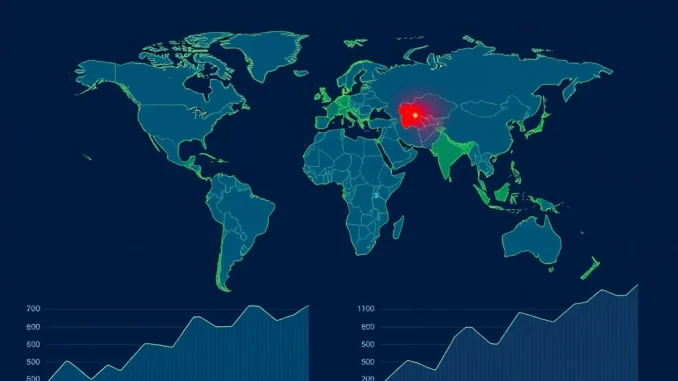
Perhaps the most consequential finding from TRM Labs is the precise characterization of illicit activity. Contrary to broad-brush criticisms, the data shows that illegal stablecoin flows are not pervasive across the ecosystem but are instead highly concentrated. The analysis identifies a critical pattern: the vast majority of flagged transactions for scams, sanctions evasion, or terrorist financing are routed through a limited number of blockchain networks and service providers that have weak or non-existent compliance controls.
This concentration allows for targeted regulatory and law enforcement action. Authorities can focus resources on the specific chokepoints and protocols that bad actors persistently abuse, rather than treating the entire stablecoin landscape as suspect. The report likely highlights networks that either intentionally design for anonymity or negligently fail to implement basic “Know Your Customer” (KYC) and anti-money laundering (AML) checks. This focused risk profile is a crucial insight for policymakers aiming to craft effective, non-draconian regulations that protect the financial system without stifling innovation.
The Regulatory and Compliance Landscape in 2025
The TRM Labs data arrives at a pivotal moment in global regulatory development. Jurisdictions worldwide are finalizing frameworks for stablecoins and virtual asset service providers (VASPs). This research provides empirical evidence that supports a risk-based regulatory approach. For compliant exchanges, custodians, and issuers operating on major blockchains with robust analytics capabilities, the illicit finance risk appears manageable and traceable. The challenge, therefore, shifts to addressing the “offshore” or non-compliant segments of the ecosystem. The data empowers regulators to distinguish between high-risk and low-risk actors, potentially leading to:
- Stricter licensing requirements for cross-chain bridging services.
- Enhanced due diligence obligations for transactions involving privacy-focused chains.
- Greater international cooperation to sanction non-compliant entities and jurisdictions.
The overarching implication is that the technology itself is neutral; the risk is dictated by the compliance posture of the intermediaries and networks involved.
Historical Context: From Bitcoin’s Shadow to Financial Mainstay
To appreciate the significance of this growth, one must consider the evolution. Stablecoins emerged in the late 2010s as a solution to the extreme volatility of cryptocurrencies like Bitcoin and Ethereum. They promised the programmability and borderless nature of crypto with the price stability of fiat currency. Early models were simple, but the sector has matured dramatically. The journey includes key milestones:
| Period | Development | Impact on Growth |
|---|---|---|
| 2018-2020 | Rise of centralized, fiat-collateralized stablecoins (USDT, USDC). | Provided initial trust and liquidity for crypto trading pairs. |
| 2020-2022 | Explosion of DeFi and algorithmic stablecoin experiments. | Demonstrated utility beyond trading; highlighted risks (e.g., Terra/Luna collapse). |
| 2023-2024 | Regulatory crackdowns and institutional entry (PayPal USD, BlackRock). | Weeded out weak projects, brought corporate governance and credibility. |
| 2025 | Data-driven maturity analysis (e.g., TRM Labs report). | Provides evidence base for sustainable, regulated scaling. |
This historical progression shows a technology moving from the fringe to the core, with each phase addressing the failures and limitations of the last.
Conclusion: A Data-Driven Future for Digital Assets
The 2025 data from TRM Labs offers a powerful, nuanced snapshot of the stablecoin ecosystem. It confirms the undeniable stablecoin growth as a trillion-dollar-plus reality, driven by legitimate global demand for efficient digital dollars. Simultaneously, it refines the understanding of illicit finance risk, showing it to be a targeted, addressable challenge rather than a systemic flaw. For the industry, this is a call to double down on compliance and transparency. For regulators, it is an invitation to craft precise rules that safeguard the system without halting progress. For the global economy, it signals the accelerating arrival of a new, digitally-native layer for value exchange. The trajectory is clear: stablecoins are becoming infrastructure, and their responsible integration is now the central task.
FAQs
Q1: What exactly does TRM Labs’ 2025 report say about stablecoin volume?
TRM Labs reports that total stablecoin transaction volume has surpassed the trillion-dollar mark annually, indicating massive adoption for payments, settlements, and DeFi, not just crypto trading.
Q2: How are illicit stablecoin flows “narrowly focused” according to the data?
The research finds that most identified illicit activity is concentrated on a small number of blockchain networks and service providers that lack strong compliance controls, rather than being spread evenly across all stablecoin use.
Q3: Why is this data important for cryptocurrency regulation?
It provides evidence that a risk-based regulatory approach is feasible. Authorities can target non-compliant actors and networks specifically, rather than imposing blanket restrictions that could hinder legitimate innovation.
Q4: What are the primary legitimate uses driving stablecoin growth?
Key drivers include cross-border business payments and remittances, providing liquidity and a stable unit of account in DeFi protocols, and serving as an on-ramp for institutional investment into digital assets.
Q5: Does this mean stablecoins are now “safe” from misuse by criminals?
No. The report does not eliminate risk but clarifies it. It shows that risks are manageable with proper oversight and that the compliant majority of the ecosystem is not the primary source of illicit activity. Vigilance and regulation remain critical.
Related News
- Bitcoin's Potential Surge: How Federal Reserve Independence Concerns Could Weaken the Dollar
- New OPEN Ticketing Module Revives the Bowie Bond
- Aptos Futures Breakthrough: Bitnomial Launches First US-Regulated APT Derivatives for Institutions
Related: Clarity Act: The Stunning Regulatory Catalyst for a Potential Ethereum Super-Cycle
Related: Aave's Pivotal $1B Surge in Tokenized Assets as DeFi Capital Shifts