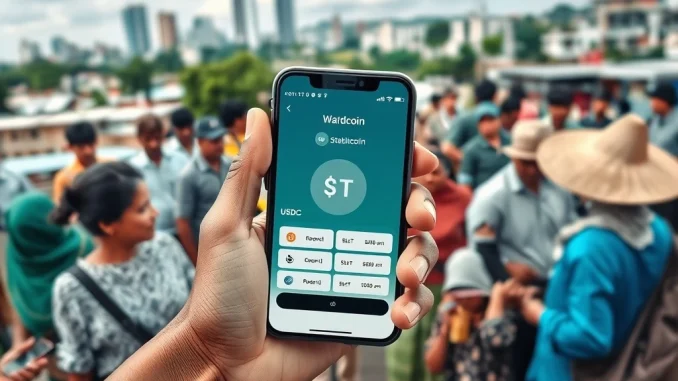
Global, May 2025: A fundamental shift is underway in the cryptocurrency landscape. Stablecoin adoption is accelerating beyond its origins as a niche trading tool, evolving into a cornerstone of daily financial activity for millions. New survey data and market analysis reveal that a majority of current users not only hold these digital assets but actively plan to increase their stablecoin holdings in the coming year, driven by practical use in savings, remittances, and freelance income.
Stablecoin Adoption Moves Beyond the Trading Desk
For years, stablecoins—digital tokens pegged to stable assets like the US dollar—served primarily as a haven within cryptocurrency exchanges. Traders used them to park value during market volatility without converting back to traditional currency. However, recent data from financial infrastructure platforms like BVNK, corroborated by reports from Chainalysis and the IMF, indicates a decisive pivot. Users are increasingly viewing stablecoins not as a temporary parking spot, but as a functional component of their personal finance strategy. This transition marks a maturation of the asset class from a speculative instrument to a utility-focused financial rail.
The driving forces behind this shift are multifaceted. In regions with high inflation or unstable local currencies, dollar-pegged tokens offer a reliable store of value. For the global freelance and remote workforce, they provide a fast, low-cost method for receiving cross-border payments. This real-world utility is creating a sticky user base less concerned with price speculation and more focused on financial efficiency and security.
Survey Data Reveals Intent to Increase Stablecoin Holdings
The most compelling evidence for this trend comes from user sentiment. Surveys conducted in Q1 2025 consistently show that over 60% of existing stablecoin users intend to grow their portfolio of these assets. This intent is strongest among two key demographics: individuals in emerging economies and digital professionals. The rationale is clear and practical.
- Emerging Markets: In countries experiencing currency devaluation, holding savings in a dollar-pegged token like USDT or USDC acts as a digital dollar account, preserving purchasing power without the need for a foreign bank account.
- Freelancers & Remote Workers: Platforms are increasingly offering settlement in stablecoins, bypassing slow wire transfers and high fees from traditional services like SWIFT or PayPal. This allows for near-instant receipt and conversion of earnings.
- Everyday Payments: Merchant adoption, while still growing, is enabling the use of stablecoins for everything from online subscriptions to remittances sent back home, often settling in minutes for fractions of a cent.
This data suggests that growth is now being fueled by retention and increased usage per capita, not just by an influx of new, speculative users.
The Regulatory and Infrastructure Landscape in 2025
The surge in stablecoin adoption for payments and savings does not occur in a vacuum. The regulatory environment globally has begun to crystallize. Jurisdictions like the European Union with its Markets in Crypto-Assets (MiCA) regulation and evolving frameworks in the United Kingdom and Singapore are providing clearer rules for issuers. This regulatory clarity, while imposing compliance costs, is simultaneously fostering greater institutional and public trust. Furthermore, the underlying infrastructure has improved dramatically. User-friendly wallets, integration with traditional payment cards, and seamless on-ramps from fiat currency have reduced the technical barriers that once hindered mainstream use.
Stablecoins as Payment Rails and Savings Vehicles
The functional split between stablecoins as payment rails and as savings vehicles is becoming more pronounced. As payment tools, they compete with legacy systems on cost and speed. A table comparing typical transaction characteristics illustrates this shift:
| Payment Method | Average Settlement Time | Average Cost (Cross-Border) | Accessibility |
|---|---|---|---|
| Bank Wire (SWIFT) | 1-5 Business Days | $25 – $50 | Requires Bank Account |
| Traditional Remittance Service | Minutes to Hours | 3% – 7% of Amount | Physical Agent or App |
| Major Stablecoin Transfer | Seconds to Minutes | < $1 (Network Fee) | Smartphone & Internet |
As savings vehicles, they offer an alternative to bank deposits in regions with low interest rates or banking instability. However, experts caution that this use case carries different risks, primarily related to the credibility of the issuer and the quality of the reserve assets backing the stablecoin, a point heavily emphasized by regulators.
Challenges and Considerations for Growing Adoption
Despite the optimistic data, significant hurdles remain. Regulatory treatment varies widely by country, with some nations embracing the technology and others imposing bans. The technical knowledge required to self-custody assets safely remains a barrier for some, though custodial wallet services are bridging this gap. Furthermore, the industry continues to grapple with the need for transparency in reserve attestations to ensure every token is fully backed. Addressing these challenges is critical for the next phase of stablecoin adoption, which may involve deeper integration with traditional financial services and central bank digital currencies (CBDCs).
Conclusion
The narrative around stablecoins is fundamentally changing. No longer just a tool for crypto traders, they are becoming embedded in the global financial fabric as instruments for savings, payments, and income. The survey data showing a majority of users plan to increase their stablecoin holdings underscores this transition from experimental to essential. This trend, driven by tangible economic needs in emerging markets and the digital economy, points toward a future where dollar-pegged digital assets play a significant role in inclusive, efficient, and borderless finance. The continued evolution of regulation and infrastructure will determine the pace, but the direction of stablecoin adoption is now clearly set toward real-world utility.
FAQs
Q1: What is driving the surge in stablecoin adoption?
The primary drivers are practical financial needs: individuals in high-inflation countries use them to preserve savings, while freelancers and businesses use them for fast, low-cost cross-border payments, moving beyond speculative trading.
Q2: Are stablecoins safe to use for savings?
Safety depends on the issuer. It is crucial to use stablecoins from transparent, well-regulated issuers that provide regular proof of reserves. They are not FDIC-insured like bank deposits, so users must assess counterparty risk.
Q3: How do stablecoins work for everyday payments?
Users can send stablecoins from their digital wallet to a merchant’s or individual’s wallet address almost instantly. An increasing number of payment processors and cards allow merchants to accept stablecoins and automatically convert them to local currency.
Q4: What are the main risks associated with holding stablecoins?
Key risks include issuer insolvency (if reserves are inadequate), regulatory changes in your jurisdiction, smart contract bugs (for algorithmic types), and the potential for loss if private wallet keys are misplaced.
Q5: How is the regulatory landscape affecting stablecoin growth?
Clearer regulations, like the EU’s MiCA framework, are legitimizing the sector and attracting institutional participation by setting standards for issuance and reserves. This builds trust but also imposes compliance requirements on operators.