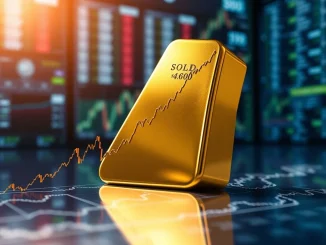
Global financial markets witnessed a historic moment on April 10, 2025, as the prices for spot gold and silver simultaneously surged to unprecedented all-time highs. Spot gold decisively broke the $4,666 per ounce barrier, while spot silver powered past the $94 per ounce level, signaling a powerful and sustained rally in the precious metals sector. This dual breakout represents a pivotal event for investors, central banks, and economists worldwide, prompting deep analysis of the underlying macroeconomic forces.
Spot Gold and Silver Achieve Historic Breakouts
The London Bullion Market Association (LBMA) fixing confirmed spot gold trading at $4,668.780, marking a robust 1.59% daily gain. Concurrently, spot silver reached $93.014, surging an impressive 3.26% in a single session. These figures are not mere incremental gains; they represent a definitive breach of long-standing psychological and technical resistance levels. Market analysts immediately began scrutinizing the tape for catalysts, finding a confluence of factors rather than a single trigger. The move’s synchronized nature across both metals suggests a broad-based reassessment of value and risk within the global financial system.
Historically, gold and silver often move in tandem, but silver’s higher volatility typically leads to more pronounced swings. The current rally showcases this relationship perfectly. For context, the previous all-time high for gold stood at approximately $4,550, set in late 2024. Silver’s prior record was near $88. This new leg higher has therefore added significant value to metal holdings globally. Central bank reserves, exchange-traded funds (ETFs) like SPDR Gold Shares (GLD) and iShares Silver Trust (SLV), and physical bullion inventories have all seen their worth climb substantially.
Analyzing the Drivers Behind the Precious Metals Surge
Several interconnected macroeconomic drivers are fueling this relentless ascent. Primarily, shifting expectations for global interest rates have created a fertile environment. While some central banks have paused hiking cycles, persistent inflationary pressures in service sectors and commodities have delayed expectations for aggressive rate cuts. Consequently, real yields—the return on bonds after adjusting for inflation—remain subdued or negative in many jurisdictions. This environment erodes the opportunity cost of holding non-yielding assets like gold and silver, making them more attractive.
Furthermore, ongoing geopolitical tensions continue to bolster safe-haven demand. Investors traditionally flock to precious metals during periods of uncertainty as a store of value uncorrelated to specific governments or currencies. Elevated demand from central banks, particularly in emerging markets seeking to diversify reserve assets away from the US dollar, provides a consistent and structural bid under the market. Additionally, robust industrial demand for silver, a critical component in solar panels, electronics, and electric vehicles, creates a fundamental floor for its price that complements investment flows.
Expert Perspectives on Market Sustainability
Leading commodity strategists emphasize the multi-faceted nature of this rally. “This isn’t a speculative bubble,” notes Dr. Anya Sharma, Head of Commodities Research at Global Macro Advisors. “We are observing a rational response to a decade of expansive monetary policy, elevated sovereign debt levels, and a fragmented geopolitical landscape. The breakout is supported by tangible flows from institutional and official sectors.” Technical analysts also point to the clean breach of multi-year consolidation patterns on price charts, which often precedes extended trending moves. The next significant resistance levels are now projected around the $4,800 zone for gold and $100 for silver, though volatility is expected to increase.
Comparative Performance and Market Impact
The rally’s impact extends far beyond the spot market. Mining equities, represented by indices like the NYSE Arca Gold BUGS Index (HUI), have experienced leveraged gains. Similarly, futures contracts on the COMEX have seen record open interest, indicating strong participation from both commercial hedgers and speculative funds. The table below illustrates the scale of the move relative to other major asset classes over the past month.
| Asset Class | 1-Month Performance | Key Driver |
|---|---|---|
| Spot Gold | +8.7% | Safe-haven, real yields |
| Spot Silver | +14.2% | Industrial & investment demand |
| Global Equities (MSCI World) | +1.5% | Earnings resilience |
| US 10-Year Treasury | -0.3% (Price) | Inflation expectations |
| Broad US Dollar Index (DXY) | -1.8% | Diversification flows |
This outperformance highlights a potential rotation in asset allocation. Portfolio managers are increasingly citing precious metals as an effective diversifier. The metals’ strong performance during a period of modest equity gains and a weaker dollar underscores their unique role. For retail investors, the surge has renewed interest in physical bullion, coins, and allocated storage accounts. However, experts caution that new entrants should focus on long-term strategic allocation rather than short-term speculation, given the inherent volatility.
Historical Context and Future Trajectory
To fully appreciate the current milestone, one must consider the long-term trajectory. Gold’s journey from its fixed price of $35 per ounce under the Bretton Woods system to over $4,600 today is a story of monetary evolution, inflation, and trust. The 2020s have been particularly transformative, characterized by:
- Pandemic-Era Stimulus: Unprecedented fiscal and monetary response post-2020.
- Inflation Resurgence: A global cycle of rising prices challenging central bank models.
- Dedollarization Trends: Strategic moves by nations to reduce dollar dependency.
- Technological Demand: Silver’s critical role in the green energy transition.
Looking forward, market consensus suggests the bullish structural drivers remain intact. Key indicators to watch include central bank purchasing data from the World Gold Council, inflation prints from major economies, and the physical premium for retail silver products, which can indicate tightness in the deliverable market. Any sustained move toward lower real interest rates or an escalation in geopolitical risk would likely provide further tailwinds. Conversely, a rapid, coordinated global shift toward aggressively hawkish monetary policy could present headwinds, though current economic data does not support this scenario.
Conclusion
The establishment of new all-time highs for spot gold and spot silver marks a significant chapter in financial market history. This event is driven by a powerful combination of macroeconomic uncertainty, strategic official sector buying, and robust industrial fundamentals. While daily fluctuations are inevitable, the breach of these key price levels confirms a strong underlying bullish trend for precious metals. For market participants, this underscores the enduring role of gold and silver as strategic assets for wealth preservation and portfolio diversification in an increasingly complex global economy. Monitoring the sustainability of these record prices will require close attention to interest rate policies, currency movements, and global demand trends throughout 2025.
FAQs
Q1: What are ‘spot’ prices for gold and silver?
The spot price is the current market price for immediate delivery and settlement of the physical metal. It serves as the global benchmark, distinct from futures prices (for delivery later) or retail prices for coins/bars which include premiums.
Q2: Why did both gold and silver hit records at the same time?
While driven by shared factors like interest rates and safe-haven demand, their simultaneous breakout is notable. Silver often follows gold but with higher volatility. The added boost for silver comes from its substantial industrial demand in green technologies, which is currently very strong.
Q3: How does a weaker US Dollar affect gold and silver prices?
Precious metals are globally priced in US dollars. A weaker dollar makes gold and silver cheaper to purchase for holders of other currencies, which can increase international demand and push dollar-denominated prices higher.
Q4: Are mining stocks a good way to invest during this rally?
Mining stocks (equities) offer leveraged exposure to metal prices but introduce additional risks like operational costs, management efficacy, and geopolitical risk in mining jurisdictions. They are typically more volatile than the metals themselves.
Q5: What is the main risk to this ongoing bull market in precious metals?
The primary risk would be a significant and sustained shift in monetary policy, such as a rapid global increase in real interest rates (nominal rates rising faster than inflation). This would increase the opportunity cost of holding non-yielding assets. A sharp, unexpected resolution to major geopolitical conflicts could also temporarily reduce safe-haven demand.
Updated insights and analysis added for better clarity.
This article was produced with AI assistance and reviewed by our editorial team for accuracy and quality.