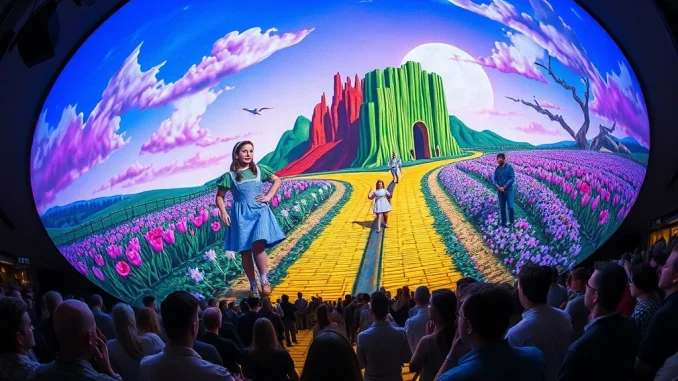
In a world increasingly shaped by digital innovation, where concepts like blockchain are redefining ownership and the metaverse promises new realities, another technological frontier is rapidly expanding: immersive entertainment. Just as decentralized finance challenges traditional systems, artificial intelligence is now revolutionizing how we experience classic media. Imagine stepping directly into the vibrant, fantastical world of Oz, not just watching it. That’s precisely what Sphere Entertainment Co. is achieving with its groundbreaking AI-enhanced transformation of “The Wizard of Oz” (1939) at its state-of-the-art venue in Sphere Las Vegas. This isn’t merely a restoration; it’s a complete reimagining, setting a new benchmark for how audiences will engage with storytelling.
What Does AI Entertainment Look Like for Classic Films?
The core of this ambitious project lies in sophisticated AI entertainment technologies that push the boundaries of visual fidelity and narrative immersion. Spearheaded by Sphere CEO James Dolan and a formidable 2,000-person team, the goal is to make viewers feel as though they are “present during its original shooting.” This is achieved through a combination of cutting-edge AI algorithms:
- AI-driven Resolution Enhancement: The original 1939 film stock, while iconic, has inherent limitations in resolution by today’s standards. AI is being used to upscale the footage, adding intricate details to previously grainy close-ups and sharpening the overall image quality to meet the demands of a monumental display.
- Outpainting and Frame Expansion: Perhaps the most revolutionary aspect, these techniques allow AI to intelligently generate new visual content beyond the original frame. For instance, the Yellow Brick Road can be extended, or distant Oz landscapes can be crafted, seamlessly blending with the existing visuals. This isn’t about cropping or zooming; it’s about intelligently filling in what was never there, while preserving the film’s aesthetic integrity.
- Generating New Character Movements and Backgrounds: Turner Classic Movie presenter Ben Mankiewicz highlighted how AI transforms a “static image into a living world,” even generating new character movements and backgrounds specifically tailored to the Sphere’s unique 160,000-square-foot LED screen. This ensures the expanded visuals feel organic and consistent with the original artistic vision.
This approach diverges significantly from traditional film restoration, which typically focuses on cleaning up, color-correcting, and preserving the existing material. Sphere’s project aims to “integrate viewers into the film rather than simply modifying it,” creating an active rather than passive viewing experience.
Sphere Las Vegas: The Ultimate Canvas for Immersion
The choice of Sphere Las Vegas as the venue for this groundbreaking debut is no coincidence. The Sphere is not just a building; it’s a technological marvel designed for unparalleled immersive experiences. Its defining features include:
- Wraparound LED Display: A massive 160,000-square-foot interior LED screen completely envelops the audience, creating a true 360-degree visual environment. This eliminates the traditional “frame” of a cinema screen, allowing the expanded “Wizard of Oz” visuals to flow seamlessly around viewers.
- Advanced Audio Systems: While not explicitly detailed for this project, the Sphere is equipped with an advanced beamforming audio system that can deliver targeted sound, enhancing the sense of presence and allowing different sounds to be directed to specific areas of the audience.
- Unrivaled Scale: The sheer size and technological sophistication of the Sphere position it as a pioneer in large-scale digital displays. James Dolan aptly described it as “a statement of what entertainment can become,” pushing the boundaries of what a live or cinematic experience can be.
The venue’s capabilities are crucial to realizing the vision of stepping into Oz’s world, blurring the line between passive viewing and active participation. It transforms a conventional film screening into a monumental event, setting a new benchmark for large-scale digital displays.
The Wizard of Oz AI: A Classic Reimagined
The decision to apply these advanced technologies to “The Wizard of Oz” (1939) is particularly significant. It’s a beloved classic, deeply ingrained in popular culture, making its transformation a bold statement. The project demonstrates how generative AI can address the technical limitations of early cinema, opening vast possibilities for reimagining other classic films.
By using AI to expand rather than merely clean up archival footage, Sphere shows how legacy content can be adapted to modern platforms without compromising artistic intent. This raises broader questions about the balance between technological innovation and historical preservation, a dialogue James Dolan addressed by stressing that the team’s focus was on “enhancing, not altering” the original work. This delicate balance is key to the project’s success; leveraging AI to enhance immersion without overshadowing the original artistic vision.
Stepping into an Immersive Experience: Beyond the Screen
The core promise of this project is a truly immersive experience. Forget simply watching a movie; Sphere aims for you to *feel* present within it. The expanded visuals, combined with the Sphere’s enveloping screen, create a cinema-sized illusion of stepping into Oz’s world. This means:
- Enhanced Presence: Viewers will feel more deeply connected to the narrative and characters, as the world of Oz extends beyond their peripheral vision.
- New Perspectives: AI-generated expansions might reveal details or landscapes previously unseen, offering fresh perspectives on familiar scenes.
- Sensory Overload (in a good way): The combination of stunning visuals and the Sphere’s advanced audio will create a multi-sensory engagement that transcends traditional cinema.
This initiative isn’t just about higher resolution; it’s about fundamentally altering the relationship between the audience and the content, transforming a passive viewing activity into an active, almost participatory, journey.
What Does This Mean for the Future of Entertainment?
The implications of Sphere’s Wizard of Oz AI project for the future of entertainment are profound. Analysts suggest that successful execution could redefine industry standards for re-mastering, particularly as audiences increasingly demand high-definition, multi-sensory experiences. This development aligns with broader trends where AI is increasingly used to bridge the gap between vintage content and contemporary viewing expectations.
This synergy between artificial intelligence and creative industries showcases how generative AI can address technical limitations of early cinema, opening possibilities for reimagining other classic films. While the project’s success hinges on maintaining that delicate balance between enhancement and alteration, its debut on August 28 signals a pivotal shift in how audiences engage with media.
The project’s impact on future entertainment ventures, including virtual and augmented reality applications, remains to be seen, but its immediate significance lies in proving that even decades-old classics can be reborn to captivate new generations. It’s a testament to technology’s power to merge nostalgia with cutting-edge innovation, promising a thrilling new chapter in storytelling.
Conclusion: A New Era of Immersive Storytelling
Sphere Entertainment Co.’s audacious venture to transform “The Wizard of Oz” using advanced AI is more than just a technological feat; it’s a bold declaration of what the future of entertainment can be. By leveraging AI for resolution enhancement, outpainting, and frame expansion, Sphere is not just restoring a classic but reimagining it for a truly immersive, 360-degree experience at its Las Vegas venue. This project stands as a testament to the powerful synergy between artificial intelligence and creative industries, proving that even the most cherished legacy content can be revitalized to captivate new generations. As we move further into an era defined by digital innovation, Sphere’s AI-enhanced “Wizard of Oz” offers a dazzling glimpse into a future where the lines between viewer and story continue to beautifully blur.
Frequently Asked Questions (FAQs)
What is the Sphere’s AI-enhanced Wizard of Oz project?
The project is a groundbreaking initiative by Sphere Entertainment Co. to transform the classic 1939 film “The Wizard of Oz” using advanced AI technologies. It aims to create a monumental 360-degree immersive experience for audiences at the Sphere venue in Las Vegas, making viewers feel present during the film’s original shooting.
What specific AI technologies are being used for this transformation?
The project leverages several AI technologies, including AI-driven resolution enhancement to upscale original film stock, outpainting, and frame expansion techniques to extend visual elements beyond the original frame. AI algorithms are also used to add intricate details, generate new visual content like expanded landscapes, and even create new character movements and backgrounds.
How does this project differ from traditional film restoration?
Unlike traditional film restoration, which primarily focuses on cleaning up, color-correcting, and preserving existing footage, Sphere’s AI project aims to “integrate viewers into the film rather than simply modifying it.” It actively generates new content and expands the visual world to create a more immersive and interactive experience, rather than just a cleaned-up version of the original.
When does the AI-enhanced Wizard of Oz experience debut at Sphere Las Vegas?
The AI-enhanced Wizard of Oz experience is scheduled to debut at the Sphere venue in Las Vegas starting August 28, 2025.
What is the significance of this project for the future of entertainment?
This project sets a new benchmark for immersive entertainment and large-scale digital displays. It demonstrates how AI can redefine industry standards for re-mastering classic content, bridge the gap between vintage films and contemporary viewing expectations, and potentially influence future developments in virtual and augmented reality applications in storytelling.
Who is leading the Sphere’s AI-enhanced Wizard of Oz initiative?
The initiative is being led by Sphere CEO James Dolan, with a dedicated team of 2,000 people working on the project.